Why Is My Aquarium Cloudy?
The Tank Guide · A FishKeepingLifeCo publication — August 2026
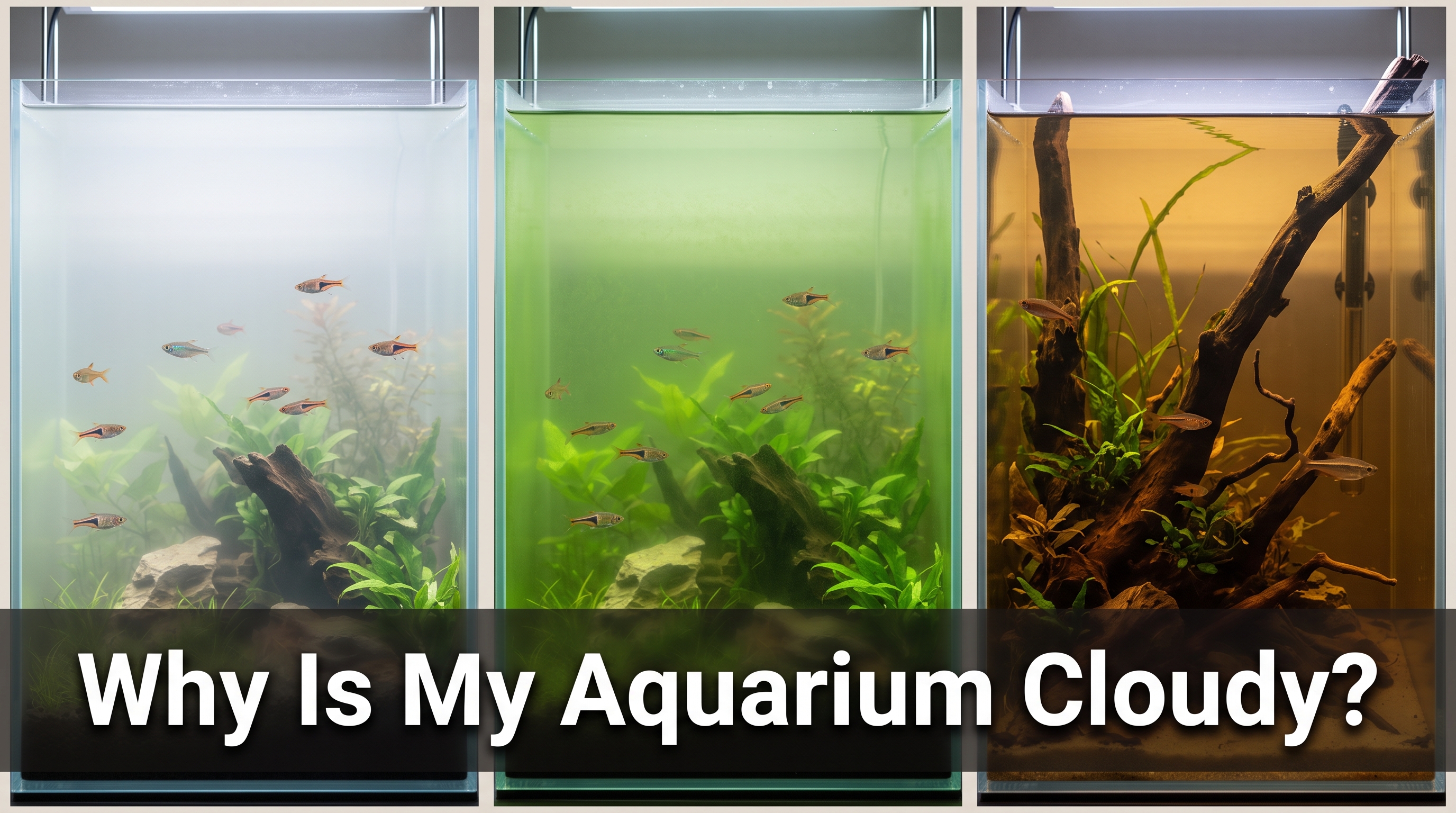
If your aquarium suddenly looks cloudy, the color and timing can tell you almost everything you need to know. White haze, green tint, brown coloration, drifting particles, and sparkling microbubbles all get called "cloudy water," but they don't share a cause and they don't share a fix.
The first thing to understand is that cloudy water is a symptom, not a diagnosis. A tank can look milky for at least four completely different reasons that each need a different response. The tank next to yours could look identical and have a different cause. That's why generic advice — do a water change, add carbon, buy a clarifier — so often fails. It's not that any of those tools are useless. It's that they solve different problems, and cloudy water is not one problem.
This guide will help you narrow down what kind of cloudy water you may be seeing. Once you have a better idea of the cause, it becomes much easier to decide what — if anything — you need to do next.
Check These Two Things First
Before you touch the water, look at the fish.
If any of your fish are gasping at the surface, crowded around the filter outflow, breathing rapidly, or lying on the bottom when they normally aren't, the appearance of the water stops being the story. That's a welfare situation and it needs attention right now: increase surface agitation, check the temperature, do a conservative water change with temperature-matched dechlorinated water, and test for ammonia and nitrite. You can diagnose the cloudiness afterwards.
If the fish are behaving normally — feeding, using the full water column, breathing at a normal rate — you have time to work out what you're seeing properly. That's a much better place to make a decision from.
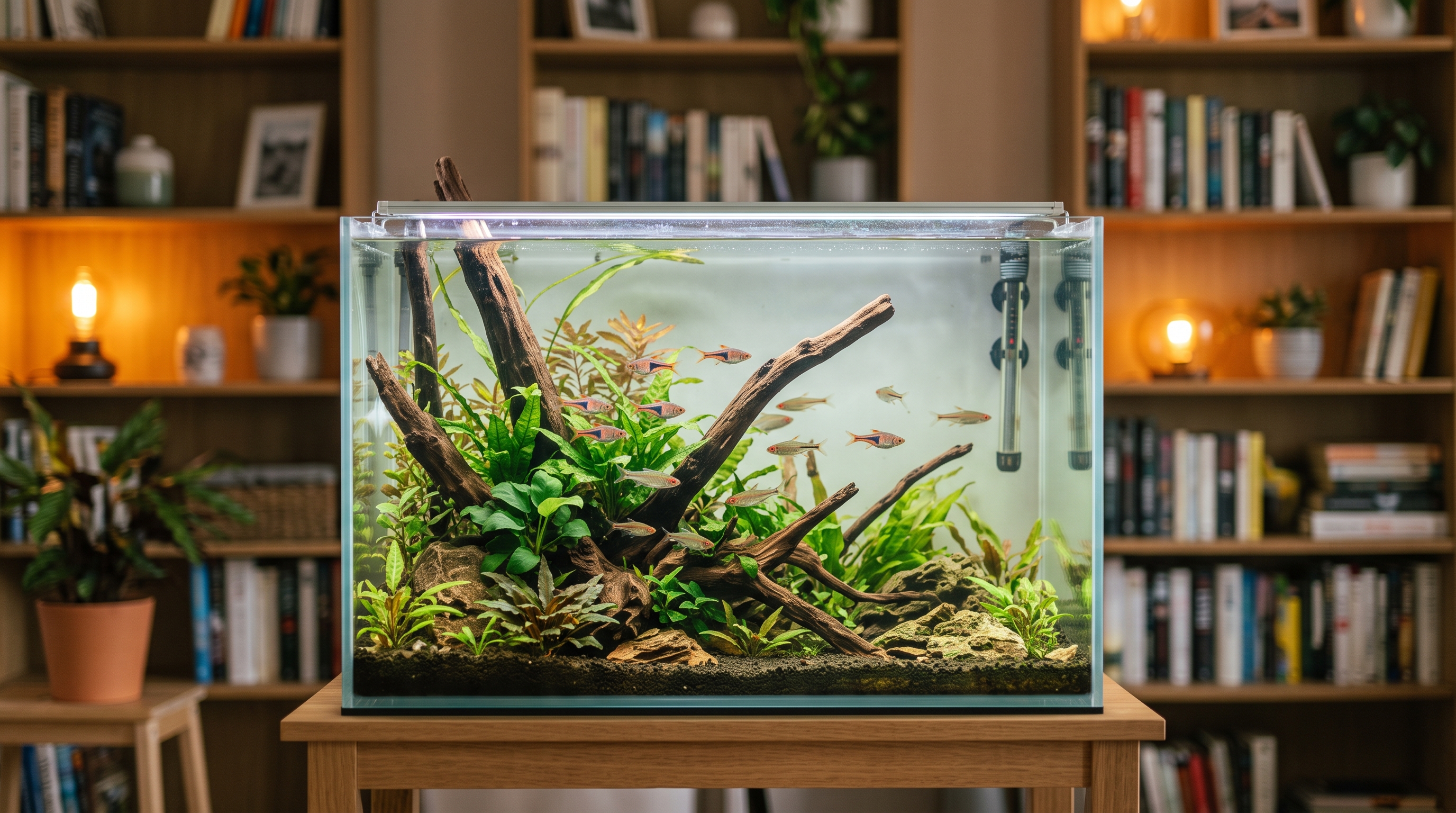
The second question is what changed in the last two or three days. Not just what you did to the tank. What happened around it. Some possibilities to run through:
- A water change or substrate vacuum
- Cleaning or replacing filter media
- Adding fish, plants, driftwood, or botanicals
- Fertilizer, medication, or any product added to the water
- New lighting, longer photoperiod, or new sunlight exposure
- A power interruption or heater issue
- Heavier feeding, or a chance that someone else in the house fed the tank
- A fish, shrimp, snail, or other aquarium animal that may have died somewhere out of sight
The trigger is often the diagnosis. Cloudiness that appeared within minutes of a water change is a very different problem from cloudiness that developed over five days after adding new wood. Timing narrows the possibilities faster than staring at the tank does.
What Kind of Cloudy Is It?
Use this table as a starting point. Find the description that most closely matches your water, then read the related section below.
| What the water looks like | Most likely category | What to check next |
|---|---|---|
| Milky, uniform, no color cast | Bacterial bloom, dust, microbubbles, or mineral haze | When it started and what preceded it |
| Green tint, reduced visibility | Suspended algae (green water) | Light exposure and photoperiod |
| Brown or amber, still transparent | Dissolved tannins from wood or botanicals | What was recently added |
| Brown and hazy at the same time | Disturbed substrate or detritus, sometimes plus tannins | What was disturbed |
| Clear water with visible drifting specks | Detritus, plant debris, or filter capacity | Mechanical filtration and flow |
| Sparkling with tiny bubbles on glass and leaves | Dissolved gas (microbubbles) | Whether it clears within the hour |
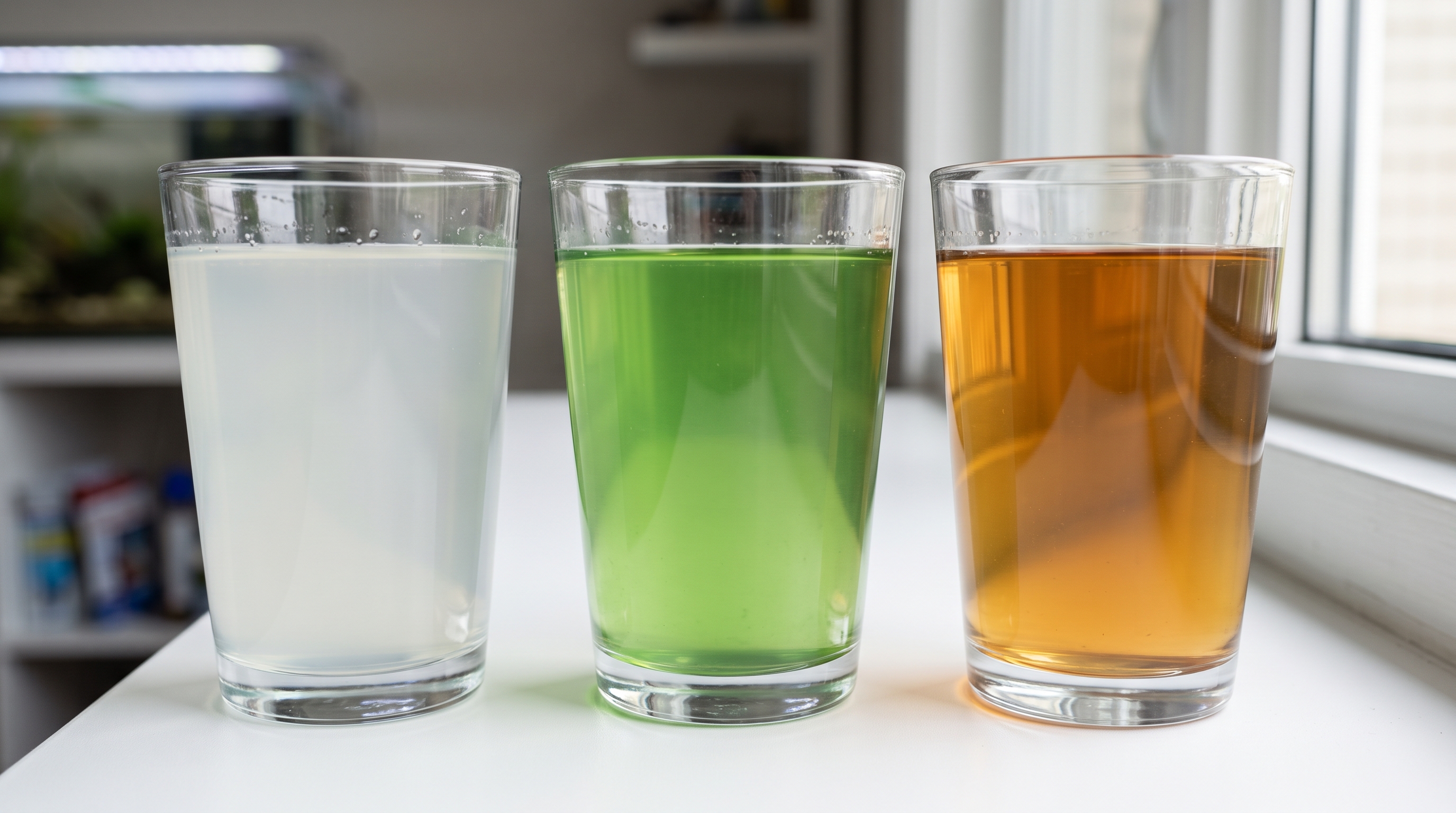
One test is worth mentioning before we go further because it separates most of these categories in under a minute. Fill a clear glass with tank water, set it against white paper in daylight, and look. Green shows green. Amber shows amber. Milky stays milky. Microbubbles clear from the top downward within an hour. Fine particulate settles overnight. It costs nothing and it works.
White or Milky Water
White cloudiness is the most misread appearance in the hobby, largely because "bacterial bloom" gets used as a default explanation for anything hazy and not-green. It's often right. It's often not. There are four common causes and they need different responses.
The first is an actual bacterial bloom. The white haze hobbyists call a bloom is a fast-growing population of bacteria feeding on dissolved organic material in the water. These are not your nitrifying bacteria floating around the tank. Nitrifiers grow slowly and live on surfaces — inside your filter, on the substrate, on the glass. A bloom is a different, faster-growing group that responds quickly whenever there's an organic food source available: a new tank leaching material from substrate, plant melt, a heavier-than-usual meal, or something decaying somewhere. Blooms are usually self-limiting; they exhaust their food supply and clear on their own, typically over days to a couple of weeks. The bacteria themselves are essentially harmless. Their oxygen demand can matter in a warm, heavily stocked, or poorly circulated tank, which is why aeration is the one intervention that consistently helps.
If you want the longer answer, read our full guide to aquarium bacterial blooms.
The second cause is substrate or mineral dust. New sand, unrinsed gravel, aquasoils that have been disturbed, and calcareous substrates like crushed coral all shed fine particles that a filter without a fine polishing stage will simply move around the tank. This kind of cloudiness settles overnight in a still glass. A real bloom doesn't.
The third is microbubbles. Cold tap water is under pressure and carries more dissolved gas than the tank can hold at room temperature. After a water change, that gas comes back out of solution as a mist of very fine bubbles that reads as milkiness. It clears from the top of a glass within an hour. If a canister filter has an air leak on the suction side, the same appearance can be persistent — a real thing to check if it doesn't clear on its own.
The fourth possibility is mineral precipitation, which may appear within minutes or a few hours of adding something to the aquarium. This happens when minerals or ingredients from different products react with one another and form tiny solid particles instead of remaining dissolved in the water. The result can look like a chalky white haze.
This is more likely when several products are added close together, particularly in hard water, or when multiple pH-adjusting products are used in an attempt to quickly change the water chemistry. A strong clue is that the haze appeared shortly after dosing. If that happens, stop adding products, check the instructions for anything you recently used, and give the filter time to collect the particles. A partial water change may also help if the haze persists. Avoid adding more chemicals to correct it, since sudden changes in pH or mineral levels can be more concerning than the cloudiness itself.
Green Water
Green water is the easiest cloudy-water category to diagnose because green is green. What you're looking at is a suspension of microscopic single-celled algae, and it's a completely different thing from the green film that grows on glass and hardscape. Both are algae. They live in different places, respond to different treatments, and shouldn't be confused.
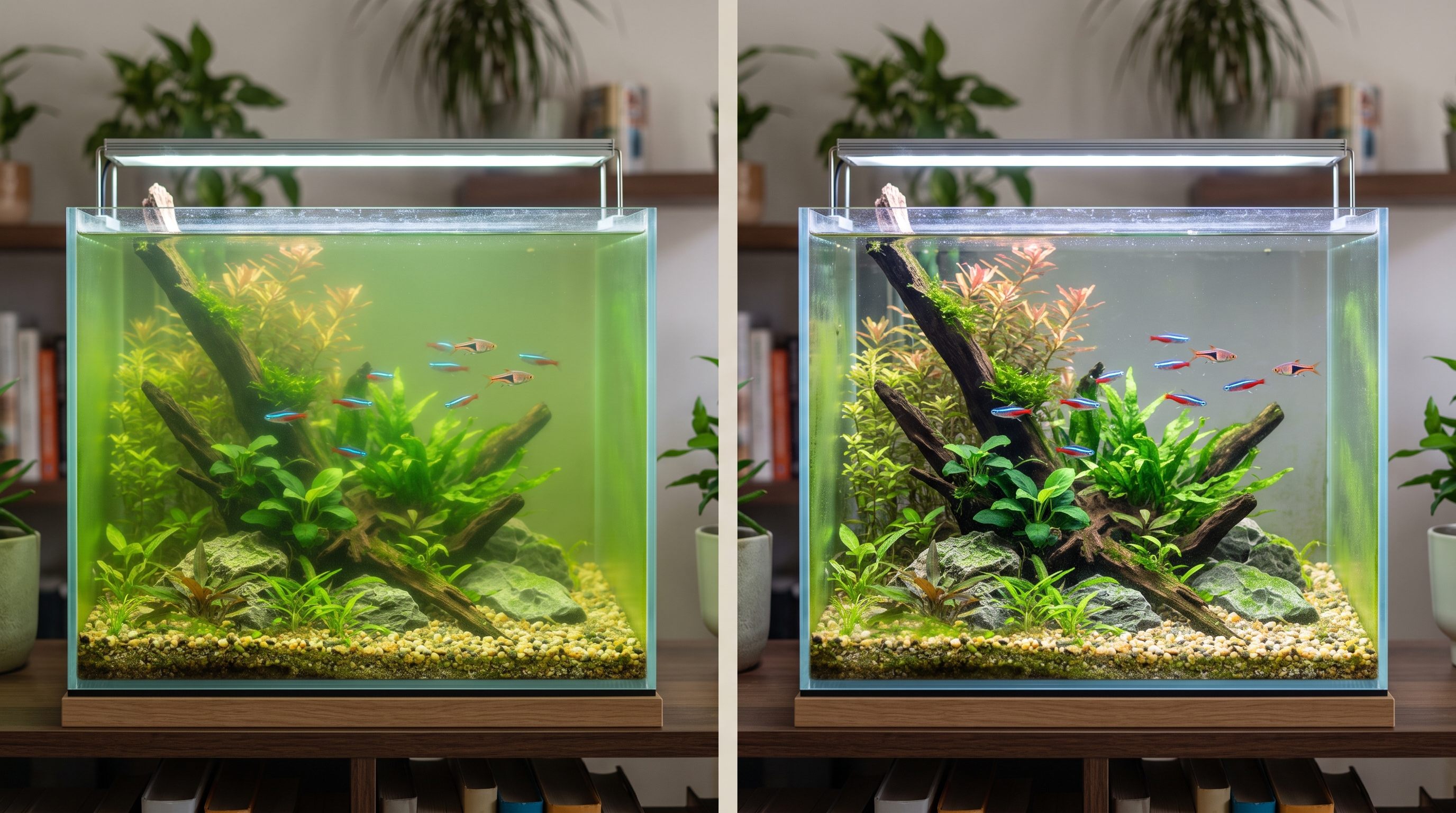
Green water always comes down to a mismatch between available light and what the plants and other organisms in the tank are taking up. Something on the light side of that equation almost always changed: a new light fixture, a longer photoperiod, direct or reflected sunlight from a window, a seasonal shift in the sun's angle, or a drop in plant uptake because plants are struggling. Nutrients matter too, but light is usually the trigger and it's the variable most under your control.
It's worth knowing that green water isn't dangerous in the way people sometimes assume. Some fishkeepers even grow green water on purpose because it can help feed newly hatched fish and the tiny organisms they eat. The real concerns are the daily oxygen swing in a very dense bloom, the loss of visibility so you can't monitor your fish, and the oxygen crash that can follow a sudden die-off — which is why chemically killing a heavy bloom is a bad first move. Fixing the conditions that produced it works better.
If green water is what you're dealing with, our guide to green aquarium water walks through the treatment options in order.
Brown, Yellow, or Tea-Colored Water
If the water is amber or brown but you can still see the back of the tank sharply, you're almost certainly looking at dissolved tannins and other humic substances leaching from driftwood, botanicals, leaf litter, or a soil-based substrate. This is dissolved coloration, not suspended particles. Nothing is floating in the water. The water itself has taken on a color.
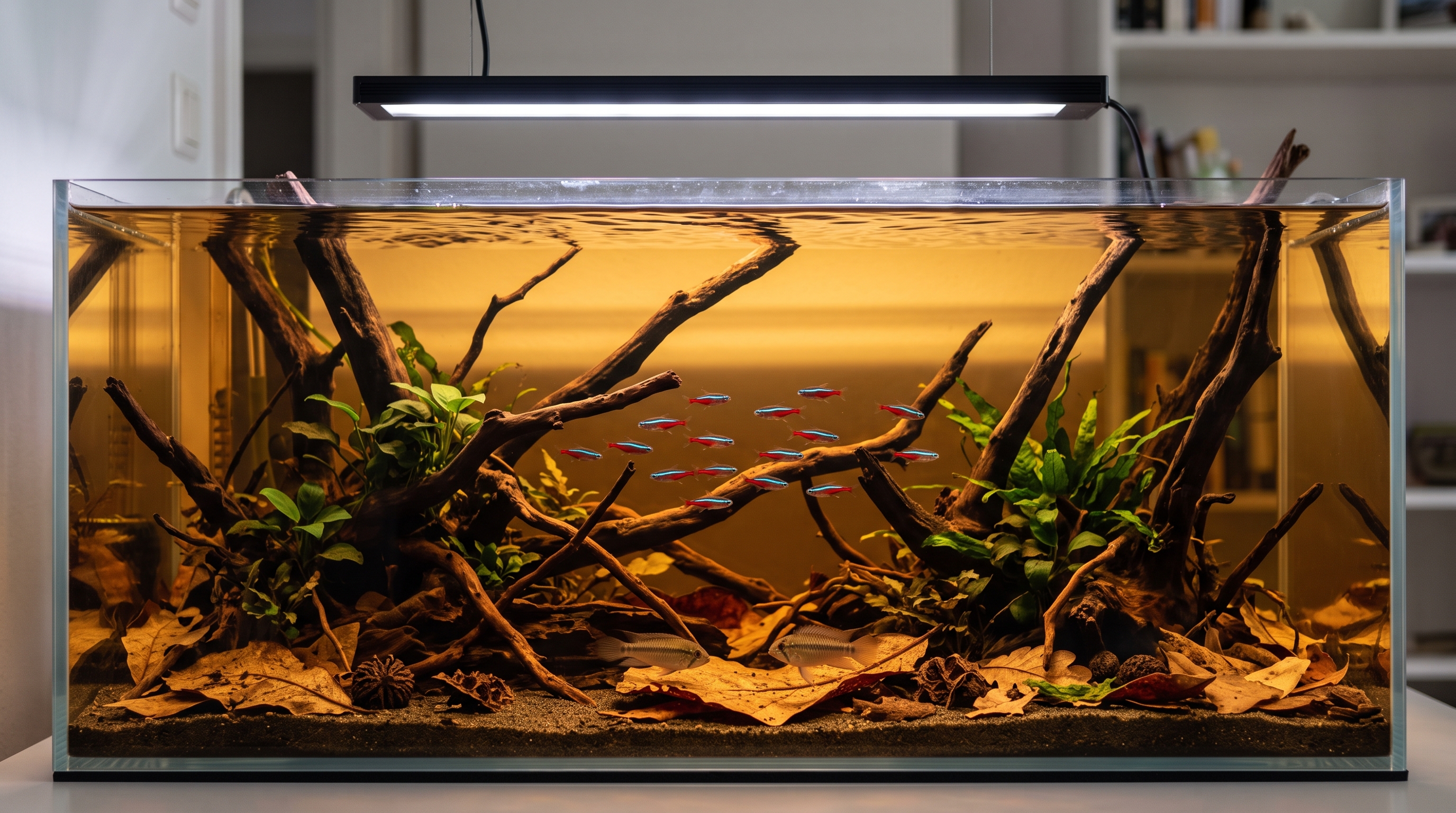
Whether that's a problem is a question worth asking honestly. For a substantial number of commonly kept species — including many tetras, rasboras, apistogramma, and other dwarf cichlids — tannin-stained water is closer to their natural habitat than crystal-clear water is.
Research suggests that humic substances can affect fish and water chemistry, but those effects vary depending on the species and the aquarium. Because of that, broad claims that tannins always boost immunity — or that they are generally harmful — should be treated cautiously. Tannins are a normal part of many freshwater habitats and are not automatically a problem. For most aquariums, whether to remove them comes down to the species being kept and whether you like the appearance, although their effects on water chemistry may be more noticeable in very soft water.
If the amber color isn't the look you want, water changes, activated carbon, and Seachem Purigen can all help reduce it. Our full guide to Seachem Purigen → explains how it works and when it may be useful in an aquarium.
If the water is brown and hazy at the same time, that's a different situation — you have both dissolved color and suspended particulate, usually from disturbed substrate or the same wood also feeding a bacterial response. Our full tannins article covers the aesthetic-versus-problem question in more depth.
Visible Particles and Dust
Water that stays clear but has drifting specks in it is a filtration and circulation question more than a water-quality question. The particles are large enough to see individually, which means they're large enough that a fine mechanical stage — floss, a polishing pad, a fine filter foam — can capture them.
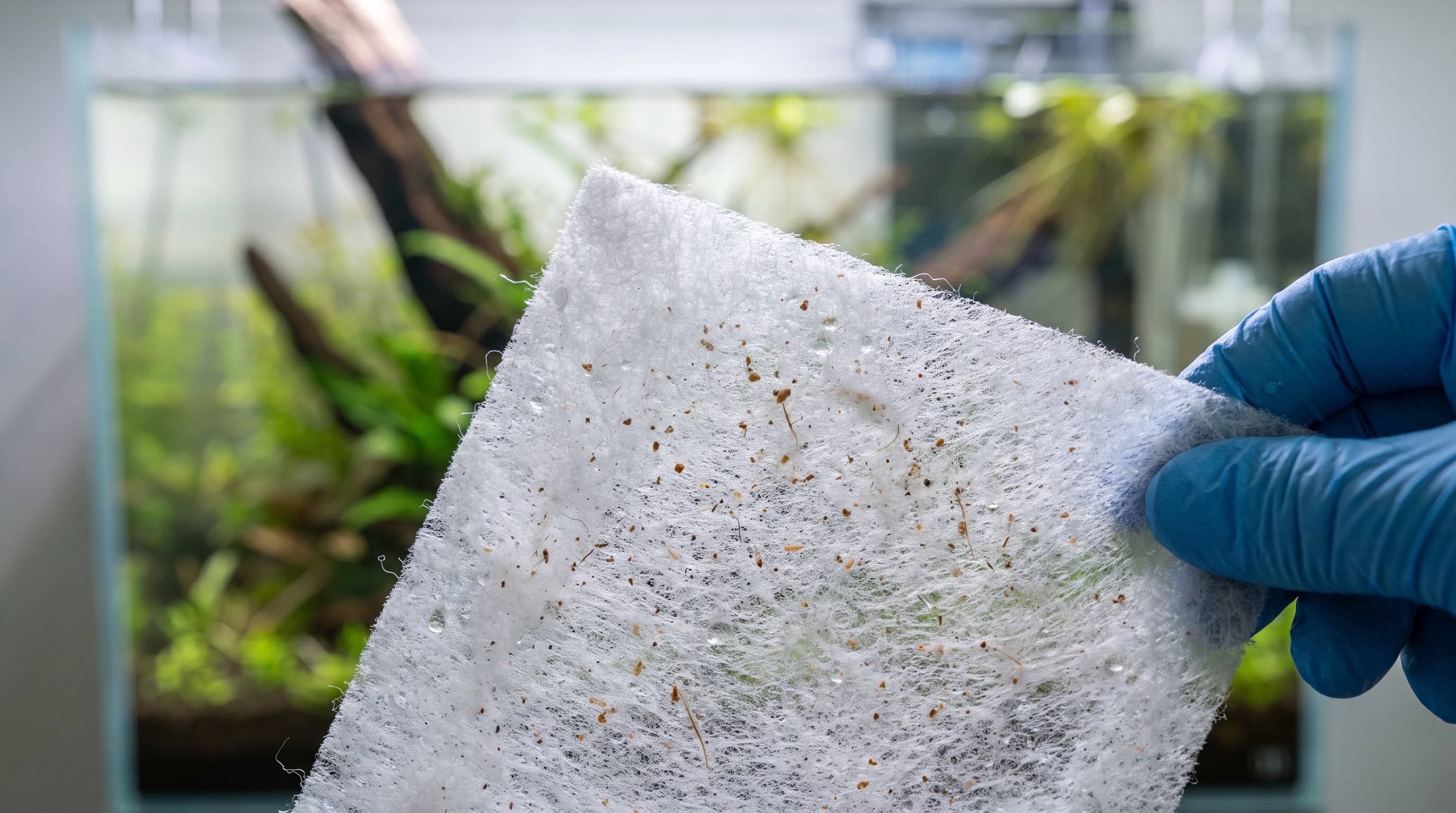
The usual causes are detritus that's been kicked up by rearranging or vacuuming, plant fragments after pruning, uneaten food, or biofilm that has sloughed off surfaces. If your filter has declined in flow, or if it has no fine mechanical stage, this material has nowhere to go and it just circulates. Restoring flow, adding a fine polishing layer, and siphoning out the accumulation zones during a normal water change usually resolves it. The particles that stay suspended for days are the smaller ones — bacteria and single-celled algae — and those aren't in this category.
Is Cloudy Water Dangerous?
Usually not, at least not directly. The bacteria in a bloom aren't attacking your fish. Green water isn't toxic. Tannins aren't a health risk for the species most commonly kept in stained water. Substrate dust and microbubbles are cosmetic.
The realistic harm pathways are indirect, and they're worth naming so you know what to actually watch for. A very dense population of bacteria or algae exerts a real oxygen demand, particularly overnight and especially in warm, heavily stocked, or poorly circulated tanks. A large algae die-off can crash the oxygen level suddenly. A cloudy tank that also has measurable ammonia or nitrite is a different situation entirely — the fish are being exposed to genuinely toxic compounds, and the appearance is a side effect rather than the problem. A fish, shrimp, snail, or other aquarium animal that has died behind hardscape, beneath plants, or inside a filter compartment may contribute to both cloudy water and an ammonia reading.
This is why fish behavior tells you more about danger than water appearance does. Fish that are feeding, using the full water column, and breathing normally are not in acute distress, regardless of how the water looks. Fish that are gasping at the surface, crowded at the outflow, or breathing rapidly need attention right now, regardless of whether the water is crystal clear.
Which brings up one of the most consequential misconceptions in the hobby: clear water is not the same thing as healthy water. Ammonia, nitrite, chlorine, chloramine, copper, low dissolved oxygen, the wrong temperature — all invisible. Cloudy water is easy to notice and easy to worry about. The truly harmful conditions often aren't visible at all.
Should I Do a Water Change If My Aquarium Is Cloudy?
The honest answer is that it depends on the cause and on whether livestock are present. That's not a dodge; it's actually the useful answer, because the sweeping rules ("always do a water change," "never change water during a bloom") are both wrong as universal rules.
If the tank is stocked and you're seeing measurable ammonia or nitrite, or the fish look stressed, a conservative water change with temperature-matched and dechlorinated water is the right move and it doesn't need to wait for a diagnosis. That's dilution of something toxic, and it's what water changes do best.
If the cloudiness is from substrate dust, detritus, or dissolved color, water changes help mechanically and there's no reason to avoid them.
If the tank is a new fishless setup running through its cycle and the cloudiness is a bloom, a water change is optional. It won't hurt anything if done properly, and it may slightly extend the process.
If the tank has green water, water changes won't resolve it — the population regrows. You have to address light and competition.
A properly conducted water change is rarely harmful. Where the argument against them applies, it's a narrower situation than it's often made out to be.
When Doing Nothing Is the Right Answer
This is worth stating clearly because the hobby has a strong bias toward action, and doing nothing in the right situations is often the actively better choice — not just an acceptable one.
Some categories where patience wins:
- A bacterial bloom in a fishless cycling tank
- A bloom in a stocked tank where ammonia and nitrite read zero and the fish are behaving normally
- Substrate fines in the first days of a new setup
- Microbubbles after a water change
- Amber tannin coloration in a tank with wood or botanicals
- The white biofilm that develops on new driftwood
- Brown diatom film in a tank under three months old
In many of these situations, the cloudiness may resolve on its own or simply be part of a new aquarium settling in. Adding several treatments or making repeated changes can introduce new variables and make it harder to tell whether the original problem was improving. If the fish are behaving normally and ammonia and nitrite remain at safe levels, giving the aquarium some time may be the most appropriate response.
When to Take It More Seriously
The short list of situations that do warrant a quicker response:
- Any fish showing respiratory distress or abnormal behavior
- Measurable ammonia or nitrite with livestock present
- A strong foul or sulphurous smell, which usually means significant decay
- A missing fish, shrimp, snail, or other aquarium animal that may have died somewhere in the tank
- Sudden onset of dense green water collapsing to grey or brown
- Cloudiness following a chemical addition, especially medications or algaecides
- Cloudiness after filter media was replaced in a stocked tank
The response in most of these situations is the same core set of steps: increase surface aeration immediately, do a conservative dechlorinated water change, locate and remove any decaying material, stop feeding for a day, and leave the filter alone. Testing ammonia and nitrite is what tells you whether the situation is stabilizing.
Diagnose Before You Treat
If there's one idea to remember, it's this: cloudy water is a clue. The right response depends on what caused it. That's why one cloudy-water treatment may work in one aquarium and do nothing in another — the tanks may look similar while having completely different causes.
Before you buy anything or change anything, spend a minute on the two questions at the top of this guide: how are the fish behaving, and what changed recently. Do the glass-of-water test in daylight. Match what you're seeing to a category. Then decide whether it needs action at all, and if it does, choose the response that actually fits.
Most cloudy water resolves on its own or clears with one well-chosen change. The mistakes that turn a temporary situation into a persistent one almost always come from stacking interventions in the wrong order — replacing filter media, dosing multiple products, doing repeated large water changes, tearing down the tank. If you find yourself several steps in and nothing has helped, the most useful move is usually to stop for a week and let the tank tell you what it's doing.

Track water parameters, maintenance, and tank changes with our journals and guides.