What Is an Aquarium Bacterial Bloom?
The Tank Guide · A FishKeepingLifeCo publication — August 2026
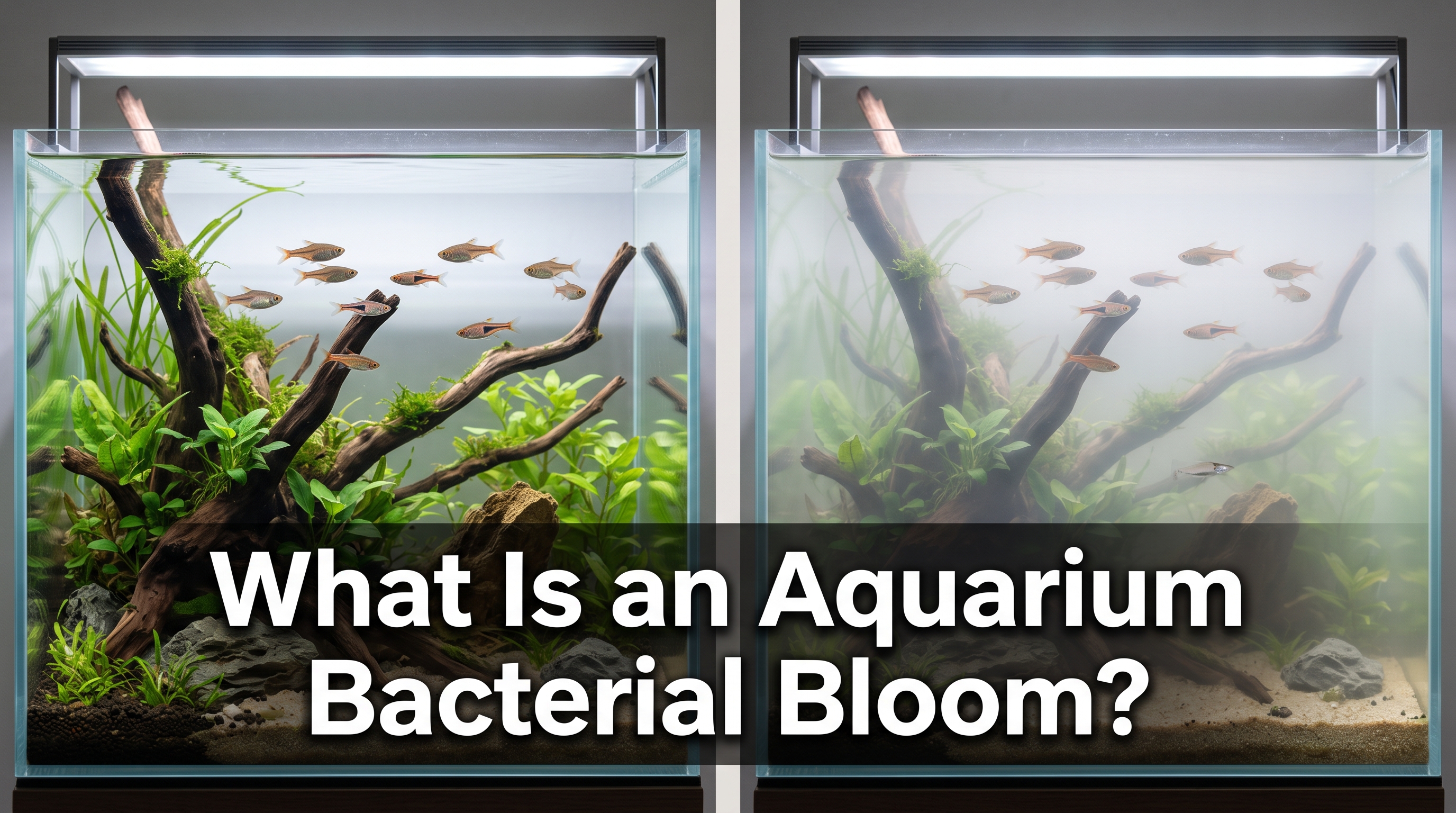
If your aquarium suddenly looks milky or has a soft white haze that wasn't there yesterday, there's a good chance someone has already told you it's a bacterial bloom. That's often right. It's also one of the more misunderstood things in the hobby, and the misunderstanding sometimes leads people toward the actions that make it harder to resolve.
A bacterial bloom is usually a temporary increase in a specific group of bacteria that live suspended in the water. They aren't the same bacteria that run your nitrogen cycle, and they usually aren't a sign of a crisis. In most cases, they're a visible response to something in the tank that recently gave them more organic material to grow on. Understanding what's happening tends to point you toward a calmer, more useful response.
What a Bacterial Bloom Actually Is
The bacteria responsible for a bloom feed on dissolved organic material in the water — things like organic compounds released by new substrate, plant tissue breaking down, uneaten food, waste, or something decaying somewhere in the tank. When that food supply increases, this group of bacteria can reproduce quickly. They stay suspended in the water column, and when there are enough of them, they scatter light and the water starts to look hazy.
The important thing to understand is that these are not the same bacteria that keep your tank cycled. That distinction is the single biggest source of confusion around this topic.
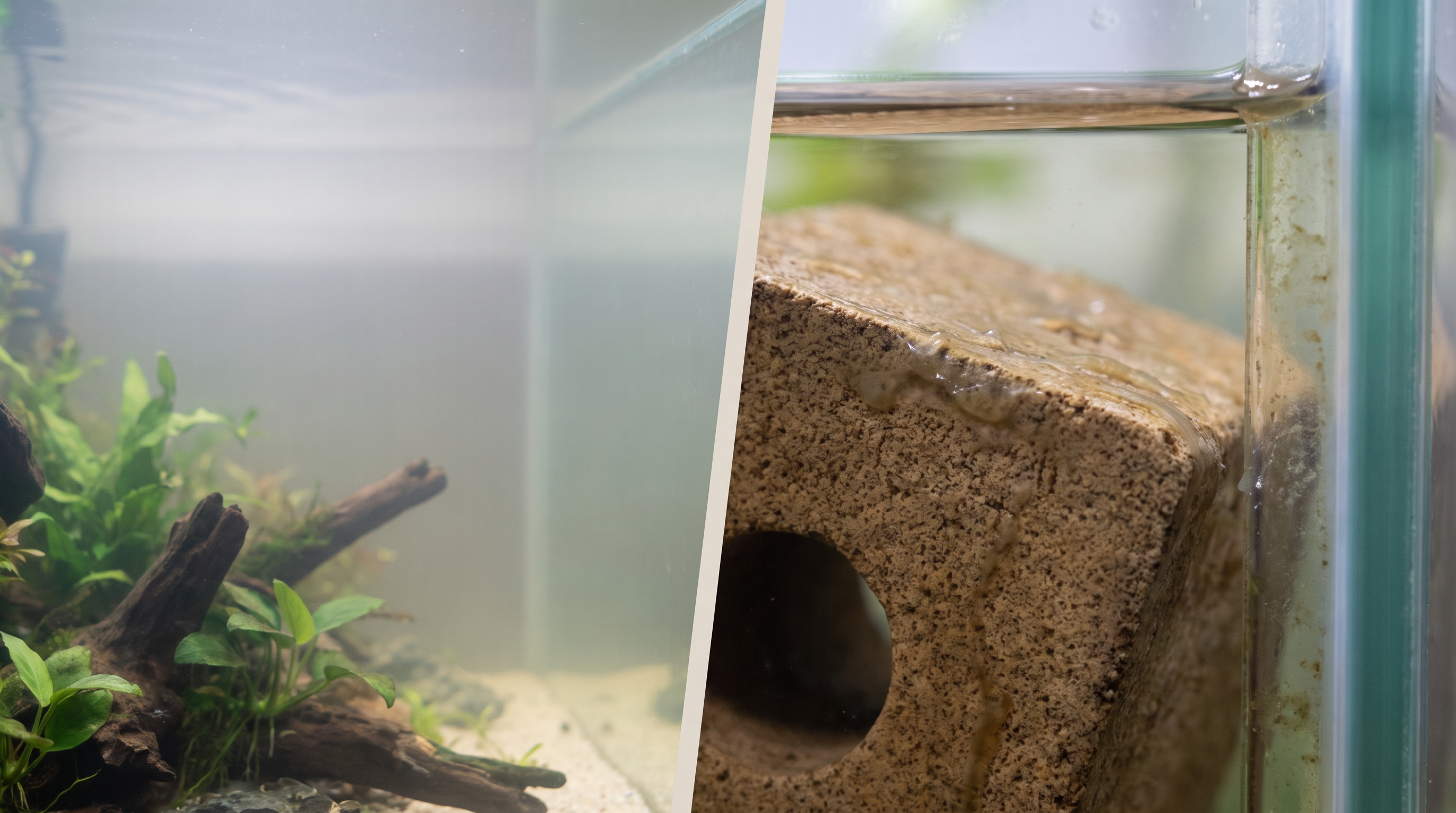
Your cycling bacteria — the ones that convert ammonia into nitrite and nitrite into nitrate — are a different group. They tend to grow slowly and live mostly attached to surfaces: filter media, substrate, glass, decorations, plant leaves. They don't usually float, and they don't cloud the water. Bloom bacteria are more often the opposite: faster-growing, suspended in the water column, and responding to organic material rather than to ammonia.
This distinction has practical consequences. Adding more bottled bacteria isn't usually a direct treatment for the visible cloudiness — those products have their place for helping to establish or support cycling, but they generally aren't a bloom fix. Aggressively cleaning or replacing filter media isn't a great response either. Those actions may have their own reasons, but they can reduce some of the tank's established biological filtration at a moment when the tank is already under load.
What Triggers a Bloom
Blooms don't usually happen randomly. Something has often given the bacteria a food source, and identifying what that was tends to point you toward what to do about it.
Some of the more common triggers:
- A new setup. New substrate, especially soil-based aquasoils, can release organic material for days or weeks. So can new driftwood. Blooms in the first two or three weeks of a new tank are common, and often part of the normal setup process rather than a sign that something is wrong.
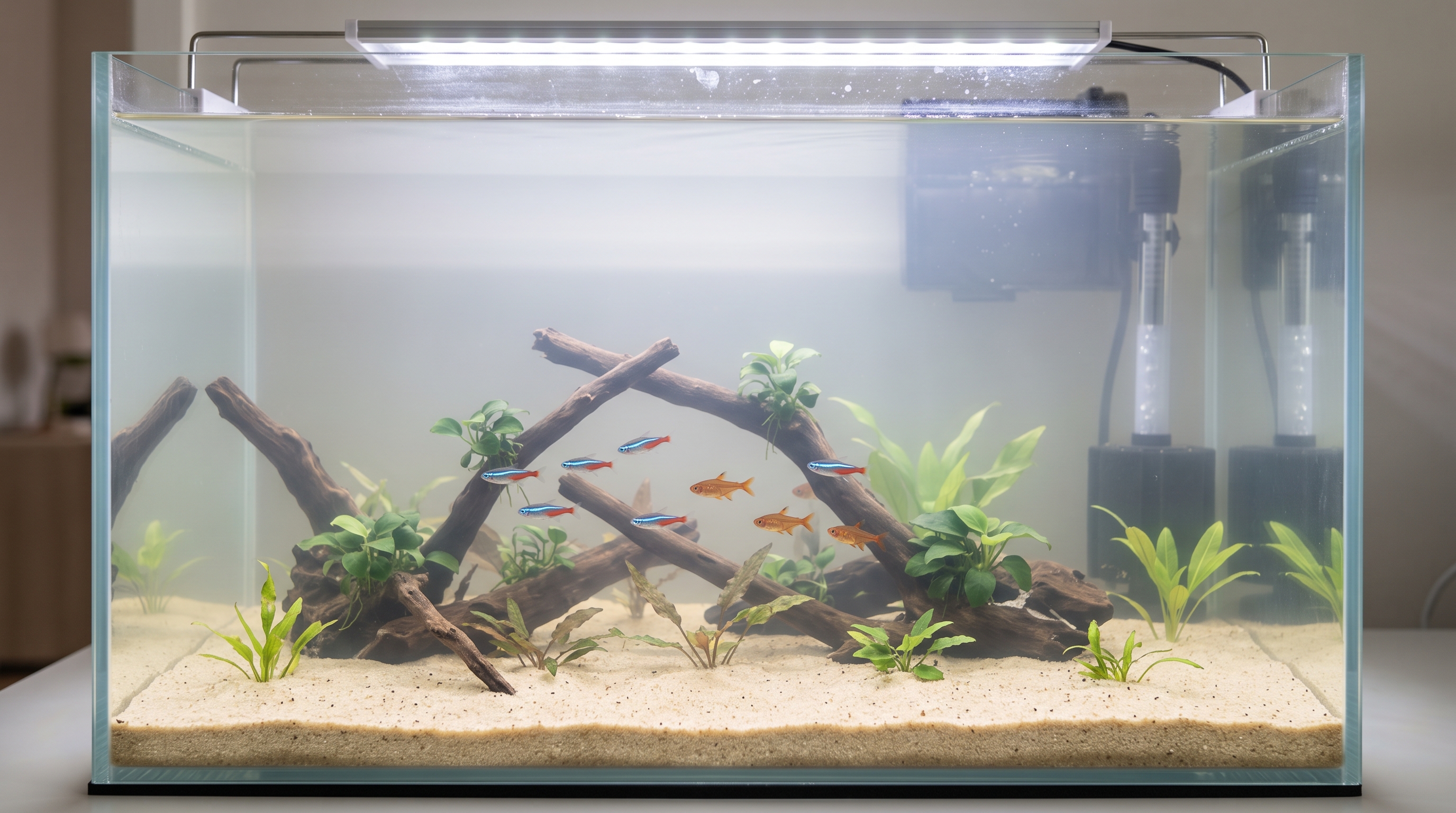
- Plant melt. Plants shipped from emersed growing conditions often shed some of their original leaves after being submerged. That decaying plant tissue is food for bloom bacteria, and new planted tanks often see a haze around days three to fourteen for this reason.
- A recent feeding event. Uneaten food is organic material, and heavier or missed feedings can produce a bloom over the following days. It's a real trigger, though it's also over-diagnosed — not every cloudy tank is an overfed tank.
- Filter disturbance. Aggressively cleaning the filter, rinsing media in tap water, or replacing a cartridge can reduce the surface-attached bacterial population. When that capacity drops, a suspended bacterial population sometimes fills the gap and a bloom appears a few days later. This one carries a real risk of ammonia and is worth testing for.
- Something decaying somewhere. A fish, shrimp, or snail that has died behind hardscape, beneath plants, or inside a filter compartment. A piece of food that ended up somewhere hidden. Deep substrate that was disturbed and released organic material. Anything that suddenly increases the food supply is on the list.
The single most useful troubleshooting question when a bloom appears is: what changed in the last two to five days? Not just what you did to the tank. What happened around it. The trigger is often the diagnosis.
Is a Bacterial Bloom Dangerous?
The bacteria themselves generally aren't dangerous. They don't tend to cause disease in fish, and the haze itself isn't toxic. Reading online, you can come away with the impression that a bloom is something to panic about, and it usually isn't.
The realistic concern is indirect and comes down to oxygen. A large population of any organism uses oxygen, and a dense bloom can measurably reduce the dissolved oxygen in the water. This matters more in some situations than others: warm water holds less oxygen to begin with, heavily stocked tanks have more competition for what's available, and tanks with weak surface movement have less gas exchange to replace it. A moderate bloom in a lightly stocked tank with good circulation is a very different situation from a heavy bloom in a warm, packed tank with a still surface.
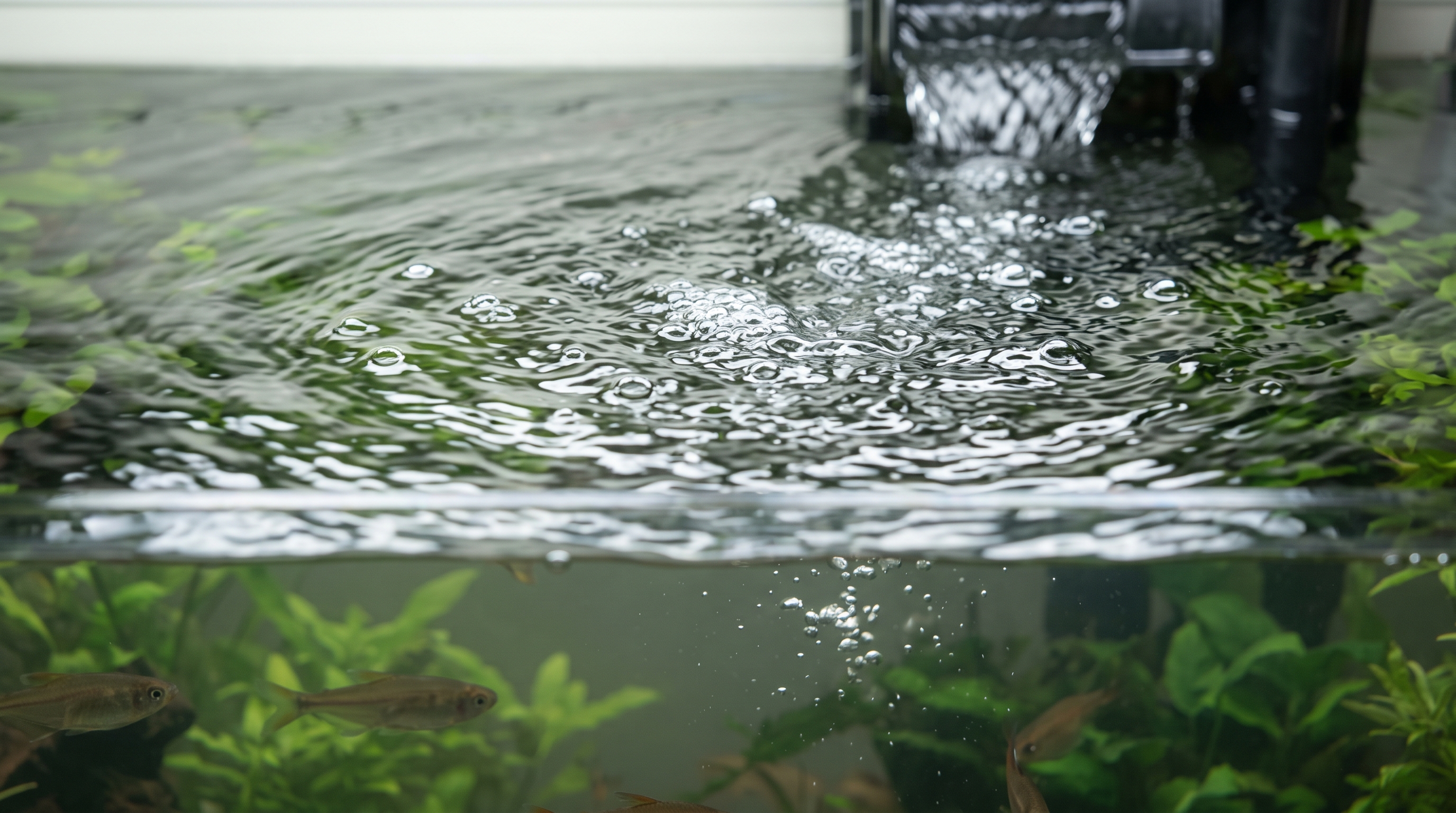
This is why the one intervention that tends to help across the board is increasing surface agitation. Raising the filter outflow so it breaks the surface, adding an air stone, or angling a powerhead upward all improve gas exchange. It costs nothing, it's unlikely to hurt anything, and it addresses the actual pathway rather than the appearance.
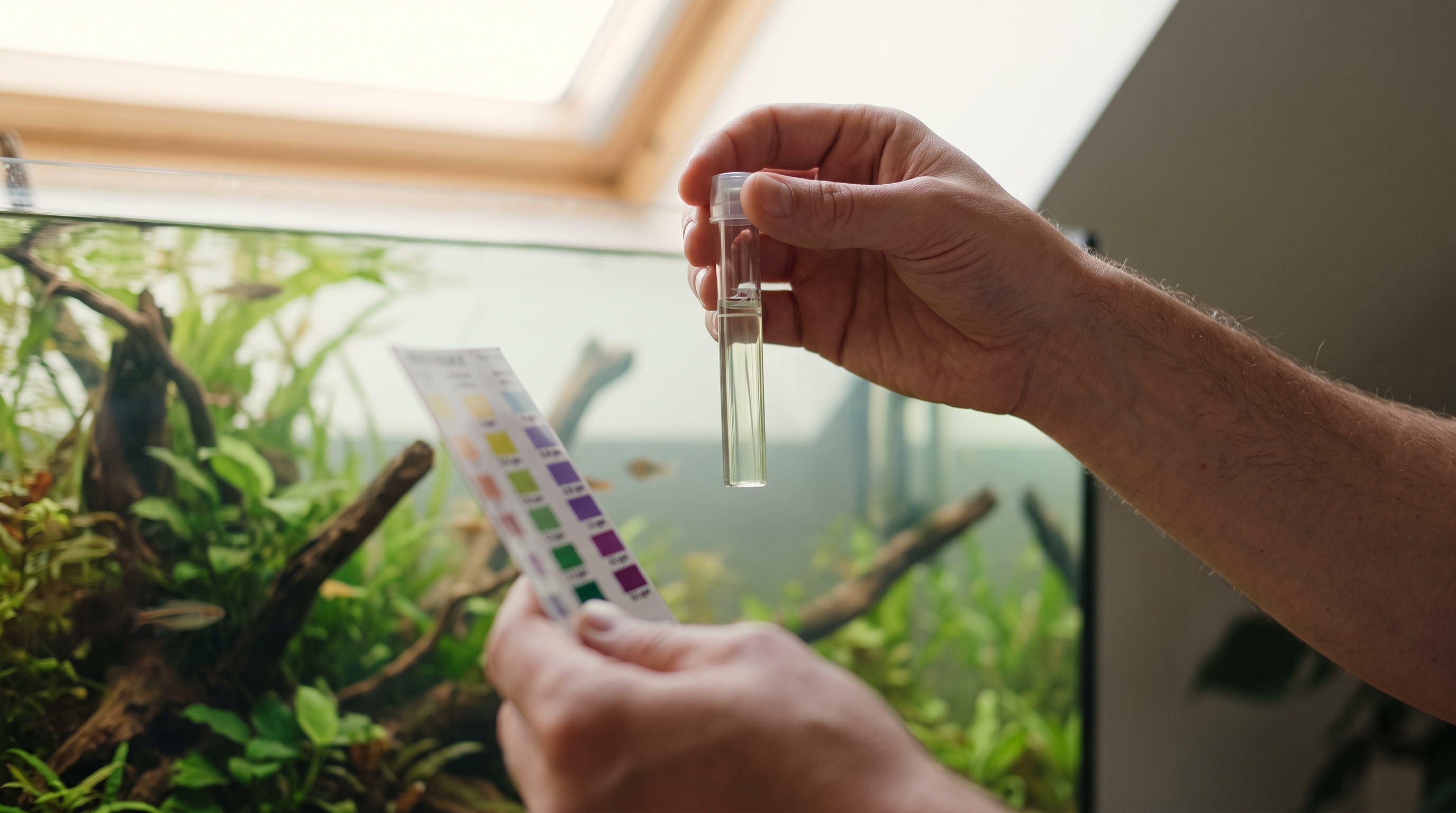
The other real concern isn't the bloom itself but what's happening alongside it. A bloom paired with measurable ammonia or nitrite, or with fish behaving abnormally, isn't really a bloom problem — it's a water quality problem that also has a bloom. If there are fish in the tank, test. If ammonia and nitrite read zero and the fish are behaving normally, the bloom is essentially cosmetic. If they don't, the numbers are the story and the haze is a side note.
How Long Does a Bacterial Bloom Last?
Honestly, nobody can give you an exact number, and any source that promises a specific timeline is guessing. The general pattern is fairly consistent, though: most blooms run from a few days to a couple of weeks and then clear on their own as the bacteria run out of food to consume.
What tends to make any individual bloom shorter or longer:
- How much organic material there is to feed on. A small trigger clears faster. A soil substrate releasing organic material for weeks keeps things going for weeks.
- Temperature. Warmer water usually speeds bacterial reproduction, both up and down. Blooms peak faster and clear faster.
- Whether the food source is still being added. A one-off event resolves quickly. Ongoing overfeeding or an unfound source of decay keeps supplying food.
- How mature the surface-attached bacterial community is. In an established tank, other microorganisms compete for the same organic material and often shorten the bloom.
- Circulation and oxygen. Well-oxygenated tanks tend to process organic material more efficiently.
The reason there's no clean answer is that all of those variables interact. What you can say confidently is that a bloom in an unstocked cycling tank at day three is rarely something to worry about, that a bloom lasting a few days after adding new driftwood is common, and that a bloom that's been going for three weeks without any change in character probably has an ongoing food source that hasn't been identified yet.
What to Actually Do About It
The right response depends on the situation, but the framework is short. Start by ruling out anything urgent: are the fish gasping, crowded at the filter outflow, or breathing rapidly? Are ammonia and nitrite reading zero? If either answer is a problem, deal with that first. If both are fine, the bloom is cosmetic and there's room to be patient.
Assuming there's nothing urgent, the useful moves:
- Increase surface agitation. Even a modest improvement to the surface break can make a real difference in dense blooms.
- Skip a feeding or two. Not for weeks, but reducing organic input while a bloom is running down is reasonable, and healthy adult fish tolerate a short fast without issue. Don't fast fry or small-bodied species.
- Find the trigger if you can. A fish, shrimp, or snail that may have died somewhere hidden in the aquarium. A clump of uneaten food that ended up out of sight. Deep substrate that got disturbed. New wood, new substrate. Removing the source is what actually shortens the bloom.
- Do a water change if the tank is stocked and something looks off. A conservative water change with temperature-matched and dechlorinated water is very rarely harmful and dilutes anything problematic. If the fish are fine and the tank is fishless, a water change is optional and can slightly extend the bloom by removing some of the substrate it's using.
- Wait. Blooms clear on their own in most cases. What tends to keep people in trouble is doing too many things while waiting.
A few things worth avoiding while a bloom is running:
- Try not to replace or aggressively clean filter media in response to the cloudiness. This is one of the more common responses that can make things worse, because it may reduce the cycling bacteria at a moment when the system is already under load. Routine gentle maintenance is fine; large-scale changes usually aren't the answer to the haze itself.
- Skip the reflexive dose of bottled bacteria. These products have legitimate uses for supporting cycling, but they're not usually a treatment for the visible bloom.
- Try not to add several products at once. Bottled bacteria, then a clarifier, then carbon, then something else — even if each one might do something, stacking them makes it impossible to tell what worked, and interactions between products can create their own issues.
- Think twice before using a clarifier as a first response. Clarifiers work by clumping fine particles so filtration can capture them. They can help with certain kinds of cloudiness but tend to have limited lasting effect on a bloom with an ongoing food source. Addressing the source is usually more effective.
If you're not sure whether what you're looking at is actually a bloom or something else, our main cloudy-water guide → walks through the differences between a bacterial bloom, substrate dust, microbubbles, and mineral precipitation — all of which can look similar.
Blooms in New Tanks vs Established Tanks
The same white haze can mean slightly different things depending on where the tank is in its life.
In a new tank, especially in the first two or three weeks, a bloom is common. New substrate is releasing organic material, plants are settling in, wood is leaching compounds, and the surface-attached microbial community is still building up. Food is plentiful and competition is limited. If the tank is fishless and cycling, this is generally part of the process, and the appropriate response is aeration and patience. If the tank is stocked, the same approach applies, with the added step of testing for ammonia and nitrite to make sure the cycling capacity is keeping up.
In an established tank that suddenly clouds up, the meaning shifts. Something changed, and the bloom is a signal that the organic load in the tank recently went up in some way. That could be a heavier feeding, a hidden dead fish, shrimp, or snail, disturbed substrate releasing material, a filter that's been quietly losing flow, new plants shedding leaves, or filter maintenance that reduced processing capacity. Finding what changed is usually where the real work is.
In both cases, the mistake tends to be treating the bloom as the thing to fix rather than the signal it's giving you.
The One Thing Worth Remembering
A bacterial bloom is usually a signal, not a crisis. It often tells you that something in the tank recently gave a fast-growing group of bacteria more to eat than they had before. Sometimes that's a new tank doing what new tanks do. Sometimes it's something in an established tank that's worth finding. Either way, the haze itself is usually temporary, and letting the tank work through it — while keeping an eye on the fish and the water — is often the most productive response.
If you're troubleshooting cloudy water more generally and you're not sure a bloom is what you're looking at, start with our main guide to cloudy aquarium water →. If the water is green, our green water guide → is the right next step. If it's amber or brown, our tannins guide → covers that.

Track water parameters, maintenance, and tank changes with our journals and guides.