Brown Aquarium Water and Tannins
The Tank Guide · A FishKeepingLifeCo publication — August 2026
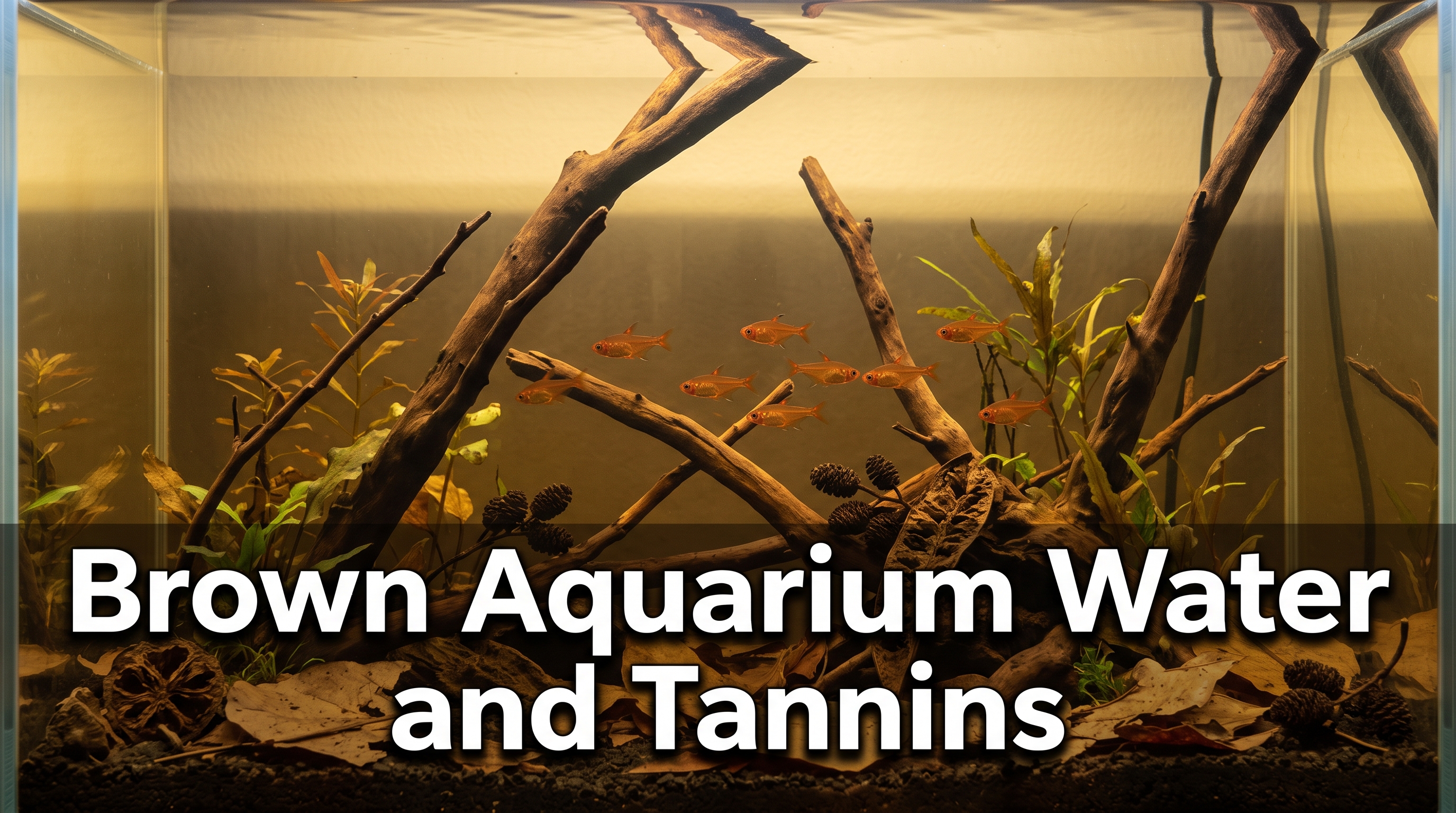
If your aquarium water has taken on an amber, tea-colored, or brown tint but you can still see through it clearly, you're most likely looking at tannins. It's one of the most common questions in the hobby and one of the ones with the most conflicting advice — some sources treat brown water as a water quality problem, others treat it as a natural feature to celebrate, and both camps tend to overstate their case.
The measured answer is somewhere in the middle. Tannins are a normal part of many freshwater habitats, they aren't automatically a problem, and whether you keep them or remove them is often more of a preference than a health decision. This article covers what tannins actually are, where they come from, how they affect the aquarium, and how to remove them if you'd rather have clearer water.
What Tannins Actually Are
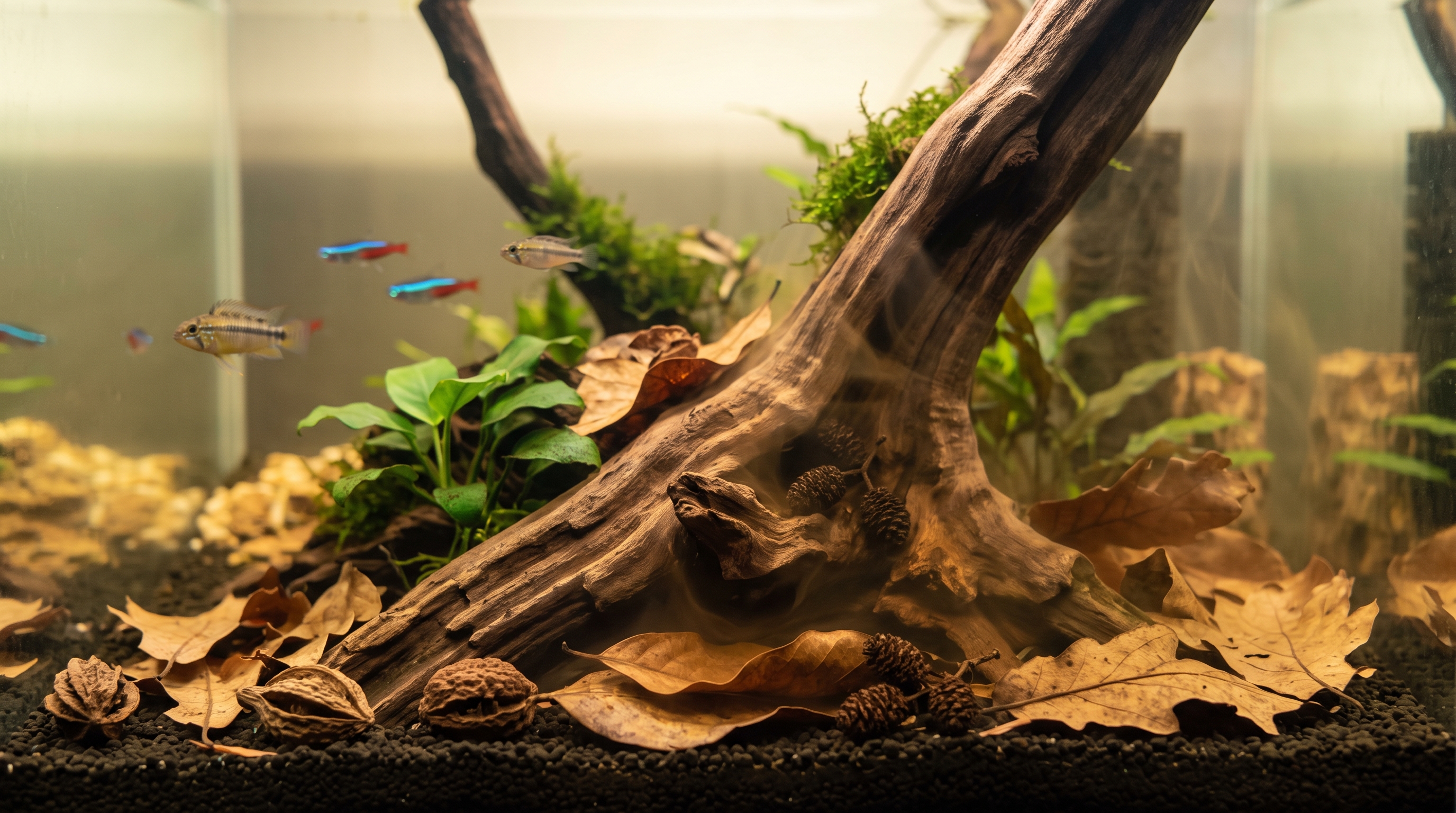
Tannins and other humic substances are dissolved organic compounds that leach out of plant material. In an aquarium, they come from driftwood, botanicals, leaf litter, seed pods, and soil-based substrates that contain organic matter. When water sits in contact with those materials, the compounds slowly release into the water and give it that characteristic amber or tea color.
The important word here is dissolved. Tannins aren't suspended particles — nothing is floating in the water, and the water itself has taken on a color. That's why tannin-stained water usually looks brown or amber but stays clear enough to see the back glass sharply. Water that's brown and hazy at the same time is a different situation, usually with a separate cause behind the haze. Our main cloudy-water guide → covers how to sort that out.
Where Tannins Come From
The most common sources in an aquarium:
- Driftwood. New wood usually releases the most, sometimes heavily for the first few weeks and then tapering off over months. Different types leach at very different rates — spider wood, malaysian driftwood, and mopani are known for producing a lot of color, while manzanita tends to release less.
- Botanicals. Indian almond leaves, catappa bark, alder cones, oak leaves, seed pods, and similar items are often added specifically for their tannin release.
- Leaf litter. Leaves continue releasing tannins as they break down.
- Soil-based substrates. Many aquasoils contain organic material and can release humic compounds, especially in their first weeks.
- Peat and peat-based products. Sometimes used specifically to soften water and add tannins.
If your water recently turned amber, thinking about what was added or is still leaching usually leads to the answer.
Are Tannins Bad for Fish?
For many commonly kept aquarium species, tannin-stained water is closer to their natural habitat than crystal-clear water is. A large number of tetras, rasboras, apistogramma, chocolate gouramis, licorice gouramis, and other blackwater and soft-water species come from environments where the water is naturally stained by fallen leaves and wood.
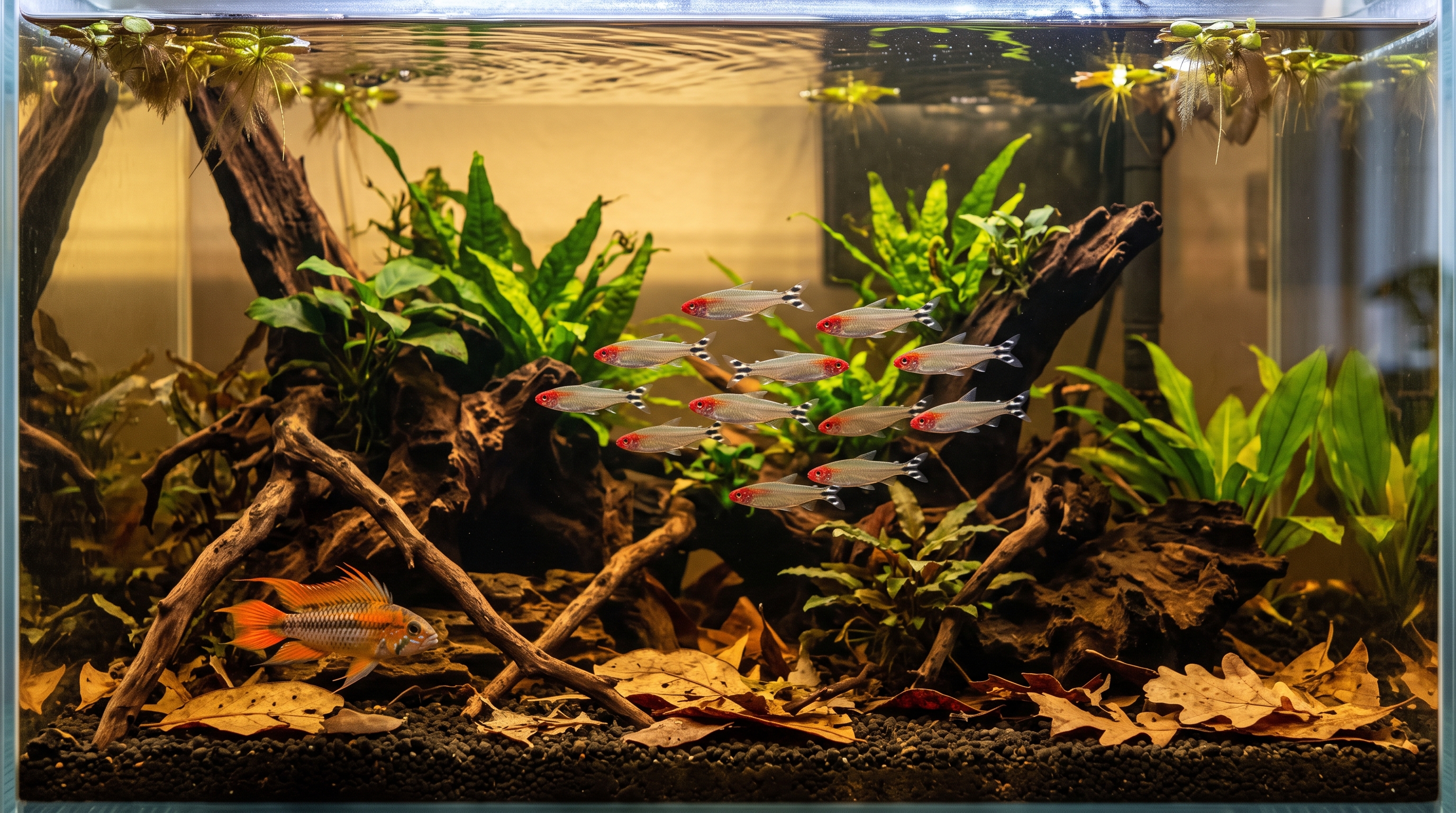
That said, the honest answer is more nuanced than "tannins are good" or "tannins are bad." Research suggests that humic substances can affect fish and water chemistry in various ways, and those effects depend on the species, the concentration, and the specific tank. Some of the more enthusiastic claims — that tannins reliably boost fish immunity, cure diseases, or fundamentally change how fish handle stress — should be treated cautiously. The evidence isn't as clean as the marketing sometimes suggests.
For species that come from tannin-influenced water, the coloration is closer to their natural conditions. For species that come from clearer, harder water, tannins aren't likely to be harmful at typical concentrations, but they may not add anything meaningful either.
Tannins and Water Chemistry
The one area where tannins can have a real practical effect is water chemistry, particularly in soft water.
Tannins are mildly acidic. In water with meaningful carbonate hardness (KH), that buffering capacity resists changes in pH, and heavy botanical loading may barely move the pH at all. In soft water with little KH, the same amount of tannin release can lower pH noticeably. This isn't automatically a problem — many blackwater species prefer softer, more acidic water — but it's worth being aware of if you're keeping species that prefer harder or more alkaline conditions.
One thing worth understanding is that KH functions like a consumable reserve rather than a permanent lock on pH. In a soft-water tank with a lot of wood, botanicals, or leaves, ongoing tannin release can slowly deplete that buffering capacity over time. A tank that seemed stable for months may eventually start showing pH shifts as the reserve runs low. Not a reason to avoid botanicals — just a reason to keep an occasional eye on KH in soft-water setups with heavy botanical loads.
How to Remove Tannins
If the amber color isn't the look you're going for, there are a few options that work well.
Water changes. Straightforward dilution. Regular water changes will gradually reduce the color, and this is often enough for tanks where the tannin source has already released most of what it's going to release.
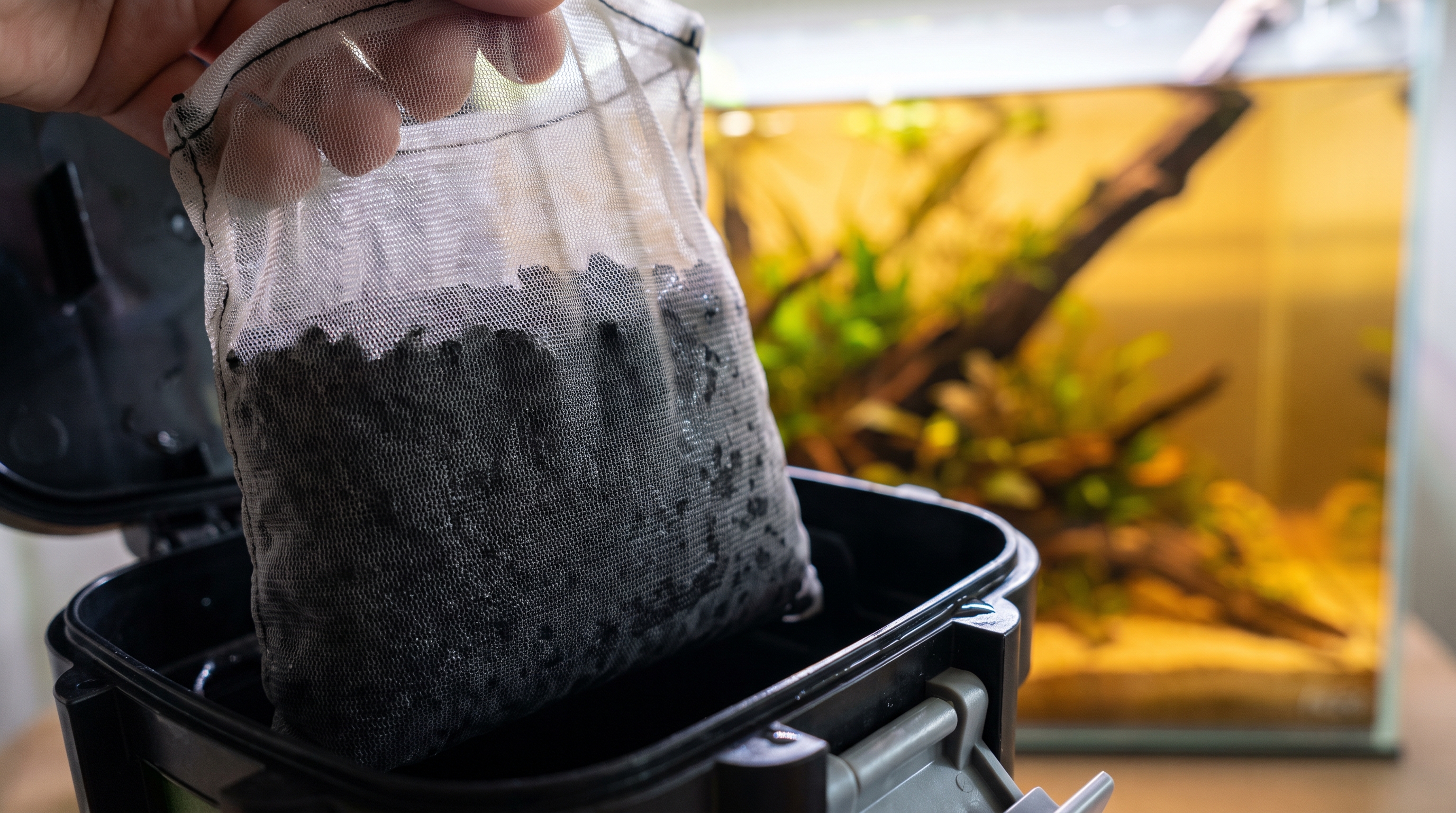
Activated carbon. Carbon adsorbs dissolved organic compounds, including the ones responsible for tannin coloration. It's effective and one of the more common tools used for this purpose. Like all chemical media, it has a finite capacity and eventually needs replacing.
Seachem Purigen. An adsorbent resin that removes organic compounds from the water. It has some advantages over carbon in that it can be regenerated with a bleach solution and tends to last longer between changes. Our full guide to Seachem Purigen → covers how it works, when it's useful, and how to regenerate it.
Pre-soaking or boiling wood before adding it. Soaking new driftwood in a bucket of water for a few weeks, or boiling smaller pieces, releases a significant portion of the tannins before the wood ever enters the tank. This doesn't eliminate future release but can substantially reduce the initial peak.
Removing the source. The most direct option. If a specific piece of wood or a batch of botanicals is producing more color than you want, removing or reducing them addresses the cause rather than the result.
Time. Most tannin sources release less as they age. New wood typically leaches heavily for the first few weeks and then tapers off over months. Botanicals and leaves release most of their tannins as they break down and then stop.
When Brown Water Actually Signals a Problem
For most tanks, amber water from wood or botanicals is cosmetic. A few situations are worth a closer look:
- The tank is brown and hazy at the same time. This usually points to suspended particulate on top of dissolved color, and the haze is worth diagnosing separately.
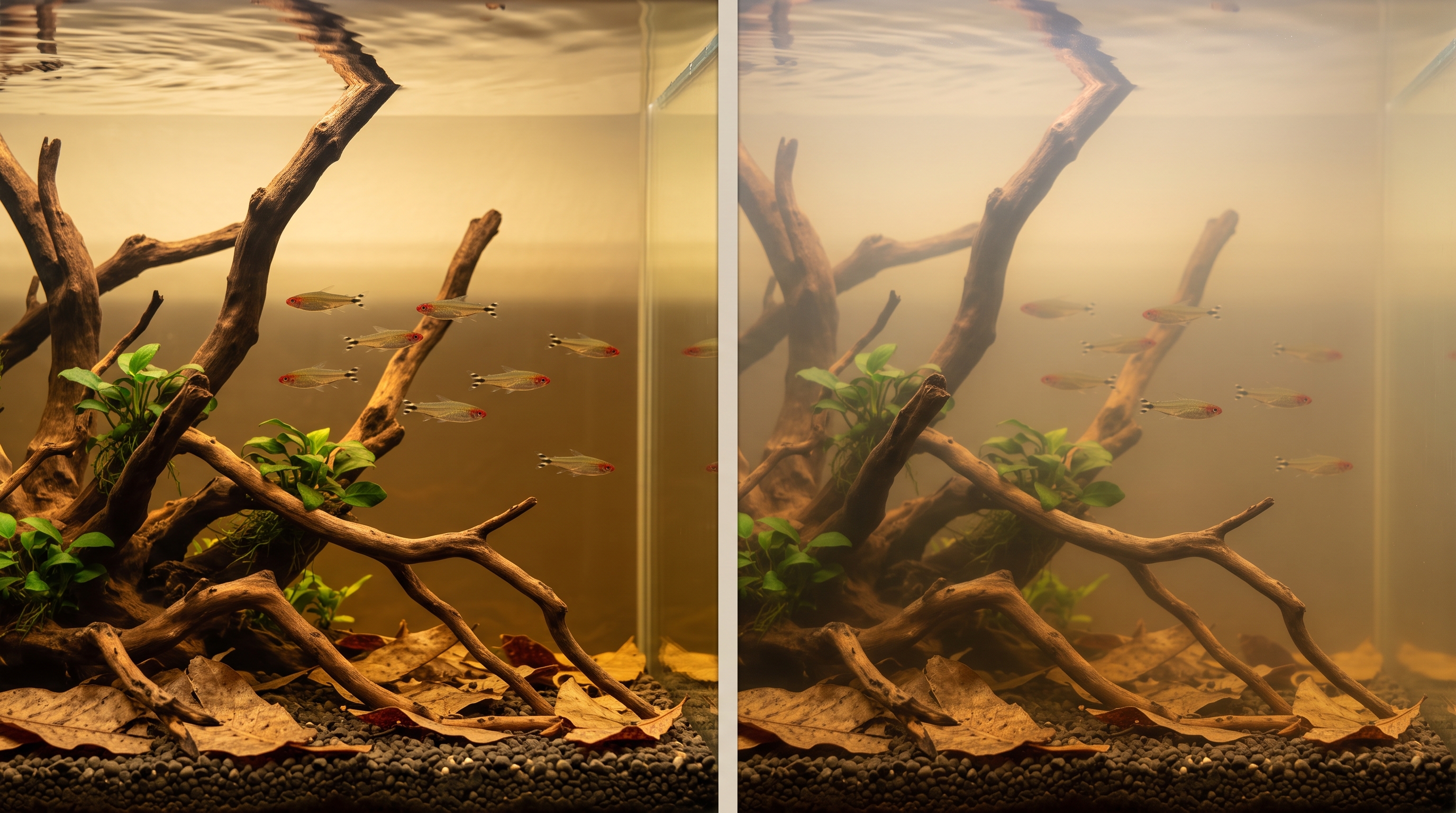
- Yellowing that appears in an established tank with no wood or botanicals. Without a clear tannin source, gradual yellowing over time can indicate accumulated dissolved organic matter, often from limited water changes. More consistent maintenance is usually the answer.
- A sudden strong color change with no addition. If the color deepened noticeably without adding anything new, existing wood or substrate may have been disturbed and released compounds that were trapped.
- The color is accompanied by a foul smell. Tannin-stained water has a distinct, generally mild odor. A strong foul or sulphurous smell isn't tannins and suggests decay somewhere.
In all of these cases, the color itself is the signal — what matters is what else is happening alongside it.
The One Thing Worth Remembering
Amber and brown water from tannins is usually a cosmetic question rather than a health question. Whether to keep the color, reduce it, or remove it entirely is mostly a matter of what looks right to you and what you're keeping.
The practical version: if you like the look and you're keeping species that come from tannin-influenced water, there's usually no need to do anything. If you'd rather have clearer water, carbon, Purigen, and water changes all work. If the water is brown and hazy at the same time, the haze is a separate question worth sorting out on its own.
If you're not sure tannins are what you're looking at, start with our main guide to cloudy aquarium water →. If the water is white or milky, our bacterial bloom guide → is the right next step. If it's green, our green water guide → covers that.

Track water parameters, maintenance, and tank changes with our journals and guides.