Chasing Crystal Clear Aquarium Water (And What Finally Worked)
You can — and it's easier than you think. Just a simple addition in the right place of your filtration setup can take your tank from clear… to showroom-level clarity.
The Tank Guide · A FishKeepingLifeCo publication | Part of the Life in Balance Ecosystem at TheTankGuide.com
Published · Updated

I wouldn’t say I ever thought of chemical filtration as cheating — it just wasn’t the route I was going. Back then, I was chasing what I called a “natural aquarium” — letting plants, sponges, and patience do all the work.
This is the story of how a simple tweak in my filtration setup changed everything — and finally gave me the kind of clarity I thought only existed in magazines. Purigen is an excellent alternative to carbon for aquarium filtration. For a complete overview of filter media options, see our filtration guide for beginners.
Why I Used to Avoid Chemical Filtration (My Stability Breakthrough)
Then I tried Seachem Stability, and it nudged me to rethink things. I hacked old hang-on-back filters so I didn’t have to keep buying disposable cartridges — I’d cut big filter sponges to size, rinse them out, and reuse them for months. The downside was that whenever I swapped or deep-cleaned them, random bacterial blooms followed. Once I started using Stability, that issue basically disappeared. Sometimes you really do need more than a sponge or a pothos vine — sometimes a little helper earns its spot.
The Turning Point: Searching for That Showroom Clarity
A while back, I watched a YouTube video by AQUAPROS titled “This is ACTUALLY The Method For Crazy Clear Aquarium Water...”. The creator didn’t drag it out — just a couple of minutes in, he said flat out, “It’s Purigen.” That stuck with me. Months later, I remembered it, wanted that same level of crystal clarity, and finally gave it a try.
Where Did I Place Purigen in the Filter?
My sump setup is simple: a 5-gallon chamber with layered sponges — coarse, medium, fine, and an ultra-fine polishing pad — followed by Purigen, then it goes to the freshwater refugium, where there are lava rocks, mosses, fast-growing floating plants, and finally the return pump. Purigen’s the polish — the final step in my mechanical filtration chain before the water moves on to the refugium and biological filtration stage.
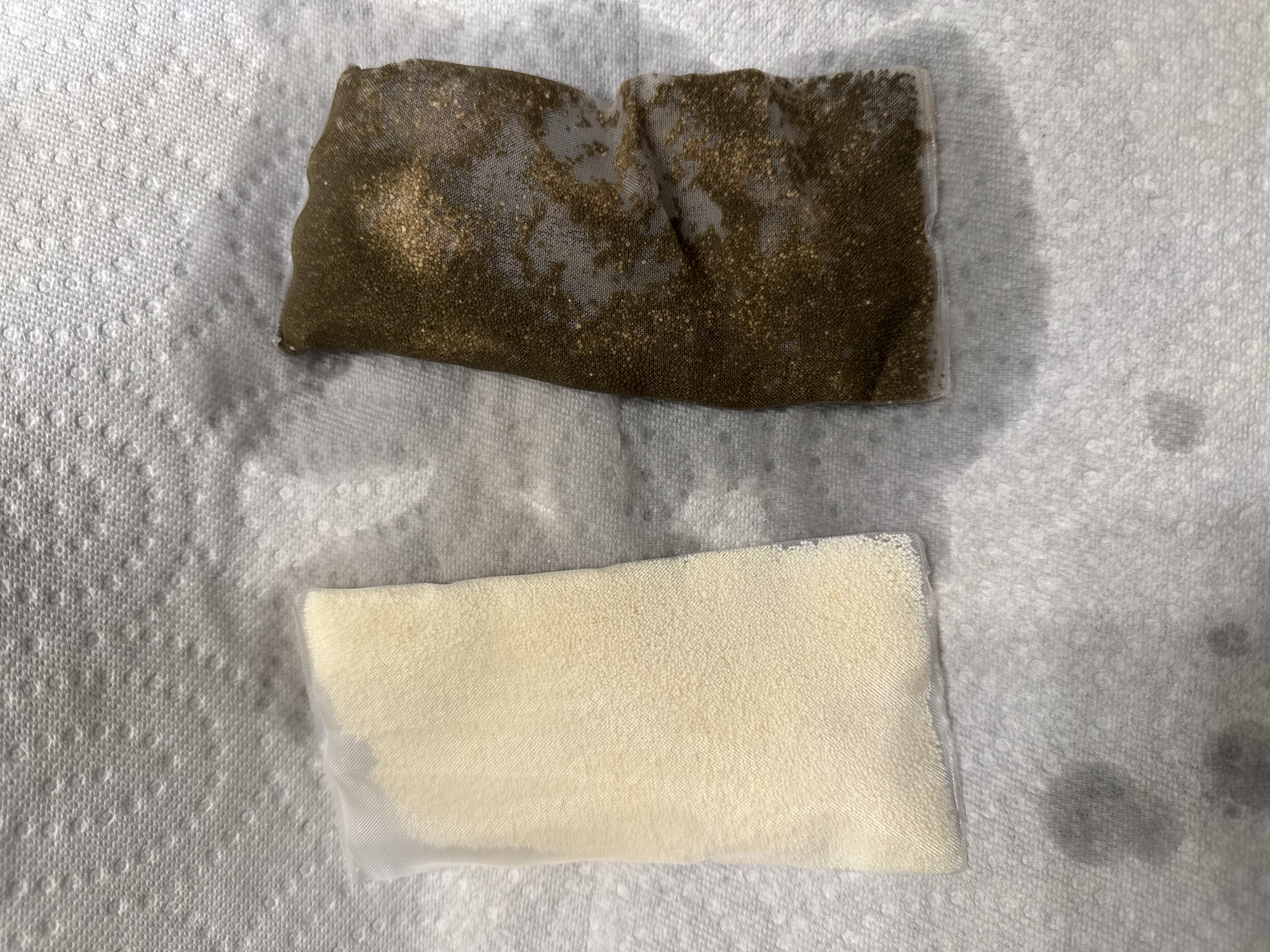
I used to love that tea-tinted blackwater vibe. It looked earthy and calm, but then I decided I wanted to chase those deep red-colored plants. So I pivoted: clear water, strong light, and let the plants show off. About a month after adding Purigen, the difference in clarity was obvious. The surface shimmer reflected light in a way that felt alive — like wiping a soft film off the entire aquarium for consistently clear aquarium water. Purigen absorbs any leftover tannins.
What Does Purigen Actually Remove?
The Unexpected Downside (When Clarity Becomes Too Clear)
There’s one funny downside, though: your water gets so clear that you’ll start noticing every speck of algae on the glass. Purigen doesn’t make algae — it just removes the haze that used to hide it. I actually ended up buying a magnetic in-tank algae scraper (mine was from Temu — that’s going to be its own write-up soon). So in a way, Purigen quietly bullies you into keeping your glass spotless. Honestly? That’s a win.
How Did I Handle Purigen Maintenance?
As for maintenance, you can recharge Purigen with a bleach-and-neutralizer process. I haven’t done it myself yet, so I won’t vouch for it, but a lot of hobbyists swear by two recharges and say they get close to a year out of one bag. Personally, I get about two to three months per bag without recharging in a heavily planted, fairly stocked tank with weekly water changes. You can — and it’s easier than you think — keep rotating fresh bags to hold that water polish while you learn the recharge routine.
Where Purigen shines for me:
- After trims or rescapes when fine debris and tannins spike
- On photography days when I want that book-quality look
What it’s not meant for: fixing poor maintenance. If your filter’s clogged or nitrates are spiking, this won’t save the day — it’s the polish, not the paint, and crystal-clear water still depends on regular upkeep.
I’ve come to really trust Seachem’s lineup for the fundamentals — Stability, Prime, and Purigen. No sponsorship here, just experience. I don’t use their fertilizers, but when it comes to a dependable water polish and startup stability, they’ve earned their reputation.
Final Thoughts: When This Trick Shines — and When It Won’t
Bottom line: If you love the look of perfectly clear water where you can see every ripple and root, Purigen earns its space in your filter. Just be ready to enjoy that crystal clarity — and to spot everything, including the algae you didn’t know was there.
What Purigen Actually Did in This Tank
- About a month after I added it, the improvement in water clarity was obvious, and leftover tannins were absorbed.
- I placed it after coarse-to-ultra-fine sponge layers and before the refugium and biological filtration stage.
- It removed the haze that had hidden algae on the glass; it did not create that algae.
- It did not replace regular maintenance or solve a clogged filter or spiking nitrates.
- Without recharging, one bag lasted me about two to three months in this heavily planted, fairly stocked tank.
Affiliate disclosure: This page contains Amazon affiliate links. As an Amazon Associate, I earn from qualifying purchases.
 Seachem Purigen — Polishes water clarity without altering chemistry. Shop on Amazon →

Log parameters, feeding, and maintenance with our journals and guides.