Why Is My Aquarium Water Green?
The Tank Guide · A FishKeepingLifeCo publication — August 2026
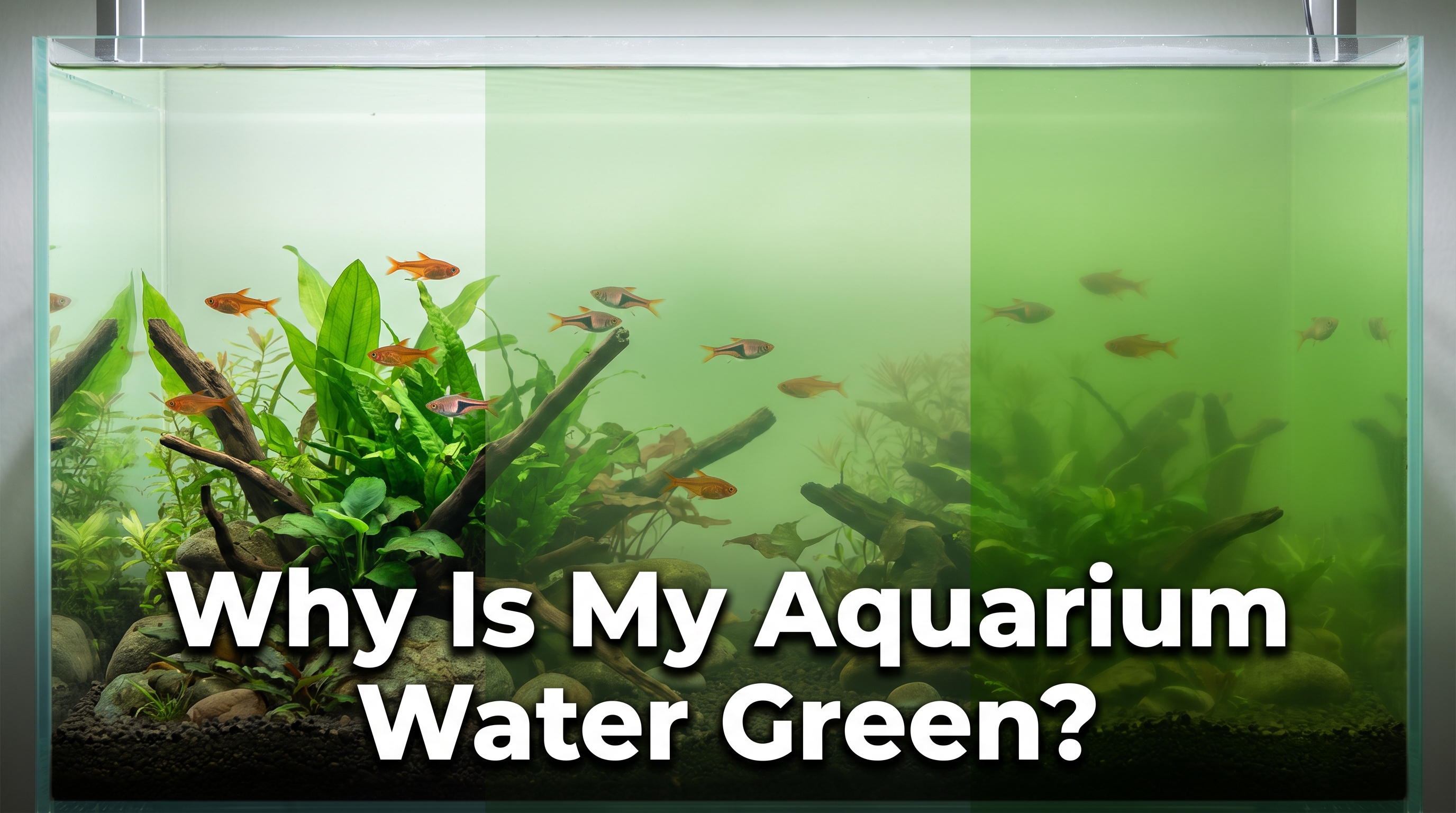
If your aquarium water has taken on a green tint that's getting harder to see through, you're almost certainly looking at green water. It's one of the easier cloudy-water categories to diagnose because green is green, and it's also one of the more misunderstood. Green water isn't the same thing as the green film that grows on your glass, and the fixes people first reach for often don't do much.
The good news is that green water is usually manageable once you know what's actually driving it. This article covers what green water is, why it appears, whether it's a problem, and how to clear it in the right order.
What Green Water Actually Is
Green water is a suspension of microscopic single-celled algae drifting in the water column. They're small enough that a normal aquarium filter usually can't catch them, and they can reproduce quickly when the conditions favor them. When their numbers are high enough, they color the water and reduce visibility.
It's worth separating this from the other kind of algae people call "green" in a tank. Green water lives in the water column. The green film that grows on glass, hardscape, and plant leaves is a different situation — those algae are attached to surfaces, respond to different pressures, and are removed differently. Both are algae. They aren't interchangeable, and treatments for one often don't do much for the other.
If you're not sure which you're looking at, wipe a patch of the glass and look through it. If the view through the wiped patch is clear, you're likely dealing with a film on the glass rather than green water. If the water itself still looks green through the clean patch, green water is what you have. For a second check, scoop some tank water into a clear drinking glass or jar and hold it against a sheet of white paper — a green tint in the sample confirms the color is in the water itself.
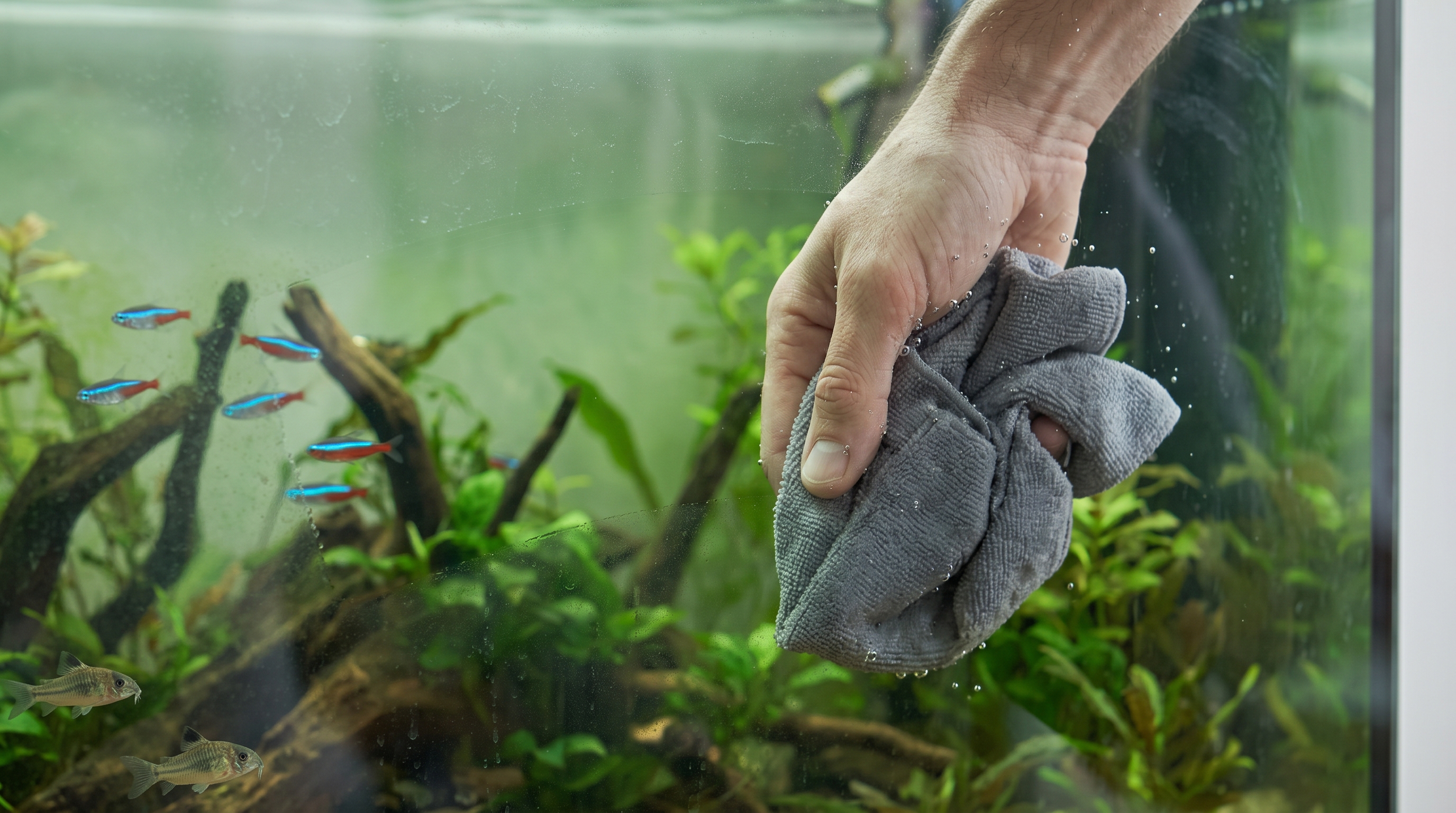
If what you're seeing turns out to be green algae growing on the glass rather than green water, you don't necessarily need to remove all of it. We usually recommend cleaning the front and side panels so the tank stays easy to view, while leaving at least some algae on the back glass if you'd like. In tanks with shrimp and snails, that back panel can double as a grazing surface where they pick at algae, biofilm, and other microorganisms throughout the day. The goal doesn't always need to be completely algae-free glass — as long as it isn't taking over the tank or causing another problem, a bit of green in less visible areas is often fine, and in some setups it's genuinely useful.
What Actually Causes Green Water
Green water usually comes down to a mismatch between available light and what the plants and other organisms in the tank are using. When light is available and there are nutrients to support growth, and nothing is outcompeting them, single-celled algae tend to take advantage of the opportunity.
The most common trigger is something on the light side of that equation:
- Direct or indirect sunlight from a window. This is one of the most common causes and one of the least suspected. Even reflected sun that only reaches the tank for part of the day can be enough.
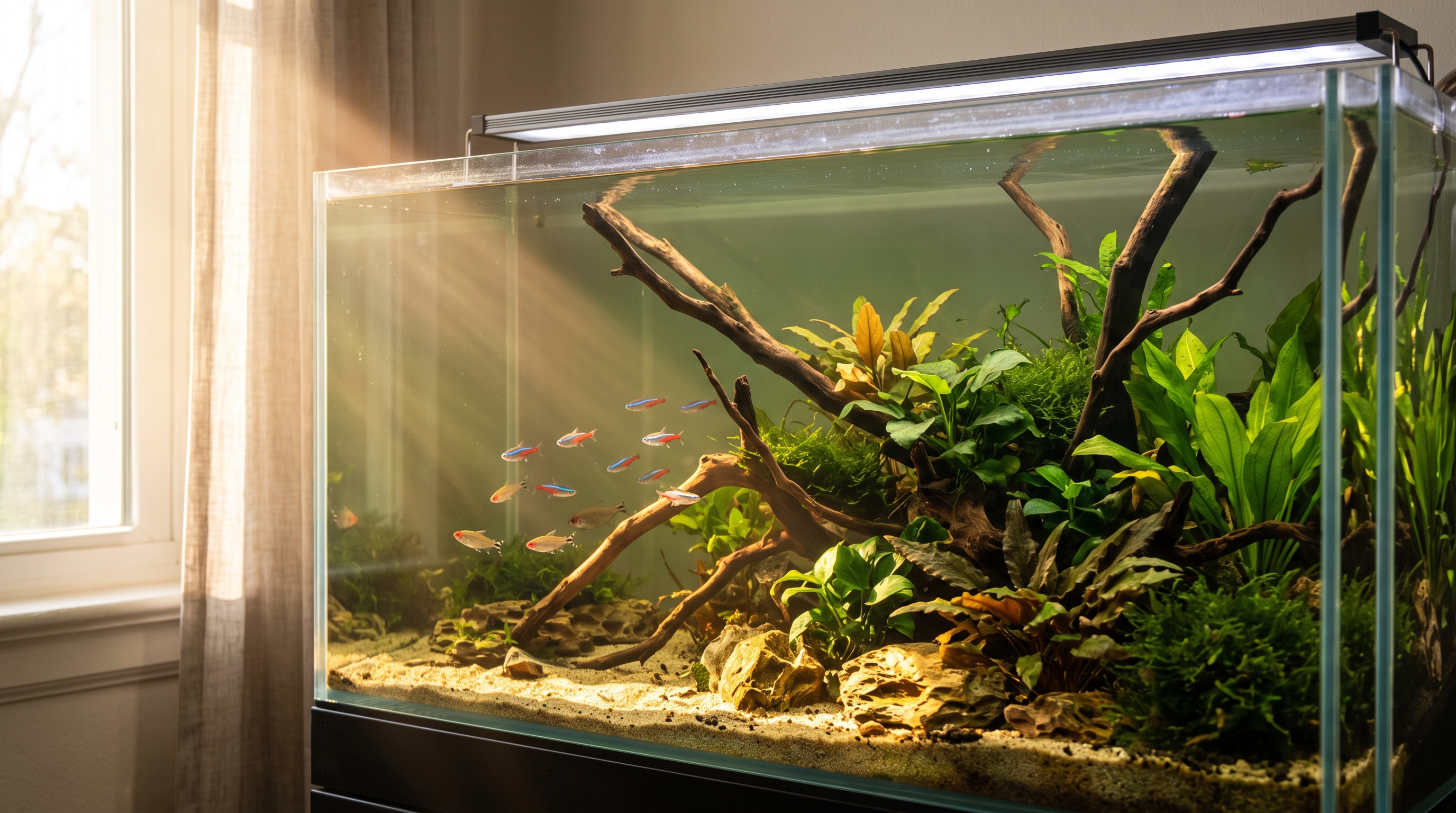
- A new light fixture. LED upgrades in particular often deliver more usable light than the previous fixture did, even if the wattage sounds similar.
- A longer photoperiod. Extending the lighting schedule by a couple of hours can be enough to tip the balance.
- Seasonal changes. As the sun's angle shifts through the year, a tank that was fine in winter can start blooming in spring. Nothing changed in the tank — the light around it changed.
- A drop in plant uptake. If plants have been struggling, dying back, or were recently reduced, the nutrients they were using become available to algae instead.
Nutrients matter too, but light is usually the trigger and it's the variable most under your control. A tank with high nutrients and modest, well-managed light often stays clear. A tank with excellent nutrient levels and a sunny window frequently doesn't. A low nitrate or phosphate reading doesn't rule nutrients out, either — an actively growing bloom pulls them out of the water as it grows, so test results can look normal while the algae are thriving.
The most useful question when green water appears is often: what changed with the light? A new fixture, a moved tank, a new window treatment, a season change, or a shift in plant health frequently turns up as the answer.
Is Green Water Dangerous?
For most tanks, green water is more of an aesthetic and monitoring problem than a health hazard. The algae themselves aren't usually harmful to fish, and some fishkeepers deliberately grow green water to help feed newly hatched fish and the tiny organisms they eat.
The real concerns are indirect:
- Daily oxygen swings. During the day, the algae produce oxygen through photosynthesis. At night, they consume it along with everything else in the tank. In a dense bloom, the oxygen level can drop noticeably before dawn — this is usually the lowest point of the daily cycle and the moment fish are most likely to show stress in a heavy green-water tank.
- Sudden die-offs. If a heavy bloom crashes quickly, either on its own or from being killed off, the collapsing algae become organic material that other bacteria feed on. That can drive oxygen down further and produce ammonia. This is one of the main reasons a chemical algaecide isn't a good first move on a dense bloom.
- Loss of visibility. You can't watch what you can't see. Green water makes it harder to notice fish behaving abnormally, hiding, or looking unwell — which matters more if the tank has fish that are prone to health issues.
Fish behavior remains the best signal, as it usually is. If the tank has fish and they're feeding normally, using the full water column, and breathing at a normal rate, there's usually room to be patient and address the cause rather than chase the appearance.
How to Clear Green Water
The order matters here. Reaching for the strongest tool first can create a new problem, and the more measured approaches tend to be more durable.
The general sequence:
Start with light. Because light is usually the trigger, adjusting it is often the most effective long-term fix.
- If the tank gets any direct or indirect sunlight, try to eliminate it. Reposition the tank, add a curtain or blind, or use background material to block the affected side.
- Shorten the photoperiod. Six to eight hours is a reasonable range for most aquariums, and going shorter for a stretch while a bloom is running down is fine. A plug-in timer or the fixture's built-in schedule keeps that photoperiod consistent from day to day.
- Reduce intensity if your fixture allows it, or raise it above the tank.
- If a new light fixture triggered the bloom, dial it back and reintroduce more light gradually as plants adjust.
Support competition. Healthy, actively growing plants use the same nutrients the algae are using. In many tanks, restoring plant health does more for algae control than any product will.
- Fast-growing plants like floating plants, hornwort, or stem plants are useful because they take up nutrients quickly.
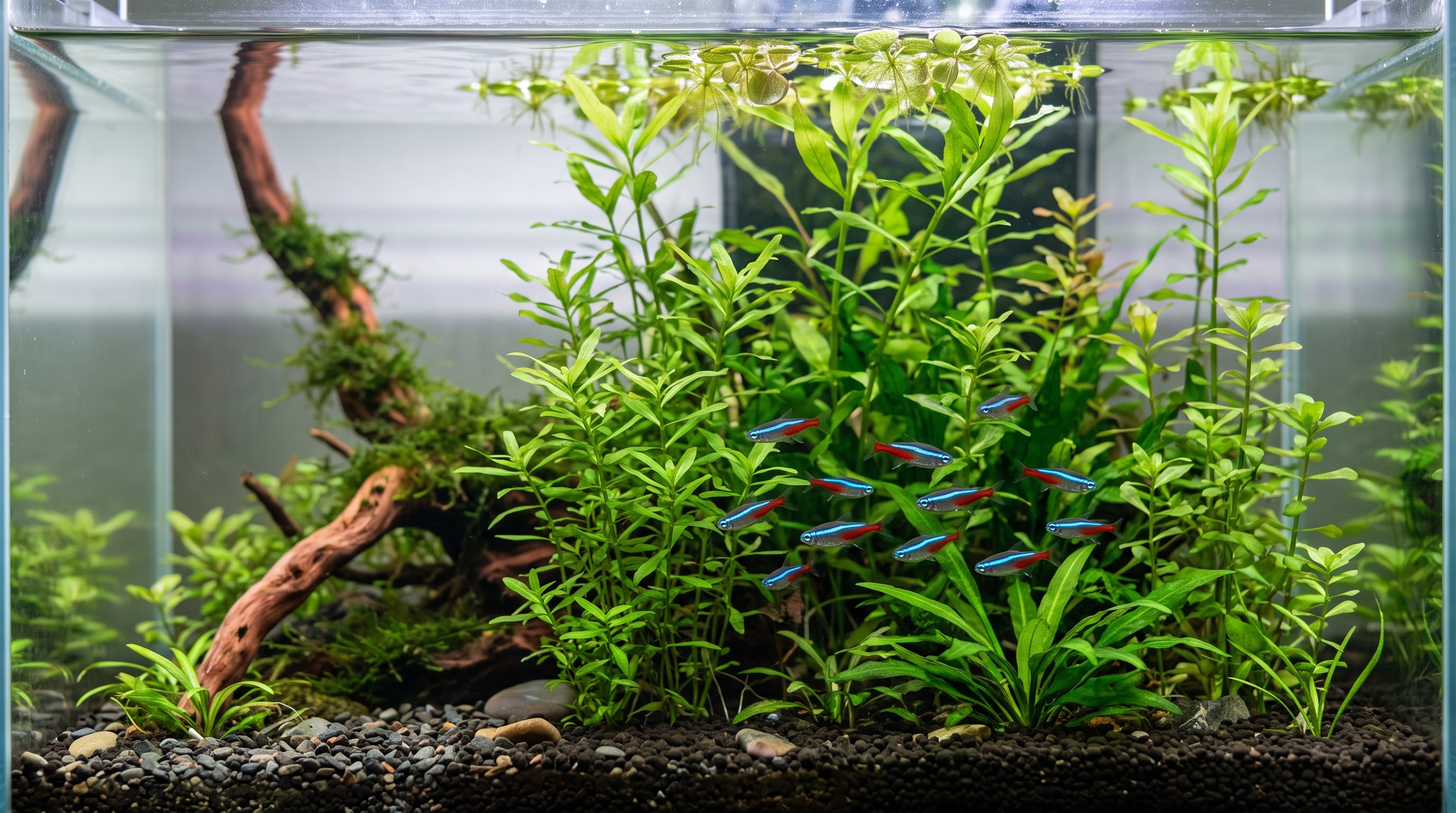
- If plants have been struggling, work out why — light, nutrients, CO2, or something else — before adding more mass.
Water changes help less than you might expect. They dilute the population temporarily, but the algae can reproduce quickly and the bloom often returns unless the underlying conditions have changed. Water changes aren't harmful, and they're worth doing as normal maintenance, but they aren't usually the fix on their own.
UV is effective when other options aren't enough. A properly sized ultraviolet sterilizer is one of the more reliable tools for green water specifically. As algae pass through the UV unit, exposure disrupts their ability to reproduce, and populations tend to drop noticeably over days.
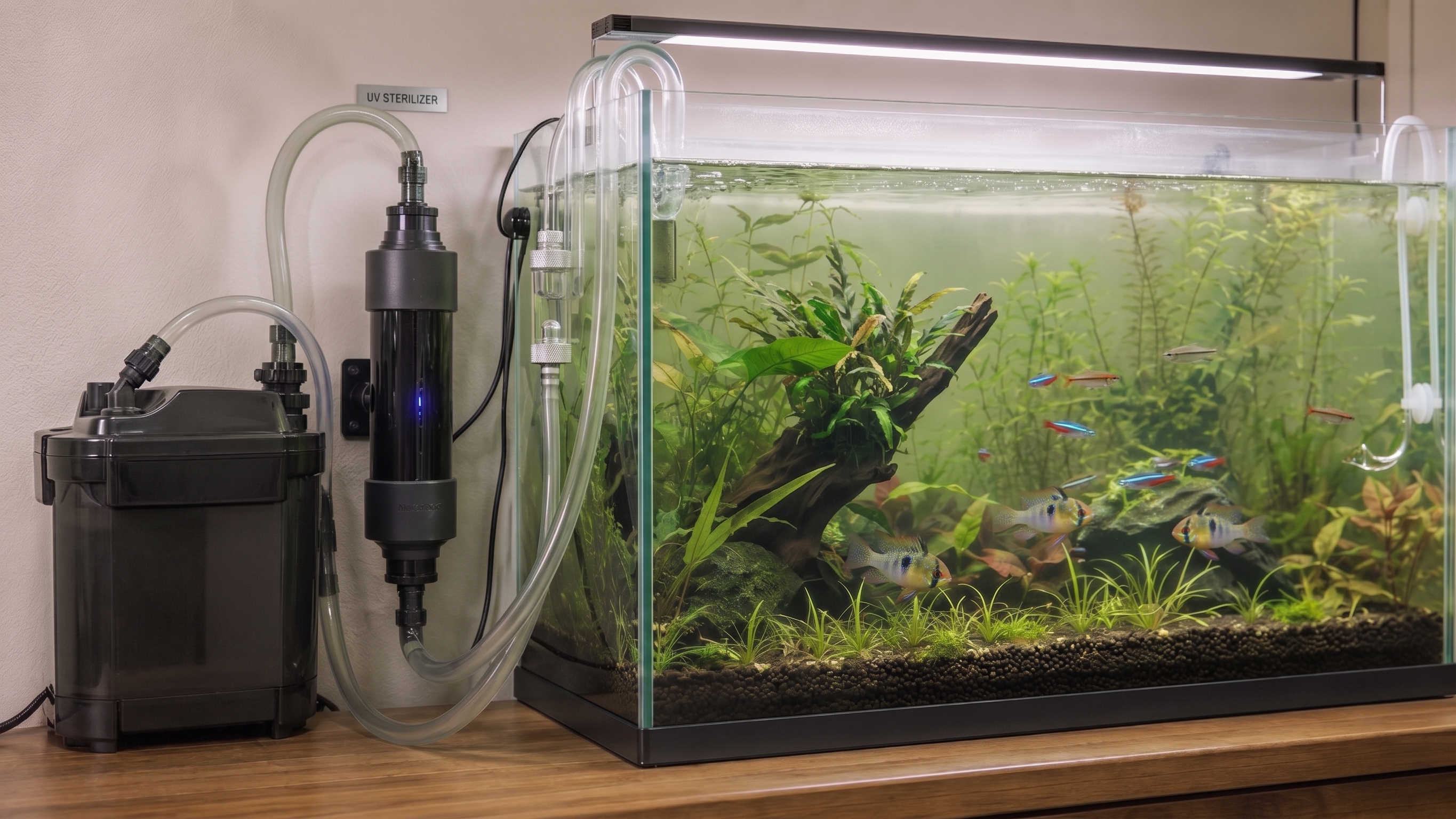
A few things worth knowing about UV:
- Effectiveness depends on the delivered dose, not just the wattage on the box. Contact time, flow rate through the unit, lamp age, and sleeve cleanliness all matter.
- UV works well on things suspended in the water, like green water algae and floating bacteria. It doesn't do anything about algae attached to surfaces, dissolved coloration, or particulate dust.
- Cloudy water reduces how much UV actually reaches the algae. A very dense bloom may need mechanical clearing first to let the UV work efficiently.
Blackout is a legitimate option with real caveats. Covering the tank completely for several days deprives the algae of light and can clear a bloom. It can work, but it stresses plants, and a large simultaneous algae die-off adds organic material and can lower oxygen. It also doesn't address whatever produced the bloom in the first place, so recurrence is common if the conditions haven't changed.
Algaecides aren't a good first response. They can kill green water, but the collapse of a dense bloom can crash oxygen and often produces a bacterial bloom afterwards as the decomposing algae feed a different group of organisms. If you've dealt with green water and then found yourself with white cloudy water a few days later, this is often what happened. Our bacterial bloom article → covers what that follow-up situation looks like.
The Order That Actually Works
For most tanks with green water, the practical sequence is:
- Identify what changed with the light and address it first.
- Support or add fast-growing plants to increase competition.
- Keep up normal water changes, but don't rely on them to clear the bloom.
- If the bloom is dense enough that the above isn't enough on its own, add a properly sized UV sterilizer.
- If a blackout is used, plan for it — remove sensitive plants if possible, keep aeration running, and be ready to do a water change afterwards.
The reason to work in this order is that each step addresses the cause a little more than the last. Light and competition target the reason the algae are thriving. UV manages the visible bloom without producing a large die-off. Blackout is more disruptive. Algaecides carry the highest risk of creating a new problem.
When Green Water Keeps Coming Back
If green water clears and then returns, the message is usually that the underlying conditions haven't changed. The most common patterns:
- Sunlight exposure that was reduced but not eliminated, or that returns seasonally.
- A photoperiod that was shortened during treatment and then extended back out to where it was before.
- Plants that were competing effectively when they were healthy, then declined again for the same underlying reason.
- A UV sterilizer that was doing the work but got switched off after the bloom cleared.
Recurrence can actually be helpful for diagnosis — it usually means the cause is still there, and that's easier to work with than a mysterious problem because it points to something specific to change.
The One Thing Worth Remembering
Green water is usually a light story more than a nutrient story or a filtration story. The algae are there because the conditions currently favor them. Killing the visible population without changing those conditions often produces a return performance a couple of weeks later, sometimes with a bacterial bloom in between.
The most durable path is usually the calmer one: work out what shifted on the light side, adjust it, support plant competition, use UV to manage the visible bloom if needed, and give the tank time to settle into the new balance. Most green water tanks clear this way without needing anything more dramatic.
If you're not sure green water is what you're looking at, start with our main guide to cloudy aquarium water →. If the water is white or milky, our bacterial bloom guide → is the right next step. If it's amber or brown, our tannins guide → covers that.
Track water parameters, maintenance, and tank changes with our journals and guides.