Growing Houseplants in Your Aquarium: The Complete Guide
The Tank Guide · A FishKeepingLifeCo publication — Jul 2026
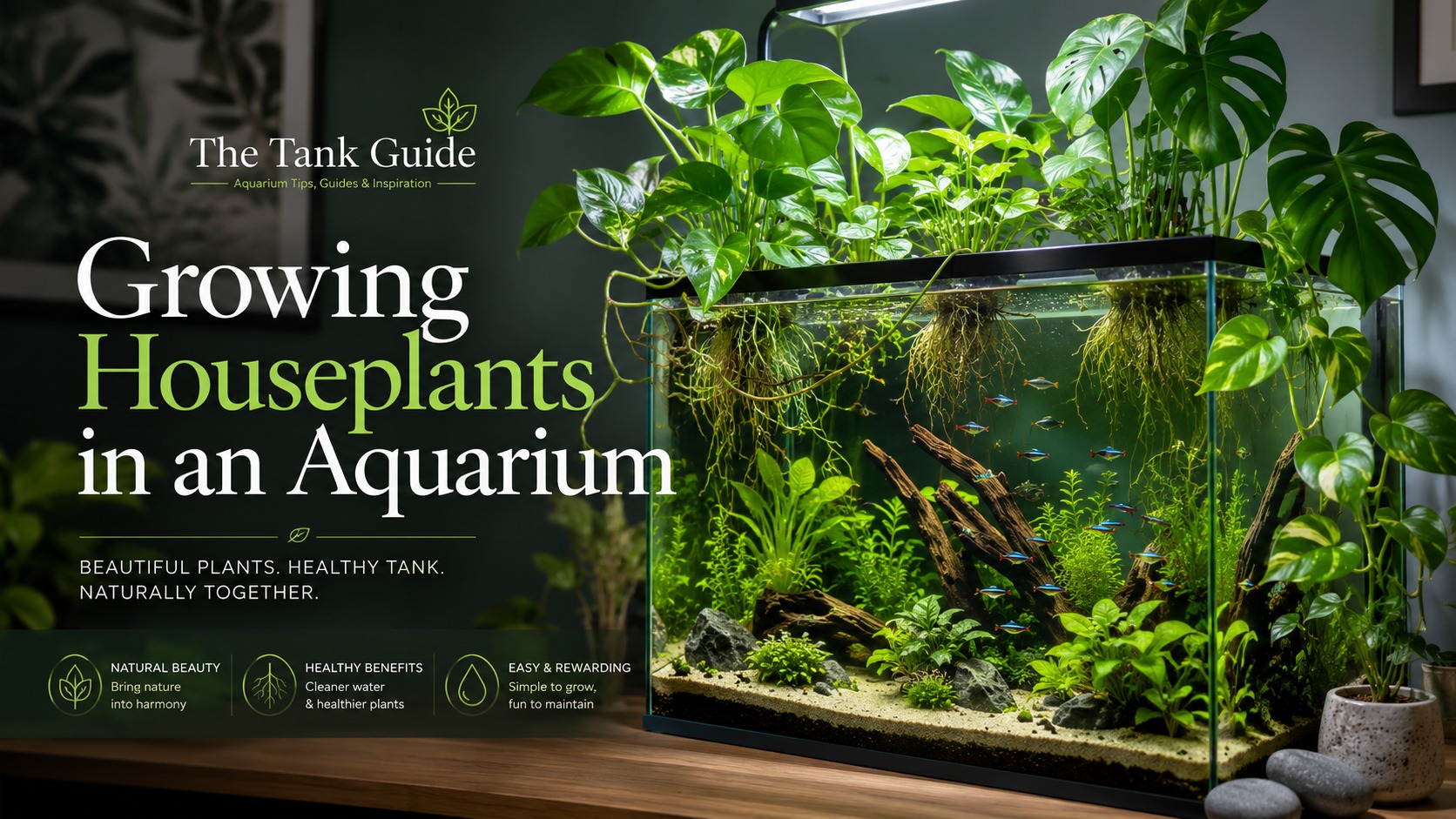
Have you ever wondered why so many aquarium hobbyists grow pothos, Monstera, or other houseplants directly from the top of their aquarium?
The answer is surprisingly simple: many terrestrial plants can grow with their roots in aquarium water, absorbing nutrients like nitrate while becoming part of your aquarium's natural filtration system.
At FishKeepingLifeCo, we love terrestrial plants because they show us how naturally an aquarium can recycle its own nutrients. Beneficial bacteria convert ammonia from fish and decomposing organic matter into nitrite and then nitrate, which the plants can use to produce new roots, stems, and leaves.
Regular pruning makes the process even more effective. When you trim and propagate healthy growth, you physically remove the nutrients stored inside the plant before older leaves can die, fall, and release some of them back into the aquarium.
But there are also a lot of misconceptions.
Many people wonder how pothos or Monstera can survive with their roots constantly in water—after all, their care guides often recommend letting the soil partially dry between waterings. Others assume these plants completely replace water changes or believe they are simply "drinking nitrates."
The real explanation is much more interesting—and it largely comes down to oxygen.
In this guide:
- How Houseplants Grow With Roots in Aquarium Water — the oxygen science, root adaptation, and how much nitrate reduction to realistically expect
- Best Houseplants for Aquariums: Selection, Setup & Care — which species to choose, how to add them safely, and how to keep them healthy
Why This Actually Works
When potting soil stays wet for too long, it becomes waterlogged and starves the roots of oxygen. Aquarium water is different—it's usually kept moving and oxygenated through filtration, surface movement, or aeration, giving roots access to both water and oxygen at once. That's the same basic principle hydroponic growers rely on: replace what soil normally provides—water, oxygen, nutrients, and support—and the plant doesn't need soil at all.
Plants moved from soil into water typically grow new roots adapted to that environment; it's normal for some older soil roots to die back in the process. And while the roots stay underwater, the rest of the plant usually doesn't—most houseplants grown this way take on an emergent form, with stems and leaves growing above the surface where they get light and exchange gases with the air.
Once established, those roots become a steady nutrient sink. Beneficial bacteria convert fish waste into nitrate through the nitrogen cycle, and actively growing plants absorb part of it to build new growth—pruning exports it from the system entirely. Houseplants can make a real, measurable difference in aquarium nitrate, but it's a gradual effect, not an instant one, and it depends heavily on how actively the plant is growing and how stocked your aquarium is.
→ Get the full science—oxygen, hydroponics, root adaptation, and realistic nitrate-reduction timelines—in How Houseplants Grow With Roots in Aquarium Water.
Which Plants Work Best
Not every houseplant thrives with its roots in water, but several popular species adapt surprisingly well. Here's how the most common choices compare:
| Plant | Growth Rate | Light Needs | Root Density | Best Mounting Placement |
|---|---|---|---|---|
| Pothos | Fast | Low to Bright | Heavy | Rim holder or dedicated basket |
| Monstera | Fast | Medium to Bright | Very Heavy | Sturdy rim bracket or floor stand |
| Heartleaf Philodendron | Moderate | Low to Medium | Moderate | Hanging basket or rim clip |
| Syngonium | Moderate | Medium | Compact | Rim basket |
| Spider Plant | Moderate | Bright, Indirect | Compact | Plant clip (keep crown dry) |
| Peace Lily | Slow to Moderate | Medium | Dense | Deep basket |
| Lucky Bamboo | Slow | Low to Medium | Light | Emergent stalk support |
→ Get species-by-species care notes and step-by-step instructions for adding and maintaining each plant safely in Best Houseplants for Aquariums: Selection, Setup & Care.
A Wider View: Aquaponics and Reusing Fish Waste
The same basic relationship—fish waste feeding bacteria feeding plants—plays out on a much larger scale in aquaponics, which combines fish farming with hydroponic plant production. Your home aquarium isn't a complete aquaponic system, but a pothos cutting growing from your filter uses the exact same biological principle, just smaller and simpler.
Waste in one part of a system can become a resource in another—that's what makes the relationship between fish, bacteria, and plants so fascinating in the first place. We go deeper on this idea in our podcast episode Tank Guide Life: Natural Filtration Myths.
Final Takeaway
Fish waste feeds the nitrogen cycle, and actively growing plants put part of what's available to use—building new roots, stems, and leaves.
The plants are not a magic filter, and they will not replace water changes, testing, filtration, or good aquarium care. Their roots need time to adapt, their leaves need adequate light, and their growth must be maintained.
But when the setup is clean, secure, and thoughtfully managed, houseplants can become a valuable part of the aquarium's natural nutrient cycle.
They can slow the buildup of nitrate, add another layer of biological activity, create shelter around their roots, and turn nutrients that might otherwise accumulate into healthy new growth.
That is what makes the relationship so fascinating.
Nature rarely treats nutrients as waste. It moves them, transforms them, and uses them again.
Tank Guide Life by FishKeepingLifeCo
Using Pothos in Your Aquarium? Hear the Root Science
Tank Guide Life explores how pothos and other houseplants grow with roots in aquarium water, use nutrients, and fit into natural filtration. It is a helpful listen before adding your first cutting above the tank.
Listen on Spotify
Log trimming, dosing, and water tests with our journals and guides.