Best Houseplants for Aquariums: Selection, Setup & Care
The Tank Guide · A FishKeepingLifeCo publication — Jul 2026
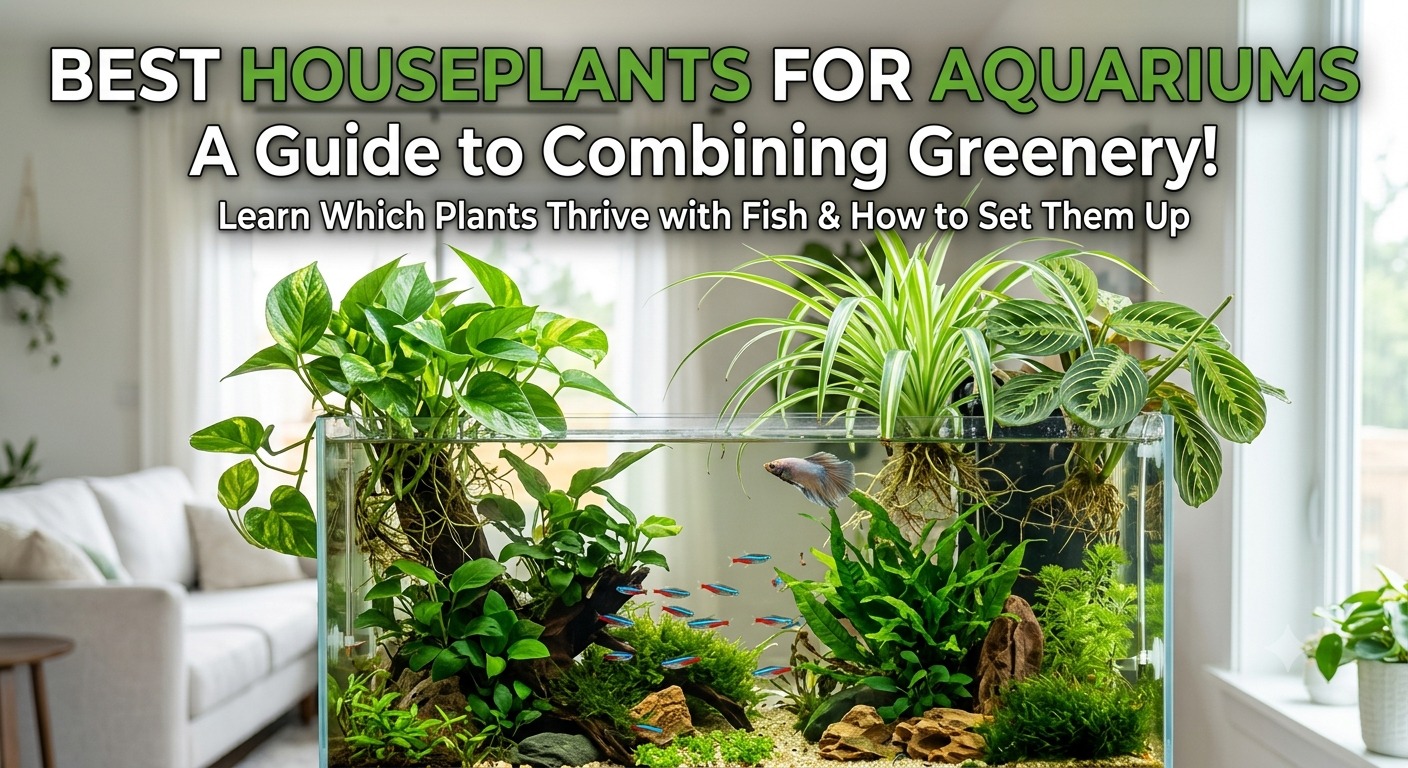
Part of our Complete Guide to Growing Houseplants in Your Aquarium. Curious why this works in the first place? See the full science.
This article contains a few affiliate links to products we actually use — if you buy through them, we may earn a small commission at no extra cost to you.
7 Best Houseplants for Aquariums
Not every houseplant will enjoy growing with its roots in aquarium water, but several popular species adapt surprisingly well.
The best choices tend to be plants that root easily, tolerate consistently moist conditions, and produce steady new growth without needing perfect conditions. Fast-growing plants usually have the greatest potential to absorb nutrients, but the right choice also depends on the amount of space, light, and root growth you are prepared to manage.
| Plant | Growth Rate | Light Needs | Root Density | Best Mounting Placement |
|---|---|---|---|---|
| Pothos | Fast | Low to Bright | Heavy | Rim holder or dedicated basket |
| Monstera | Fast | Medium to Bright | Very Heavy | Sturdy rim bracket or floor stand |
| Heartleaf Philodendron | Moderate | Low to Medium | Moderate | Hanging basket or rim clip |
| Syngonium | Moderate | Medium | Compact | Rim basket |
| Spider Plant | Moderate | Bright, Indirect | Compact | Plant clip (keep crown dry) |
| Peace Lily | Slow to Moderate | Medium | Dense | Deep basket |
| Lucky Bamboo | Slow | Low to Medium | Light | Emergent stalk support |
Pothos (Epipremnum aureum)
Pothos is one of the most popular choices for good reason.
It roots easily, grows quickly, tolerates a wide range of lighting conditions, and usually adapts well to aquarium water. Once established, it can produce long vines, large root systems, and plenty of new leaves.
That combination makes pothos a strong choice for beginners and one of the easiest plants to use in a low-maintenance setup.
The main thing to watch is the roots. They can spread quickly and may eventually need trimming or containment to keep them away from filter intakes and equipment.
For a closer look at pothos specifically as a dedicated nitrate-export tool—including our real-world testing on nitrate reduction timelines and placement methods—see our full pothos nitrate guide.
Monstera (Monstera deliciosa)
Monstera can create a dramatic display, especially over larger aquariums.
It develops thick roots and broad leaves, but it also needs more room than pothos. As the plant matures, the stems and root system grow heavy and need solid support above the aquarium.
Monstera is better suited to tanks with enough open space around the rim and enough light above the water. It may be too large for a small aquarium, but in the right setup, it can become the centerpiece of the entire display.
Philodendron (Philodendron hederaceum)
Many climbing philodendrons adapt well to growing with their roots in water.
They share several qualities with pothos: easy propagation, steady growth, attractive trailing stems, and relatively forgiving care. Their root systems can still become dense, but they are usually easy to trim and manage.
Heartleaf philodendron is one of the most practical choices because it stays manageable, roots readily, and works well in hanging baskets or holders.
Syngonium (Syngonium podophyllum)
Syngonium, often called arrowhead plant, is another strong option for aquarium setups.
It grows quickly under good conditions and produces a full, bushy appearance rather than the longer trailing vines of pothos. Young plants are usually compact, although mature growth may begin climbing or spreading.
Syngonium can work especially well when you want more foliage near the aquarium rather than long vines stretching across the room.
Spider Plant (Chlorophytum comosum)
Spider plants can grow with their roots in aquarium water, but they may take more time to adjust than pothos.
The small plantlets produced on mature spider plants are often the easiest way to begin. They can develop roots directly in water without going through the stress of having soil removed from an established plant.
Spider plants prefer good light and may struggle if the crown remains wet, so only the roots should sit in the aquarium.
What's the "crown"? The crown is where a plant's stem meets its roots—the thickest, most active growing point. Keep it above the waterline. Even when the roots below are perfectly healthy, a crown that stays wet and submerged can still rot.
Peace Lily (Spathiphyllum spp.)
Peace lilies are naturally drawn to moist environments, which can make the transition to aquarium water easier than it is for many houseplants.
Their dark leaves and white flowers make them an attractive choice, but they tend to grow more slowly than pothos or Syngonium. They may also need stronger lighting above the tank if you want consistent flowering.
The crown and leaves should remain above the waterline. A basket or holder can help keep the plant secure while allowing the roots to hang below.
Lucky Bamboo (Dracaena sanderiana)
Lucky bamboo is commonly sold as a water-grown plant, although it is actually a type of Dracaena rather than true bamboo.
Its roots can remain in aquarium water, but the leaves and most of the stalk should stay above the surface. Fully submerging the plant often leads to decline because it is not a true aquatic species.
Lucky bamboo grows more slowly than many vines, so it may not have the same effect on nutrient uptake as a fast-growing pothos. Its upright form can still make it useful in setups where trailing plants would be difficult to manage.
Edible Plants
Some herbs and leafy greens can grow using aquarium water, especially in systems designed more like aquaponics.
However, we do not recommend growing edible plants from a standard display aquarium. Fish medications, salt, copper, water conditioners, cleaning products, and other treatments may not be appropriate for food crops, and a typical aquarium is not managed with food safety in mind.
If your goal is to grow basil, lettuce, mint, or other edible plants, it is better to use a dedicated aquaponic system built specifically for both fish health and food production.
For most beginners, pothos, heartleaf philodendron, or Syngonium are the easiest places to start—Monstera and peace lilies make a bigger statement, while spider plants and lucky bamboo suit more specialized setups. The best plant isn't necessarily the one that absorbs the most nitrate; it's the one that fits your aquarium, gets enough light, and grows at a pace you're comfortable maintaining.
How to Safely Add Houseplants to Your Aquarium
Adding a houseplant to an aquarium is fairly simple, but the safest setups all follow the same basic rule: keep the roots in the water and the rest of the plant above the waterline.
Quick steps:
- Choose a cutting or a potted plant. Cuttings are the easiest starting point for beginners.
- Rinse away all potting soil using clean water—no soap or bleach.
- Inspect and trim the roots, removing anything soft, mushy, or discolored.
- Secure the plant above the rim so the roots hang below the waterline and the rest of the plant stays above it.
For most beginners, starting with a cutting is the easiest option. A fresh pothos, philodendron, or Syngonium cutting can develop water-adapted roots from the beginning. This avoids the stress of removing an established plant from soil and makes it easier to watch the new root system develop.
Potted plants can work too, but they require more preparation.
Gently remove the plant from its pot and loosen the root ball with your fingers. Rinse away as much potting soil as possible using clean water. This may take several rinses, especially when fine soil is packed tightly between the roots.
Do not use soap, bleach, or household cleaners.
Any soil left behind can cloud the aquarium, collect debris, and introduce fertilizers or other products that were mixed into the potting medium. Work patiently and avoid tearing healthy roots just to remove every last grain.
Once the roots are clean, inspect them carefully. Healthy roots should generally feel firm. Remove roots that are soft, mushy, badly discolored, or foul-smelling. Light trimming can also make a large root system easier to position, but avoid aggressively cutting back a plant that is already stressed from the move.
One of the biggest concerns is not the plant itself—it is what may have been used on it before you brought it home.
Nursery and store-bought plants may have been treated with pesticides, systemic insecticides, fertilizers, fungicides, or leaf-shine products. Some of these treatments can be dangerous to fish, shrimp, snails, and other aquarium inhabitants.
Rinsing can remove dirt and some surface residue, but it may not remove a systemic pesticide that has already been absorbed into the plant. Whenever possible, use cuttings from a trusted, untreated plant, or quarantine a new plant in plain water—away from fish, shrimp, and snails—for several weeks before adding it to the tank. Systemic treatments can take longer than that to fully clear, so quarantine reduces the risk; it doesn't guarantee a plant is completely clean.
Once the plant is ready, it needs a secure place to grow.
Hanging aquarium plant baskets and plant holders are among the easiest options—suction-cup baskets, 3D-printed rim clips, and even a repurposed shower caddy all work. They keep the plant supported above the water while allowing the roots to hang into the tank, and can help contain fast-growing roots and keep them away from equipment.
We also walk through a few of these setups visually in our YouTube guide to aquarium plant holders if you'd rather watch than read.
Some hobbyists grow plants directly from a hang-on-back filter, where the chamber supports the roots while the stems and leaves grow above the tank. It works, but fast-growing roots can tangle with the filter media and impeller—in our own testing, this placement caused the most maintenance headaches of any method we tried. More on what worked better appears in our pothos nitrate guide.
A glass canopy with a removable plastic rear strip can provide another option—Versa-Top-style lids are a common example. Some hobbyists carefully cut small openings in the plastic strip and thread cuttings through them so the roots grow down into the aquarium, creating a clean, organized look above the tank.
Take this part slowly. Only modify the removable plastic section—never drill or cut the glass—and smooth any rough or sharp edges before the strip goes back on. We cover the fuller lessons from testing this method, including where roots tend to cause trouble later, in our pothos nitrate guide.
Aquarium lids, clips, hardscape, and filter compartments can also provide support. Whatever method you choose, the plant should remain secure without having its stem crushed or its crown held underwater.
Placement matters too. The roots should receive some water movement, but they do not need to sit directly beneath a powerful filter outflow. Keep them away from heaters, impellers, and other moving equipment. Above the aquarium, make sure the leaves have enough room and light to grow without blocking access needed for feeding or maintenance.
After placing the plant, give it time to adjust. Some wilting, yellowing, or loss of older roots can happen during the transition from soil to water. Remove anything that becomes soft or begins to decay, but do not assume the plant has failed after only a few days.
Look for healthy new roots and leaves. Those are the clearest signs that the plant is adapting to its new environment.
A safe setup doesn't need complicated equipment—just a clean plant, secure support, and room to grow.
Lighting, Pruning, and Ongoing Maintenance
Once the plant is established, keeping it healthy is mostly about giving it enough light, trimming it when needed, and watching how it responds over time.
The first thing to look at is the light above the aquarium. For a practical reference, see the lights and filters I actually run.
A standard aquarium light may do a great job illuminating the tank below while barely reaching the leaves growing above it. Pothos and philodendron can often manage with bright ambient light, but larger plants or faster-growing species may benefit from a dedicated grow light.
What matters most is that the light reaches the foliage.
A plant that is not getting enough light may stretch toward a window, produce smaller leaves, develop longer gaps between leaves, or slow down almost completely. Pale growth and weak stems can also be signs that the plant is asking for more light.
Too much light can cause problems too. Strong direct sun or a grow light placed too close can scorch leaves, dry leaf edges, raise the aquarium temperature, or increase evaporation. The goal is steady light, not the hottest or brightest setup you can create.
The vines and leaves need regular attention as the plant grows. Trimming many common houseplants encourages branching and fuller growth. Remove yellow, damaged, or dying leaves before they fall into the aquarium, and keep long vines away from lights, electrical cords, doors, and areas where they may be pulled or damaged.
Larger plants may eventually need a stake, trellis, or other support.
Pruning does double duty here—it also exports some of the nutrients the plant has stored, as we cover in how houseplants use aquarium nutrients.
Healthy trimmings can also become new plants. For many vining species, take a cutting just below a node and place the node in water while keeping the leaves above the surface. The cutting can root in the same aquarium, move to another setup, or be shared with another hobbyist.
Propagation is one of the easiest ways to control a plant that is getting too large without wasting healthy growth.
Even with a steady supply of nitrate, the plant may still run short on something else. Aquarium water does not always provide every nutrient in the right balance. Pale new leaves, yellowing, distorted growth, or stalled growth may point to a deficiency, but those symptoms can also come from weak light, stress, or another care issue.
Do not automatically add regular houseplant fertilizer directly to a stocked aquarium. Many products are not designed with fish, shrimp, snails, or aquarium water chemistry in mind. If supplementation becomes necessary, use a product intended for aquarium use and consider the needs of the entire system rather than only the houseplant.
In most cases, steady light, regular trimming, and a little patience matter more than complicated equipment. If the plant is producing clean new leaves and steady growth, it is usually telling you that the setup is working.
Common Mistakes, Safety Concerns, and Limitations
Growing houseplants from an aquarium is simple once the setup is established, but a few common mistakes can create problems for both the plant and the livestock below it.
The first is submerging too much of the plant. For most of the houseplants covered in this guide, only the roots should remain underwater. Keeping the crown, stems, or leaves constantly submerged can lead to softening, rot, and eventual decline.
Another common mistake is leaving potting soil packed around the roots. Even a small amount can cloud the water, trap debris, and introduce fertilizers or treatments from the original potting mix. If a rinse job looks incomplete, patience matters more than damaging healthy roots just to remove every last speck.
Store-bought plants also deserve extra caution. A healthy-looking store-bought plant can still carry pesticide or fungicide residue from the nursery—see the safety section above before adding one to your tank. Whenever possible, start with a cutting from a trusted, untreated plant.
Poor lighting is another easy issue to overlook. It's easy to underestimate how little light actually reaches the foliage above the tank—a pale, stretched, or stalled plant is usually asking for more.
Roots can cause trouble when they are ignored too. Fast-growing roots may block filter flow, collect debris, crowd a basket, or reach heaters and moving equipment. They do not need constant trimming, but they should remain easy to inspect and manage.
Dead growth should never be left to break down unnoticed. A yellow leaf or dying root is not an emergency, but it should be removed before it falls into the aquarium and begins decomposing. Otherwise, some of the nutrients the plant stored can simply return to the water.
Expecting immediate nitrate reduction is another common mistake. A newly added plant needs time to adapt before it meaningfully affects nitrate. Houseplants work gradually, and only while they are healthy and actively growing.
It is also important to keep toxicity concerns in perspective. Plants such as pothos, Monstera, philodendron, Syngonium, and peace lily contain irritating compounds in their leaves and stems. That is one reason the foliage should remain above the aquarium and out of reach of pets or children who may chew it.
This matters most for pet owners. Pothos, Monstera, philodendron, and peace lily all contain calcium oxalate crystals, which can cause mouth and throat irritation in cats and dogs if chewed. Keep trailing vines and leaves somewhere curious paws and mouths can't reach.
The roots themselves are commonly used in aquariums, but no plant should be treated as completely risk-free for every species. Some fish, snails, or shrimp may nibble soft roots, and individual livestock can behave differently.
Watch the aquarium after adding anything new. If fish begin repeatedly chewing the plant, if livestock show unusual behavior, or if water quality changes unexpectedly, remove the plant and investigate before trying again.
Finally, remember what houseplants cannot do. They cannot replace a cycled biological filter. They cannot remove every dissolved compound from the water. They cannot correct chronic overfeeding, overcrowding, poor circulation, or neglected maintenance. They also cannot make an unsafe aquarium safe simply because nitrate is lower.
Think of them as support, not a substitute.
When the plant is clean, properly supported, well lit, and regularly observed, it can become a valuable part of the aquarium. But the fish still depend on you to test the water, maintain the equipment, and keep the entire system balanced.
Frequently Asked Questions
Are pothos roots toxic to fish?
Pothos contains irritating compounds in its leaves and stems, but its roots are commonly grown in aquariums without problems. Keep the foliage above the waterline, remove fallen leaves, and watch for livestock that repeatedly chew the plant.
No plant should be treated as completely risk-free for every species, so observe the aquarium after adding anything new.
Can Monstera live permanently with its roots in aquarium water?
Yes, Monstera can remain with its roots in aquarium water as long as the plant adapts successfully and its basic needs are met.
The roots need oxygenated, moving water, while the stem, crown, and leaves should remain above the surface. Because Monstera becomes large and heavy, it also needs enough light, space, and physical support.
Can houseplant roots clog an aquarium filter?
Yes.
Fast-growing roots can enter filter intakes, restrict water flow, collect debris, or interfere with a hang-on-back filter's impeller. Check them during routine maintenance and trim them before they become difficult to manage.
A basket or plant holder can help keep the root system contained.
Do aquarium-grown houseplants need fertilizer?
Sometimes, but not always.
Aquarium water may provide plenty of nitrogen while still lacking another nutrient the plant needs. Pale leaves, distorted new growth, or stalled growth can suggest a deficiency, but similar symptoms may also come from weak lighting, damaged roots, or transition stress.
Do not add ordinary houseplant fertilizer directly to a stocked aquarium. Use only products intended for aquarium use, and consider how they will affect the entire system.
Why are the leaves turning yellow?
Yellow leaves can have several causes, including transition stress, weak lighting, damaged roots, natural aging, or a nutrient deficiency.
One yellow leaf is not always a sign that the setup is failing. Remove dying growth, inspect the plant, and look for patterns in the newest leaves and roots.
Can fish, shrimp, or snails eat the roots?
Some aquarium inhabitants may nibble soft new roots or graze on material growing across their surface.
Light grazing is not always a problem, but repeated chewing can damage new growth before the plant becomes established. If the roots are being heavily damaged, move or protect them and make sure the livestock's dietary needs are being met. If you're planning your invertebrate cleanup crew, our Snail Stocking Recommender can help you choose species that are less likely to bother new root growth.
Log trimming, dosing, and water tests with our journals and guides.