Why Goldfish Are the Most Misunderstood Fish in the Aquarium Hobby
The Tank Guide
Owned and published by FishKeepingLifeCo
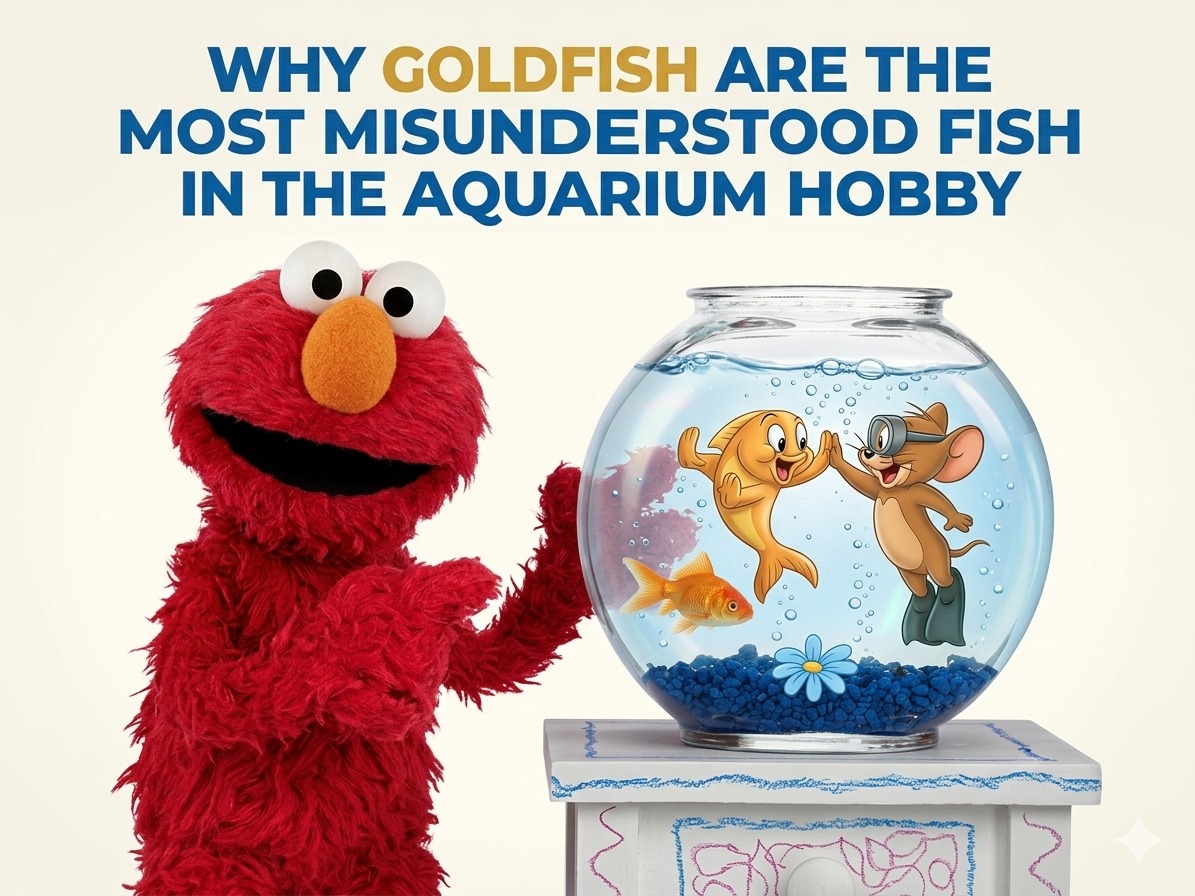
From Sesame Street to American Dad, goldfish bowls are everywhere.
Cartoons, movies, commercials, classrooms, waiting rooms — for generations, the image of a goldfish swimming around in a tiny glass bowl has been treated as completely normal.
It’s one of the most recognizable images associated with fishkeeping.
And honestly, if you grow up seeing it constantly, why would you ever question it?
Most people don’t.
Goldfish are probably one of the most recognizable animals on the planet, yet somehow they’re also one of the most misunderstood fish in the entire aquarium hobby.
We see them sold as feeder fish for a few cents. Given away at carnivals. Kept in bowls barely larger than the fish themselves. Treated like temporary pets that can simply be replaced when they die.
But the strange thing is that most people never actually get to see what goldfish really are.
They never see the massive comet goldfish gliding through outdoor ponds. Most people don’t realize how long they live, how much space they actually need, or how different a well-kept goldfish looks from the ones sold for cents at the bottom of a feeder tank.
And honestly, I used to misunderstand them too.
The 10-Gallon Aquarium and the “One Inch Per Gallon” Myth
I remember being around 11 or 12 years old and wanting fish for the first time. I already had an empty tank sitting in the garage, and I had family members who kept guppies for years.
Eventually, my younger sister and I went into a pet store to pick out fish.
I believe it was an old Petland location. This was before information about fishkeeping was easy to find online. Back then, most beginners relied almost entirely on whatever the pet store employee told them.
The comet goldfish were cheap — just a few cents each back then — and they were kept in those lower tanks at the bottom of the fish racks. The feeder fish tanks. The tanks where there always seemed to be a few dead fish laying at the bottom of the tank.
I still remember wanting to pick specific fish out with my sister, and one of the employees — a younger woman who could tell we were excited kids — let us choose which ones we wanted.
Then her manager walked over and said:
“No picking for those fish.”
Looking back now, that moment says a lot.
To us, they were pets we were excited about. To the store, they were feeder fish. Inventory. Replaceable.
The employee eventually let us pick them anyway.
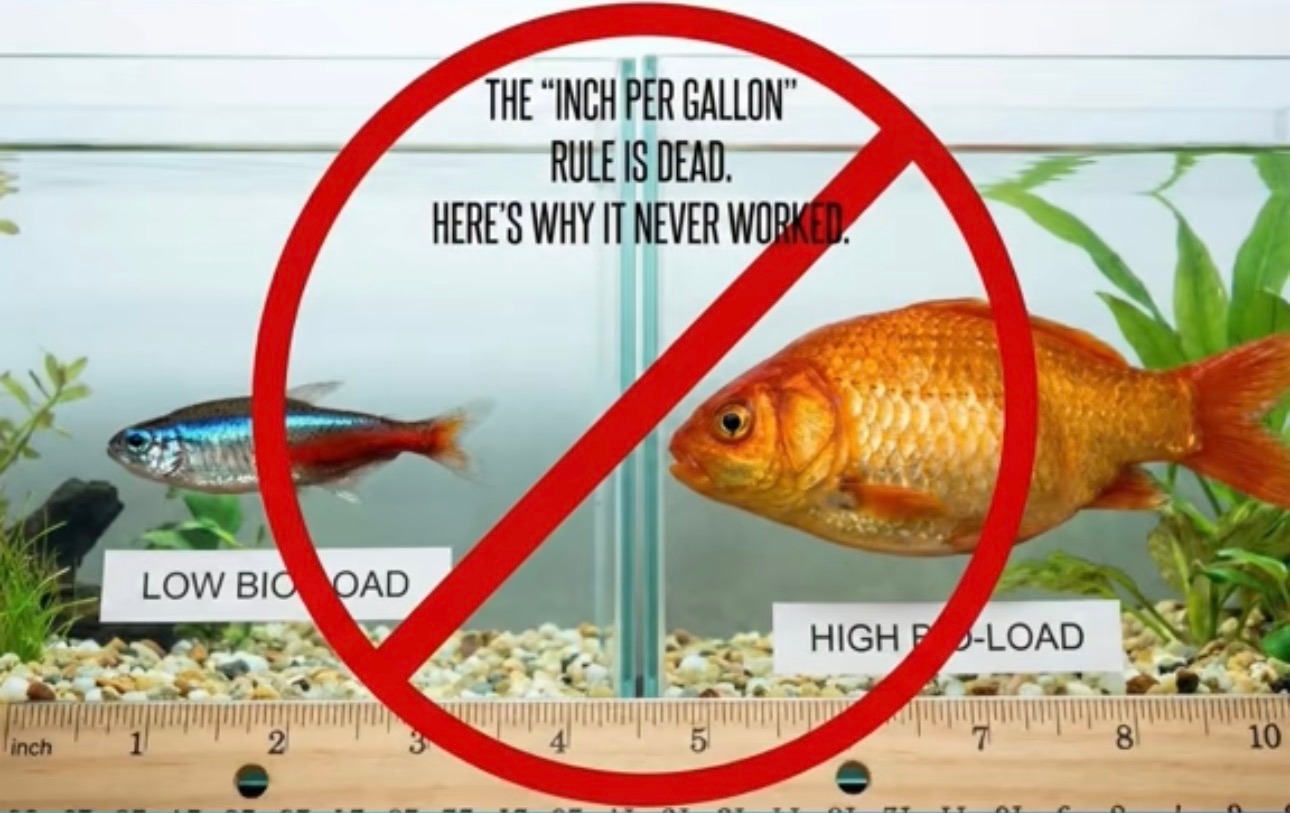
At one point, she asked me how big the tank was, and I told her it was a 10-gallon aquarium. I remember hearing the old “one inch of fish per gallon” rule, so we ended up leaving with 10 tiny comet goldfish because, technically, they were only around an inch long.
Rather than relying on that shortcut, use a cautious planning tool to work out what your tank can actually hold, then keep testing and reassessing as the tank matures.
Looking back now, it’s kind of crazy to think about.
We went home with comet goldfish, a simple sponge filter with some charcoal inside, and almost no real advice. I vaguely remember hearing things like:
“They’re hardy fish.”
“They don’t need heaters.”
“Just change the water once a week.”
Nobody talked about cycling an aquarium. Nobody explained water conditioner or dechlorinator. Nobody talked about acclimation. Nobody talked about how much waste goldfish produce or how large they could eventually become.
The fish lasted a few weeks before they eventually died.
At the time, it was just disappointing.
It took years to understand why those fish died. And longer still to understand what their dying actually meant.
Years later, after I actually got deeper into fishkeeping and started understanding things like water chemistry, aquarium filtration, oxygen exchange, and the nitrogen cycle, I realized how unfair that setup really was for the fish.
Biological Resilience vs. Proper Care
Goldfish are descended from wild carp, and that lineage shows. They can handle temperature swings, low oxygen, and water conditions that would kill most tropical fish outright.
And unfortunately, people often confuse survival with proper care.
There’s a huge difference between an animal surviving and an animal thriving.
Goldfish became known as “easy fish” because they could tolerate poor setups longer than many species. Bowls became normalized. Tiny tanks became normalized. Using goldfish to cycle aquariums became normalized.
But resilience shouldn’t be an excuse for poor care.
The Goldfish Bowl Myth
What’s interesting is that this problem goes far beyond pet stores.
It became cultural.
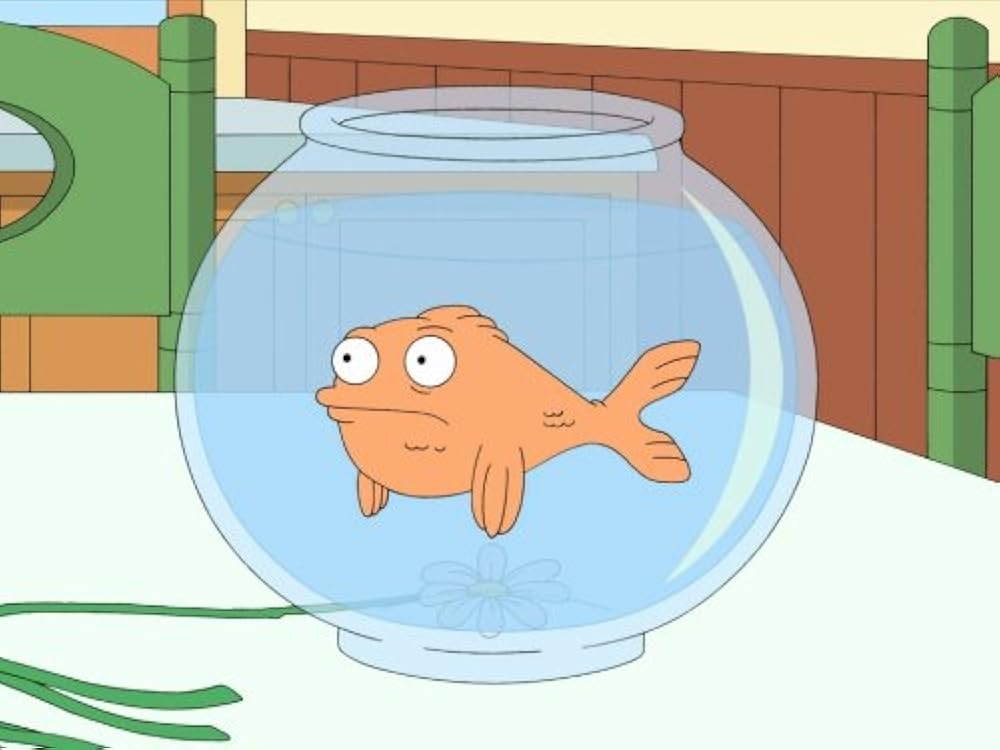
Even now, I’ll be watching Sesame Street with my kid and see Elmo with a goldfish living in a bowl, and I cringe.
For decades, pop culture has reinforced the idea that fish bowls are normal.
Goldfish are active fish. They produce heavy waste. They need oxygen-rich water, stable water quality, and room to move. Comets especially are incredibly athletic fish that can grow surprisingly large in the right environments.
Most people simply never get to see that side of them.
Shifting Perspectives: From Comets to Fancy Goldfish
For a long time, I honestly wrote goldfish off.
Then years later, after I had already started getting more serious about fishkeeping, my sister ended up buying a few goldfish while she was away at college. When it was time for her to leave again, I basically inherited the fish because I knew they weren’t in a good setup.
At the time, I didn’t even know exactly what type of goldfish they were.
I remember posting online asking for advice and immediately getting the usual internet reactions:
“Poor fish.”
“This is terrible.”
But eventually somebody actually helped identify them and pointed me in the right direction. They turned out to be fancy goldfish, specifically orandas — a variety known for their rounded bodies and distinctive head growth called a wen.
Once I understood what they needed, I started trying to improve their situation the best I could with the space and resources I had available at the time.
I ended up setting them up in a 20-gallon long aquarium. Looking back now, I know that still wasn’t ideal long term for a high-bioload species, but at the time I was genuinely trying to do better with the information and resources I had available.
Ironically, one of the same people criticizing me later messaged me privately.
He told me he noticed that instead of getting defensive, I actually tried to learn and improve the care for the fish. Then he explained that his girlfriend had impulsively bought a goldfish and added it to his tropical aquarium, and he didn’t know what to do with it.
So he gave the fish to me.
That interaction stuck with me because it reminded me that education works a lot better than humiliation in this hobby.
A lot of people genuinely care. They just start with bad information.
Confronting Swim Bladder Issues
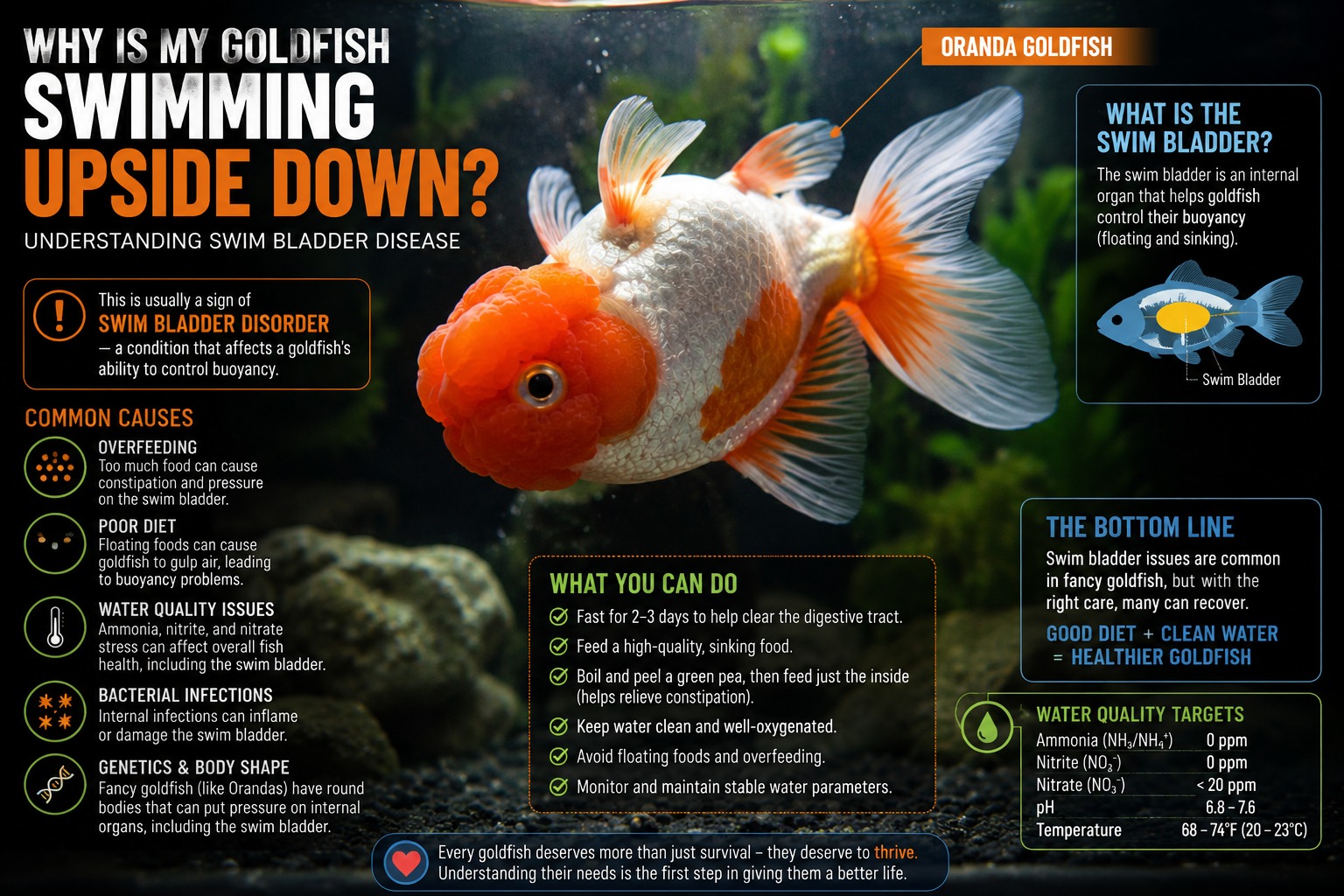
One of those goldfish eventually developed what I believe was swim bladder disease.
It started struggling to stay upright and eventually spent a lot of time floating awkwardly upside down. At the time, this was one of my first real experiences dealing with fish illness.
I researched everything I could.
I read about feeding deshelled boiled peas to help digestion and relieve pressure. I went to the grocery store, bought frozen peas, boiled them daily, and tried everything I could think of to help the fish recover.
The fish eventually passed.
I remember standing over the tank trying to figure out what else I could have done.
Reimagining Comets as Pond Fish
Recently, we attended Fitz’s Fish Ponds PlantFest 2026, and it completely brought all of those memories back.
Read our full PlantFest 2026 recap.
Seeing large, mature comet goldfish in outdoor ponds was honestly kind of surreal.
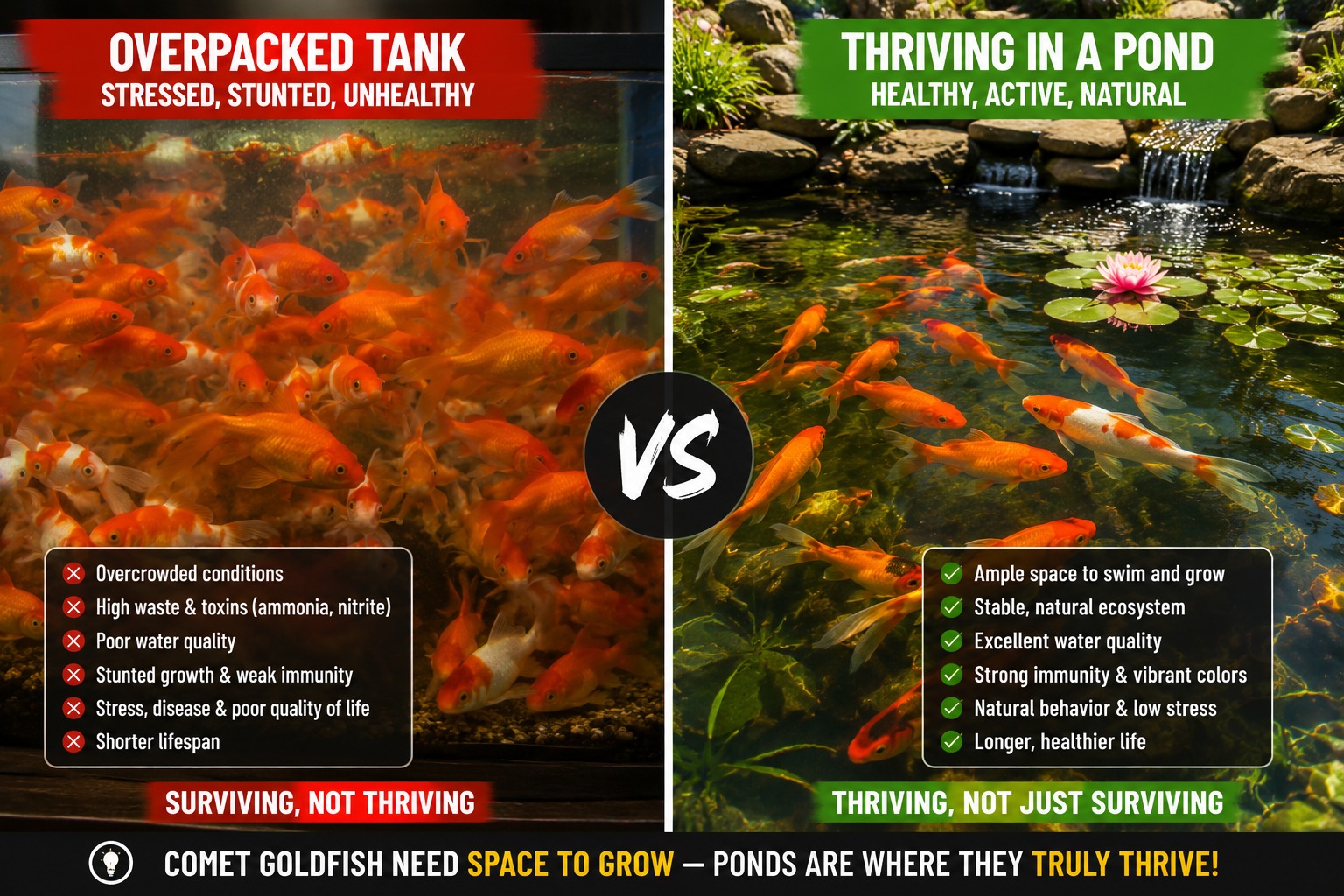
These were the same fish people buy for cents as feeder fish. But in a proper pond environment, they looked completely different: graceful, active, colorful, powerful, and elegant.
Some of them moved slowly through the water like koi, with long flowing tails trailing behind them in massive schools.
In that kind of water, comets and commons make sense in a way they never do behind glass.
Most people only ever see the first stage of a comet goldfish’s life.
They never get to see what the fish can actually become when given a proper environment instead of a confined space.
Goldfish Care and the Things I Wish Someone Told Me Earlier
If I could go back and tell that eleven-year-old kid one thing, it wouldn’t be complicated.
Goldfish are not bowl fish. They’re not disposable pets. And they’re definitely not temporary decorations.
They need real filtration, real water volume, and stable water conditions. Before adding fish to any aquarium, people should understand the nitrogen cycle, water conditioning, and proper acclimation.
Single-tail goldfish like comets and commons are generally much better suited for ponds or very large aquariums long term, while many fancy goldfish varieties require slower flow and more specialized care.
Most importantly:
don’t judge a fish by the conditions it’s commonly sold in.
Frequently Asked Questions About Goldfish
How long do goldfish live?
When kept in proper environments with stable water quality, goldfish can live surprisingly long lives. Fancy goldfish commonly live 10–15 years, while comet and common goldfish kept in ponds can live several decades.
Why are fish bowls bad for goldfish?
Fish bowls are difficult to keep stable because they usually lack adequate filtration, oxygen exchange, and water volume. Goldfish produce a large amount of waste, which can quickly lead to poor water quality in small containers.
What’s the difference between comet goldfish and fancy goldfish?
Comet goldfish have streamlined single-tail bodies built for fast swimming and are often best suited for ponds. Fancy goldfish have selectively bred rounded body shapes, double tails, and other specialized traits that make them slower swimmers and more prone to buoyancy issues like swim bladder problems.
Can goldfish cycle a new aquarium?
Historically, many people used hardy fish like goldfish to start the nitrogen cycle in a new aquarium. Today, most experienced hobbyists recommend fishless cycling methods to avoid exposing fish to toxic ammonia and nitrite spikes.
A Small Reminder That Education Matters
Recently, I visited one of my old teachers, and she reminded me of something I had completely forgotten.
Apparently years ago she posted online that she bought goldfish for her kids, and I messaged her explaining some basic care advice so the fish would have a better chance at living long-term.
She told me one of those fish is still alive today years later.
Hearing that honestly meant a lot to me.
Goldfish survived decades of poor care because they’re incredibly resilient animals.
But resilience should never be mistaken for quality of life.
Tank Guide Life by FishKeepingLifeCo
Thinking About Goldfish? Listen Before Choosing a Tank
Goldfish need more than a bowl and a vague stocking rule. Tank Guide Life explores goldfish tank size, filtration, waste load, and the welfare-first choices that lead to healthier long-term care.
Listen on Spotify
Log parameters, feeding, and maintenance with our journals and guides.