Rethinking Undergravel Filters: A Planted Aquarium Case Study
Undergravel filters are often treated as relics of early aquarium keeping—simple devices that trapped debris, clogged over time, and were ultimately replaced by modern filtration. In many discussions, they’re dismissed outright, rarely revisited in a modern planted-tank context.
This build started with a different question:
What happens if an undergravel system is used to position water and nutrients rather than to trap waste?
What follows is a documented case study of how we used undergravel flow in both a planted display tank and a sump refugium, what we observed, and why we think the results turned out the way they did.
Important Context and Scope
This article is not presenting peer-reviewed conclusions.
Everything here is based on:
- Personal experimentation and observation
- Established aquarium concepts
- Hands-on work in our own systems
- Long-term observation during routine maintenance
Variables such as livestock load, plant selection, feeding, lighting, and water chemistry were not isolated in a laboratory setting.
This is a case study, not a universal prescription.
Our goal is simple:
to document what we built, what we observed, and why we believe those outcomes occurred.
System Overview
- Display tank: 29-gallon planted aquarium
- Filtration approach: Undergravel-assisted substrate flow
- Additional filtration: Sump with mechanical stages and a reverse undergravel refugium
This build was an upgrade to an existing aquarium, not a sterile new setup. Because of that, we knew certain biological elements—especially Malaysian trumpet snails—would already be present and could contribute to substrate mixing.
Complete Water Flow Path
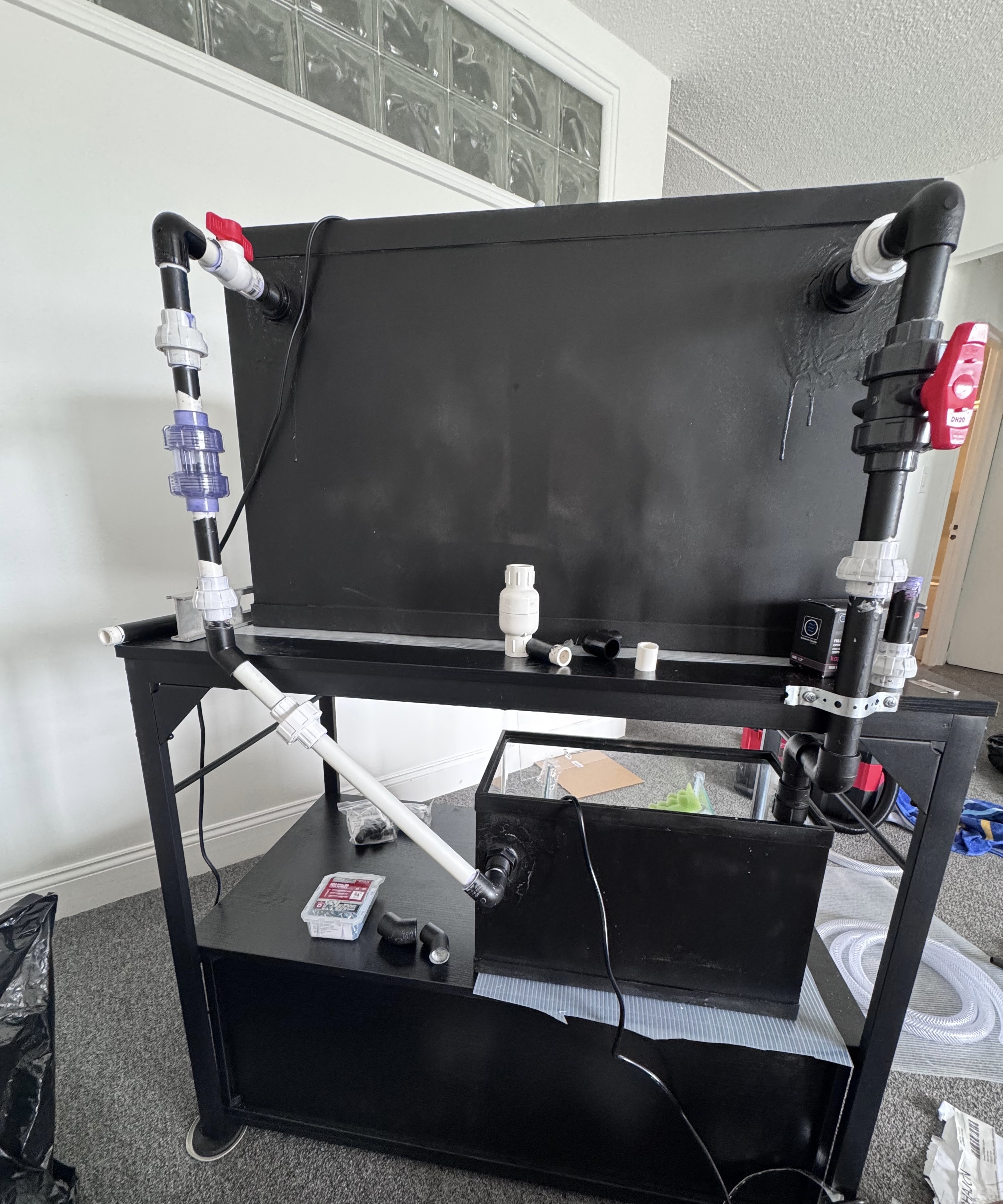
Understanding how water moves through this system is essential to understanding how the two undergravel setups work together.
Flow sequence:
-
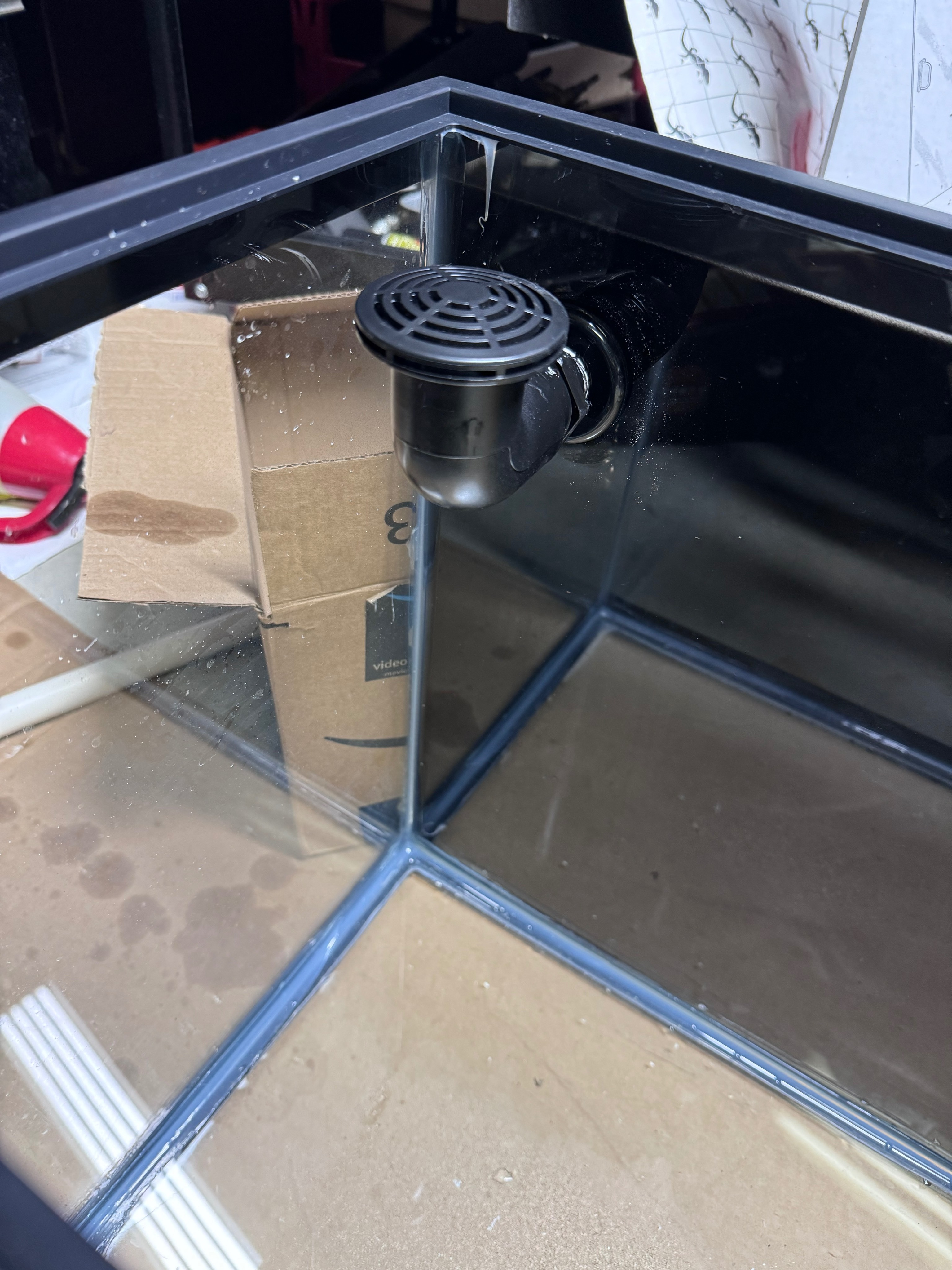
Display tank → Water exits via internal overflow (PVC elbow)
-
Sump mechanical filtration → Water enters bottom of filter chamber, passes through:
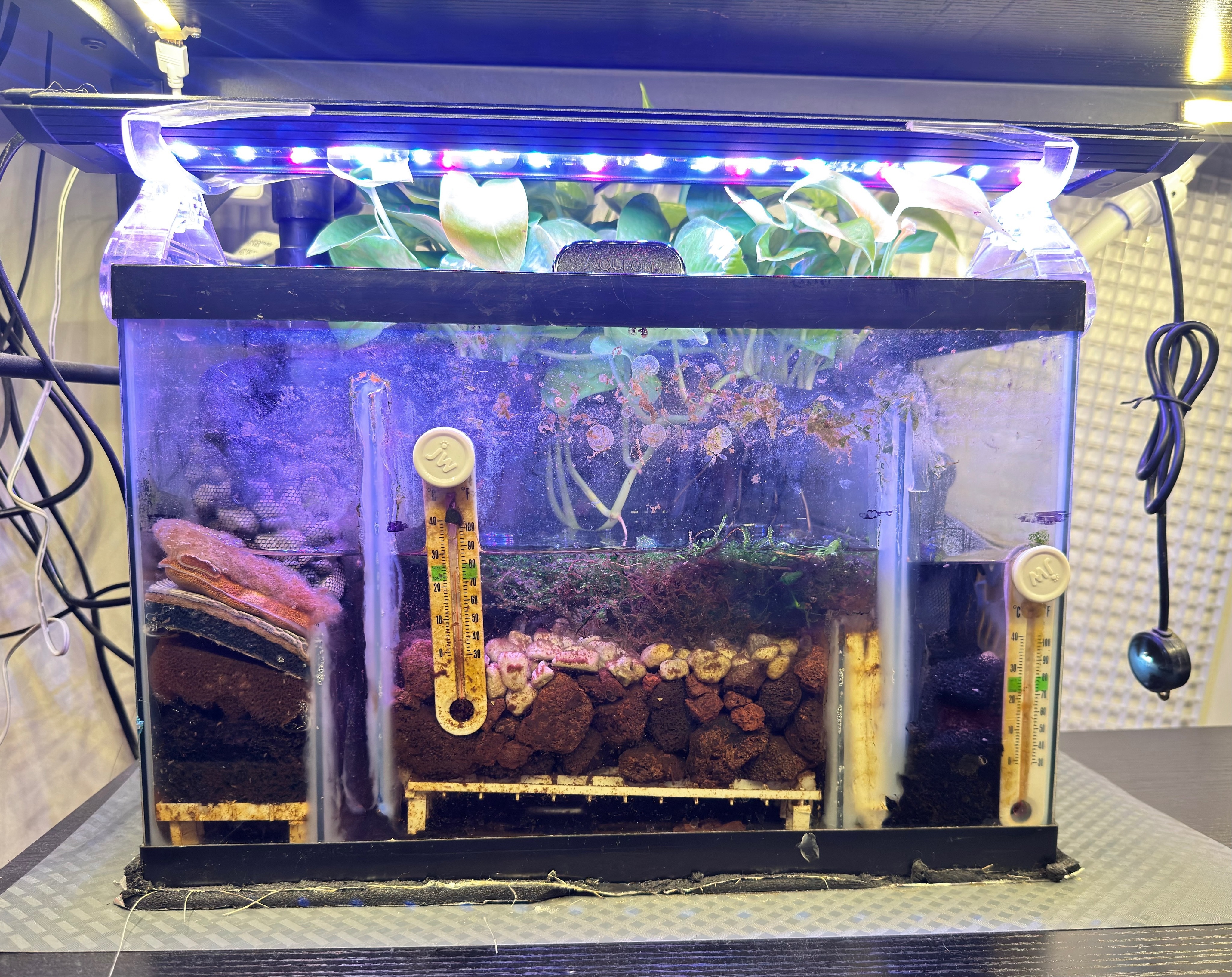
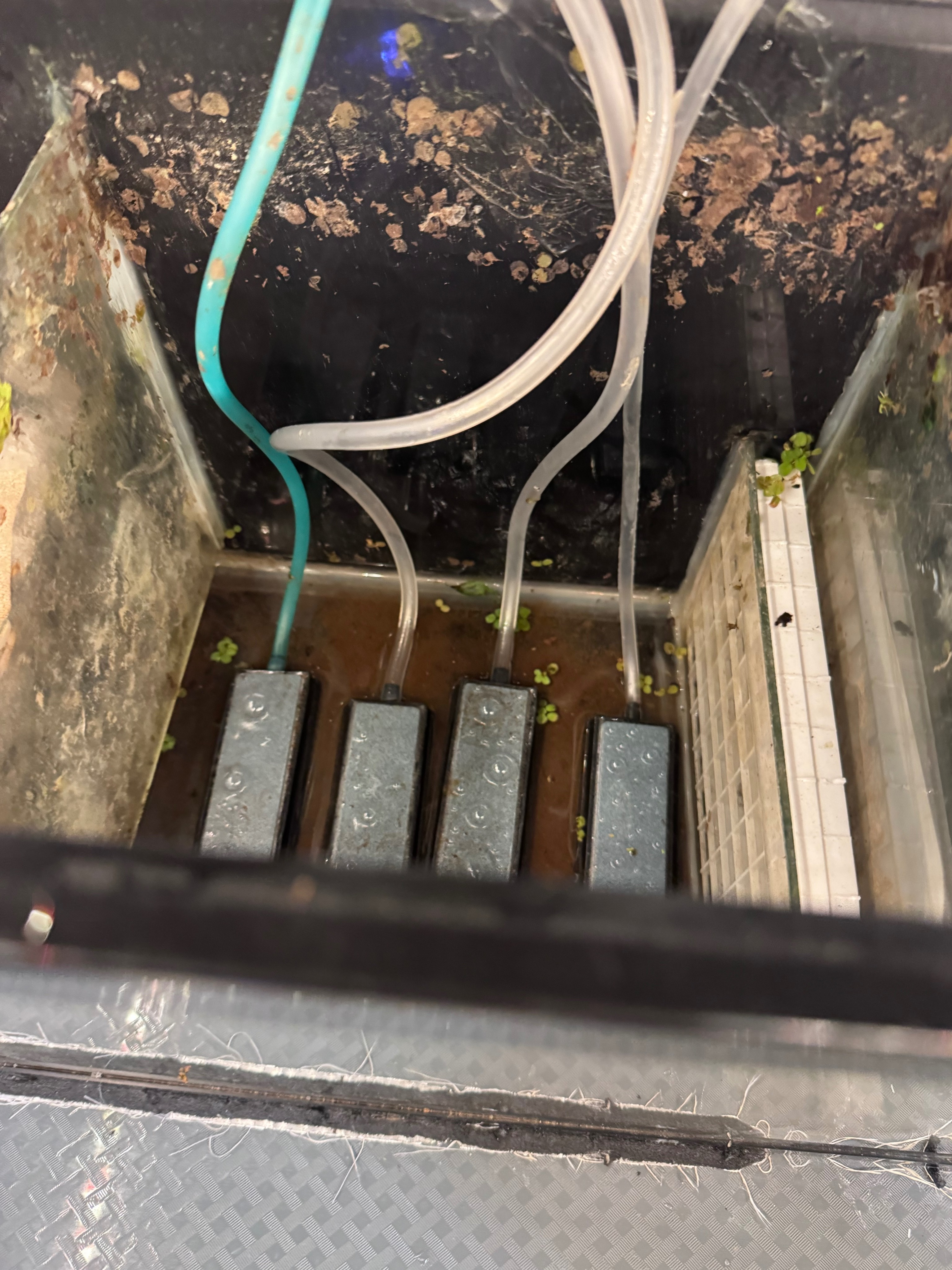
- Sump refugium → Water flows down into refugium chamber where air stones push it upward through:
- Egg crate platform (lifting media off bottom)
- Lava rock layer
- Seachem Matrix biomedia
- Floating moss and pothos roots
- Return chamber → Water flows down into return chamber
- Back to display → Return pump sends water through random flow generator nozzle back into tank
The display tank’s undergravel system pulls water down through substrate layers. The sump’s reverse undergravel system pushes water up through biological media. Together, they distribute filtration across plants, bacteria, substrate, and flow rather than relying on a single mechanical device.
How the Display Tank Was Built
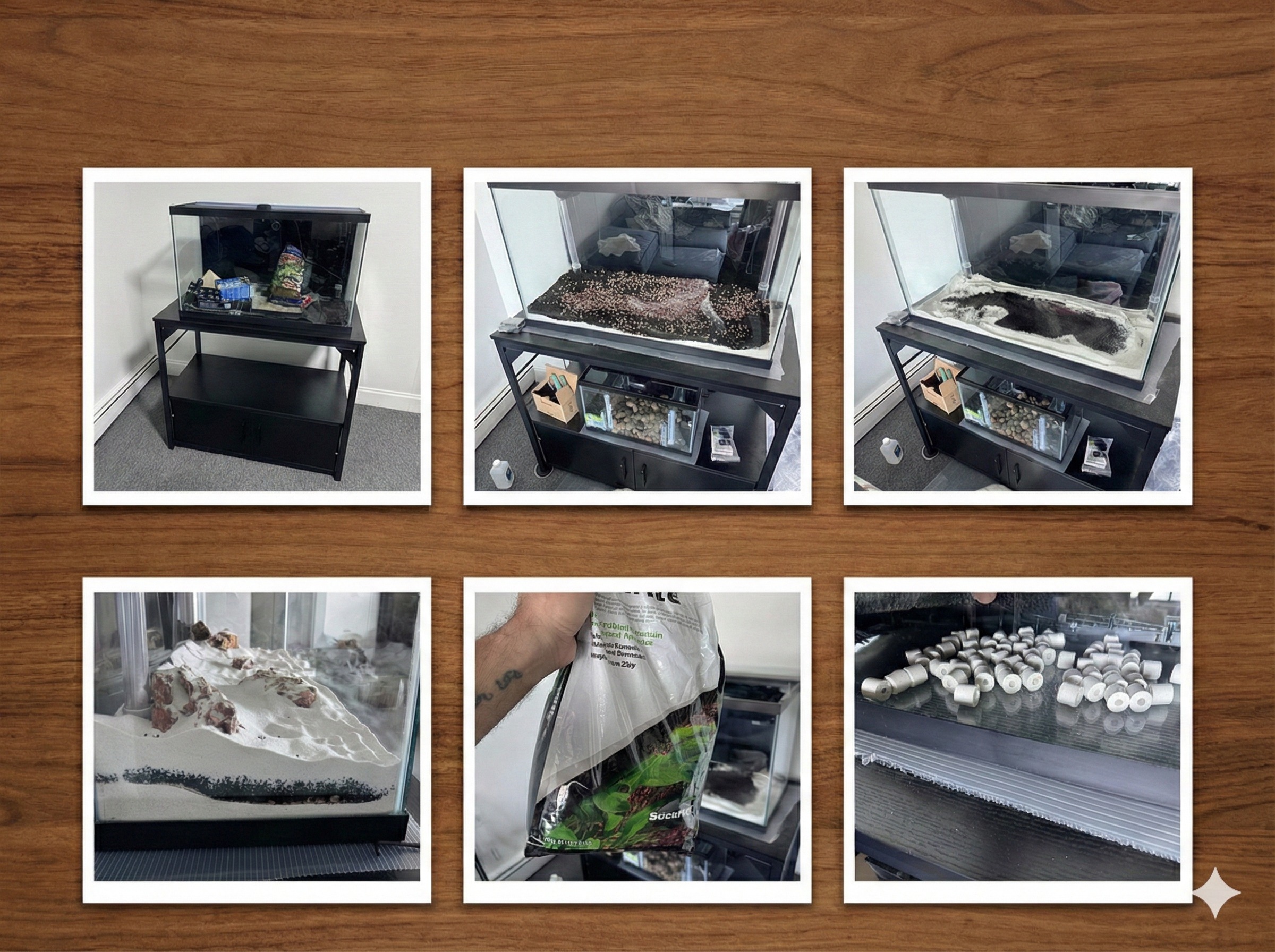
The 29-gallon aquarium began completely empty, with bare glass on the bottom.
Before any substrate was added, a light, centralized layer of ceramic biomedia was placed directly on the glass. This media was positioned in the center of the tank floor—not spread wall-to-wall. Its purpose was to add additional biological surface area in the void space beneath the undergravel plates.
Whether water actively flows through this biomedia or simply colonizes it passively remains uncertain, as we cannot observe the flow path beneath the plates. We included it as a precautionary measure to maximize potential biological filtration in that space.
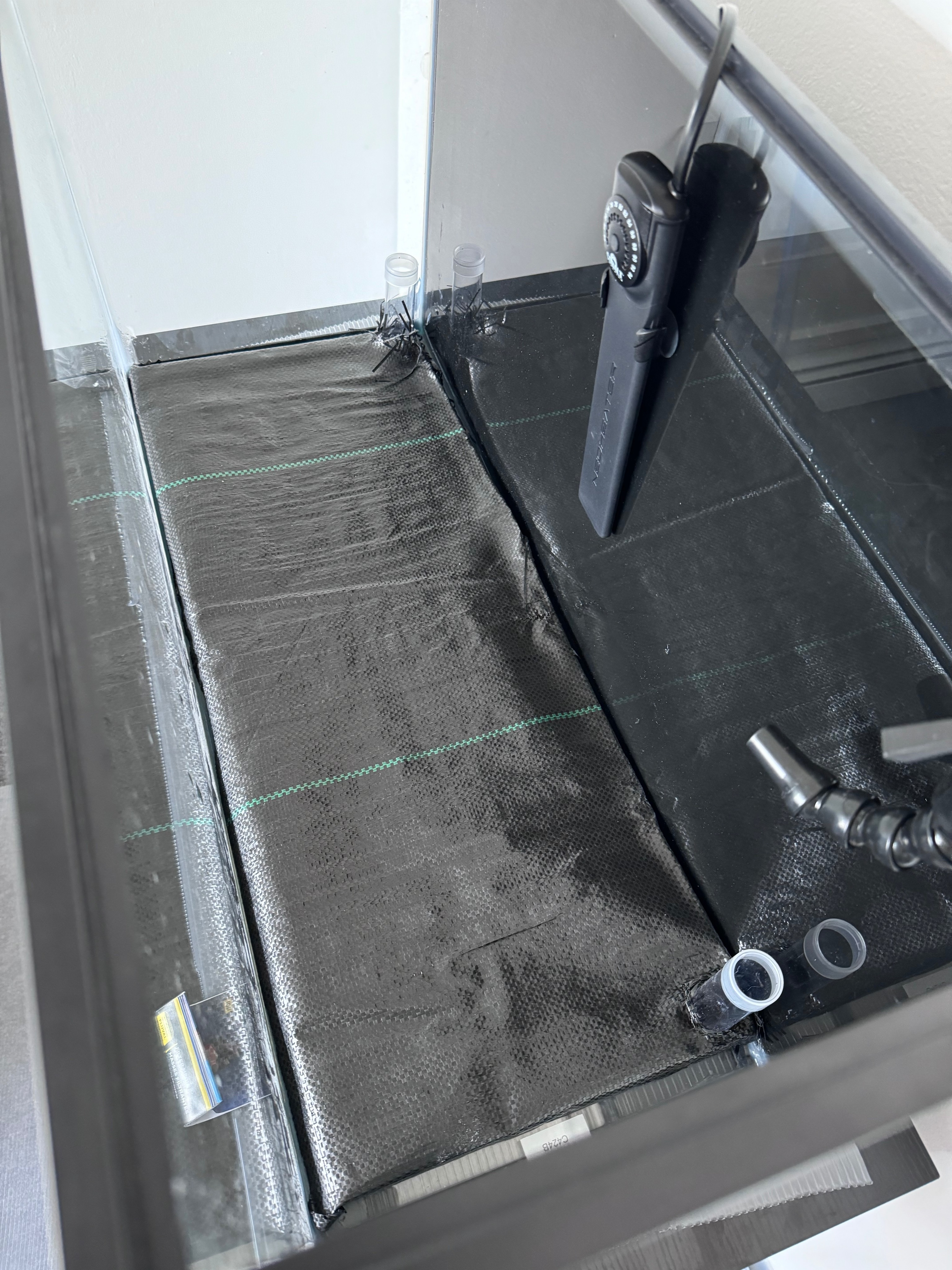
Next, undergravel plates were installed over the biomedia. These plates were positioned to encourage even downward water movement rather than aggressive suction at a single point. Two uplift tubes—one on each side of the tank—were fitted with air stones and airline tubing. The air-driven lift creates the suction that pulls water downward through the substrate.
To prevent fine material from entering the void beneath the plates, the entire undergravel surface was covered with weed barrier cloth placed on top of the plates and carefully cut around uplift tube openings. This layer functioned strictly as a control barrier to reduce clogging—one of the most common failure points in traditional undergravel designs.
Substrate Layering (Bottom → Top)
- Bare glass bottom
- Light, centralized layer of ceramic biomedia
- Undergravel plates
- Weed barrier cloth (on top of plates)
- Fluval Stratum
- Seachem Flourite Red
- 3-4 inches of play sand cap (slightly thicker toward rear of tank)
- Hardscape embedded into sand
The Fluval Stratum provided readily available nutrients for early root development, while the Flourite added long-term nutrient retention through its porous structure and cation exchange capacity. The thick play sand cap slowed nutrient movement, acted as a buffer between the water column and nutrient-dense layers below, and provided a clean visual surface.
What the Undergravel Filter Was (and Wasn’t)
All meaningful filtration and nutrient interaction occurred above the plate—within the sand, substrate layers, plant roots, microorganisms, and invertebrate activity.
In this system, the undergravel filter was never intended to act as a filter in the traditional sense.
The undergravel plate itself is not the filter.
The undergravel plate itself does not trap debris, polish water, or process waste.
Instead, it functions as a structural tool for moving water.
Its role was to:
- Create suction via air-driven uplift
- Pull water downward through the substrate
- Provide a consistent flow path
The undergravel system simply ensured that water moved through those biological layers rather than around them.
Observable Evidence of Downward Flow
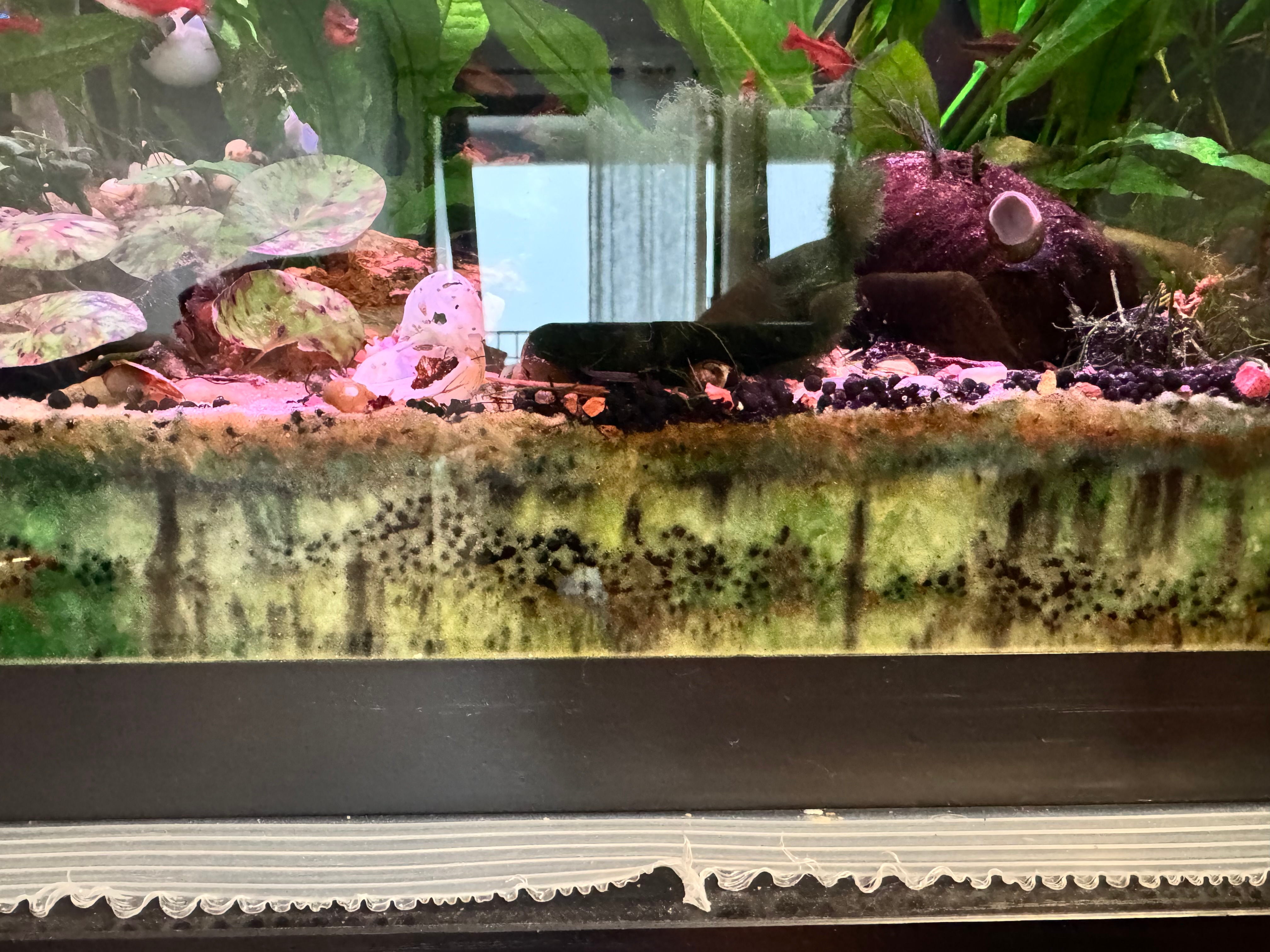
One of the most important observations came months after the system was established: visible nutrient streaking in the white play sand.
These streaks appear as dark brown vertical lines running downward through the sand cap. They vary in appearance—some look like dirt or sediment, others like detritus or algae being pulled through the sand matrix. The algae appears to be attached to sand grains or flowing through the sand along these paths, not growing on the glass.
When we first noticed them:
The streaks began appearing well past six months into the tank’s maturity. They started as faint, thin lines and gradually connected, thickened, and darkened over time as biological activity and flow paths became more established.
What’s causing the streaks:
We believe they result from a combination of:
- Tannins leaching from Fluval Stratum being pulled downward
- Dissolved organics and detritus from the water column
- Traces of nilocG liquid fertilizer (dosed twice weekly)
- Particulate matter (including algae) being filtered into the substrate
The fact that these flow paths developed gradually and became more defined over months suggests the substrate biology and flow distribution matured together rather than appearing instantly at setup.
Why this matters:
This is direct visual evidence that water is being pulled downward through the substrate as intended, carrying nutrients and organic material into the root zone rather than letting them disperse into the water column or accumulate on the surface.
Biological Assistance: Malaysian Trumpet Snails
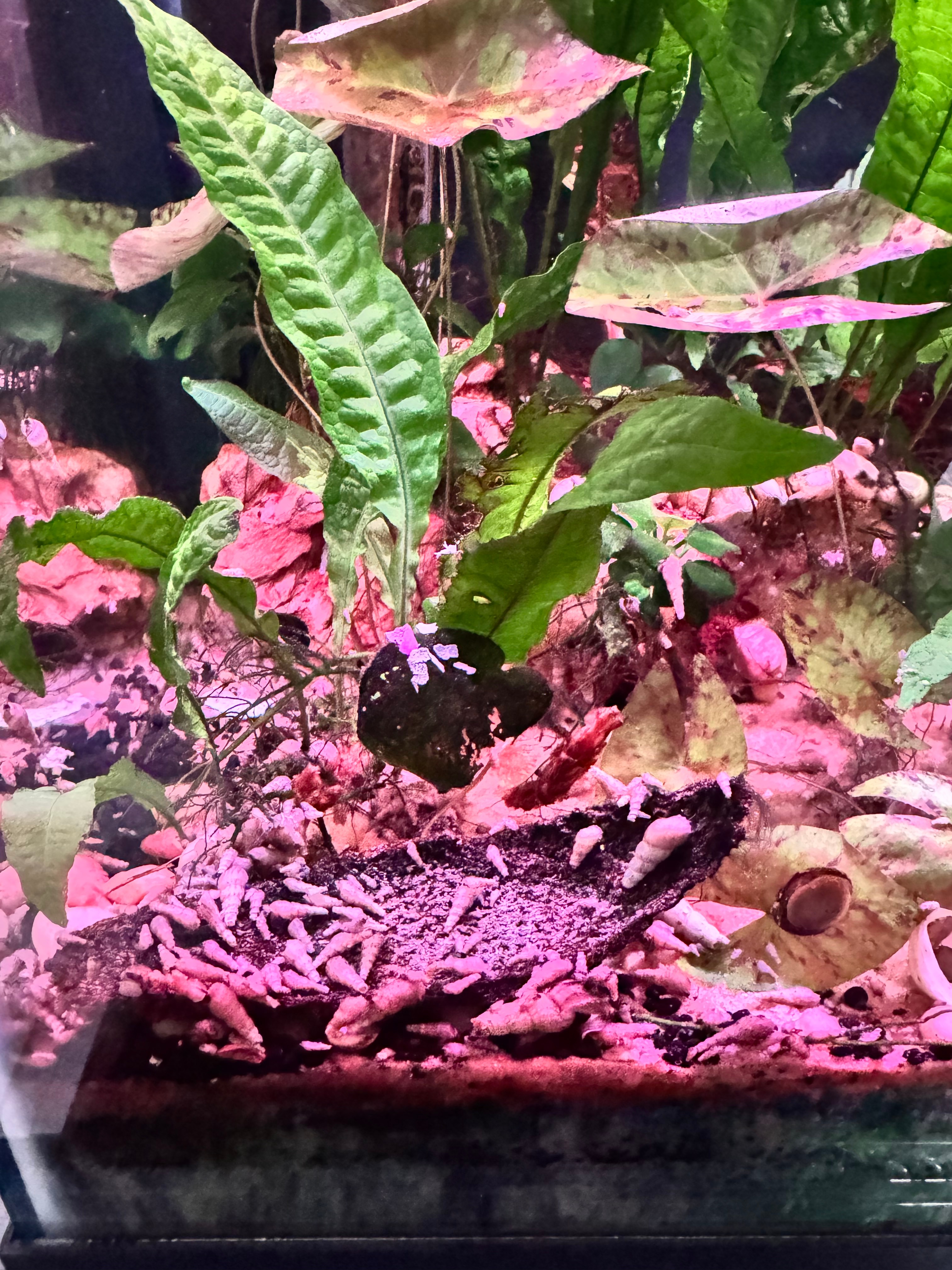
Because this tank was upgraded from an existing system, hundreds of Malaysian trumpet snails were already present and intentionally tolerated.
Their activity:
- Most active after water changes and during feeding (algae wafers)
- Population has increased over time, suggesting favorable substrate conditions
- They focus on substrate work while nerite and mystery snails handle glass cleaning
Their constant burrowing likely:
- Prevents sand compaction
- Maintains pore space for water and root movement
- Slowly redistributes nutrients deeper into the substrate
Rather than viewing them as pests, we treated them as part of the system’s biological function—gently mixing substrate layers without aggressive disturbance.
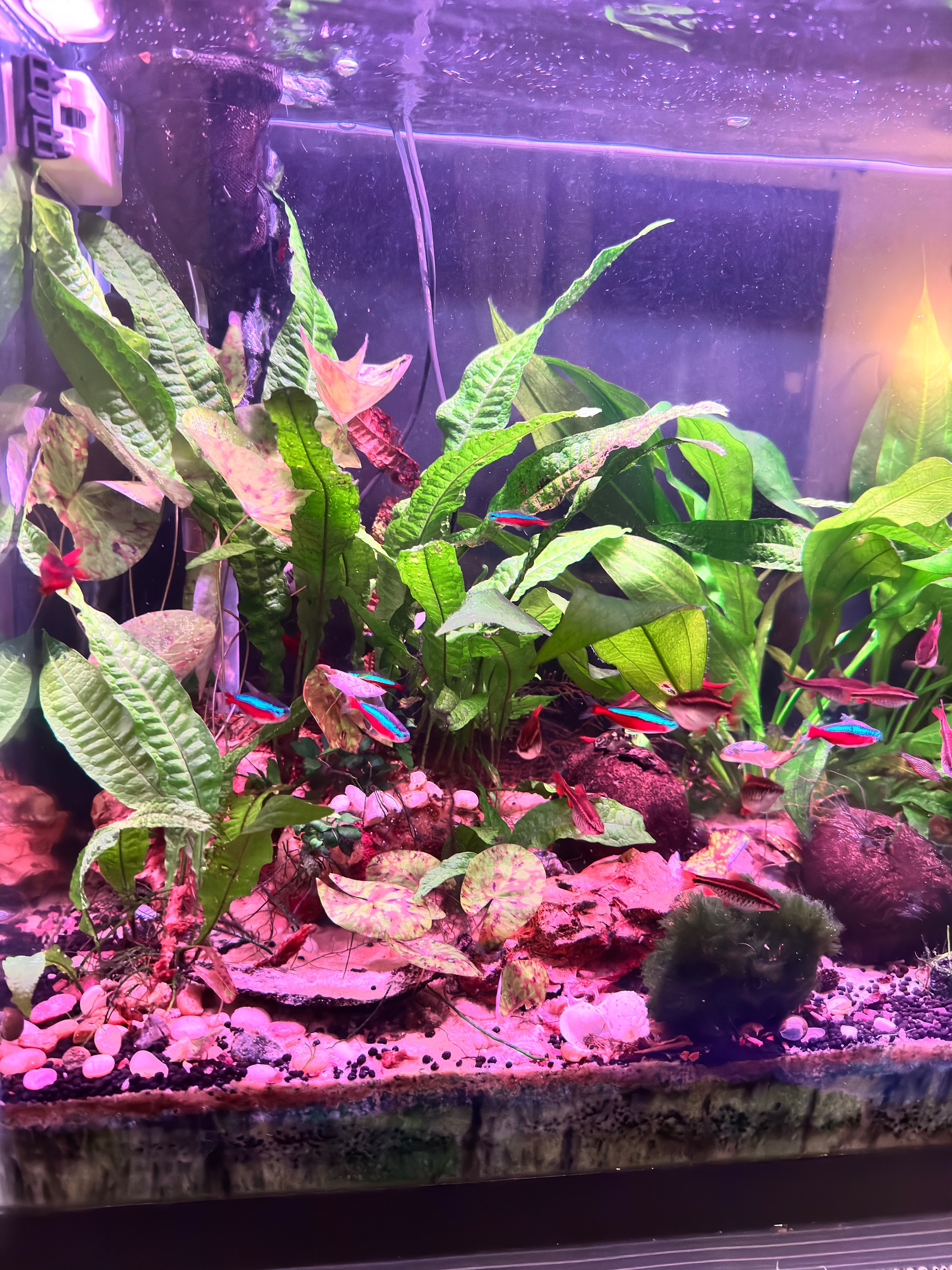
Observed Display Tank Results
Over time, we observed:
Plant performance:
- Consistent growth across multiple species with different nutrient strategies
- Tri-color lotus grew tall and produced additional bulbs—a strong indicator of thriving substrate conditions, as lotus plants propagate via bulbs only when nutrient-rich
- Rotala (flexible feeder) showed steady stem growth
- Java fern and Anubias (water column feeders) remained healthy
- Minimal to no plant melt during the substrate upgrade and system establishment
Substrate behavior:
- Extensive root systems (not visible through glass, but inferred from robust plant growth and propagation)
- Stable sand structure with minimal visible compaction
- No persistent anaerobic odor during maintenance
- Visible nutrient flow paths (the dark streaks) developed and stabilized over months
Water quality:
- Nitrates remain stable at ~20ppm, rarely exceeding 40ppm
- Stability maintained while dosing nilocG fertilizer twice weekly
- Parameters tested before each fertilizer dose
Maintenance requirements:
- No substrate disturbance beyond light surface vacuuming when dead plant matter is visible
- No need to “reset” compacted zones
- No foul smells when moving hardscape or replanting
- Sand cap has remained intact and functional without intervention
Water change schedule:
We perform large weekly water changes (75-80% display, 95% sump) as a personal preference, not because the system requires it. This aggressive dilution schedule prevents us from claiming the system is fully self-regulating, but it also means the filtration setup isn’t forcing heavy maintenance—we’re choosing it.
Why We Think the Display System Worked
Based on design and observation, we believe the results were influenced by:
- Air-driven downward water movement through substrate layers
- Layered materials with complementary physical and chemical roles
- Plants acting as primary nutrient consumers across different uptake strategies
- Continuous micro-disturbance from hundreds of trumpet snails preventing compaction
- Nutrients being retained and cycled within the substrate zone rather than flushed into the water column
Rather than isolating nutrients or flushing them away, the system appeared to support nutrient retention within the substrate zone, as evidenced by consistent plant growth, lotus bulb propagation, and the development of visible downward flow paths.
The Sump and Reverse Undergravel Refugium
This aquarium does not rely on a single filtration method.
After water exits the display tank, it passes through mechanical filtration stages in the sump before entering a reverse undergravel refugium designed for biological processing and nutrient export.
How the Reverse Undergravel Refugium Was Built
The refugium uses a DIY undergravel platform, not a commercial plate system.
The build consists of:
- Bare glass sump bottom
- Long air stones placed directly on the glass
- Custom undergravel platform fabricated from lighting diffuser (egg crate)—provides approximately 1 inch of lift
- Lava rock layer (1-1.5 inches deep) placed on top of egg crate
- Seachem Matrix biomedia sitting on top of lava rock
- Moss floating freely in the refugium chamber
- Pothos plants in 3D-printed canisters with roots dangling into the water
The egg crate serves as a structural platform, elevating the media bed and preserving open space beneath it where air stones can push water upward.
How the Reverse Undergravel Refugium Works
In this configuration, air-driven lift pushes water upward through the elevated lava rock and biomedia.
This design:
- Maximizes oxygen availability throughout the media bed
- Prevents media compaction
- Encourages bacterial colonization across highly porous surfaces
- Acts as a nutrient sink and biological processor rather than a debris trap
- Supports pothos root growth for additional nutrient export
Unlike the display tank, this undergravel system is focused on biological processing and oxygenation, not nutrient positioning for plant roots.
How the Two Undergravel Systems Complement Each Other
Although both systems use undergravel principles, they serve very different roles:
Display tank undergravel system:
- Positions water and nutrients within the substrate
- Supports plant root zones with nutrient-rich substrate flow
- Encourages slow, controlled downward movement
- Air-driven suction pulls water through layered materials
Sump reverse undergravel system:
- Maximizes oxygenation of biological media
- Supports heavy bacterial colonization on porous surfaces
- Absorbs and stabilizes excess nutrients via plants (pothos, moss)
- Air-driven lift pushes water upward through media bed
Together, they distribute filtration across plants, bacteria, substrate biology, and directional flow, rather than relying on a single mechanical device.
What This Case Study Is — and Isn’t
This article does not claim that:
- Undergravel filters are universally superior
- This approach will work in every aquarium
- Traditional filtration methods are wrong
- Minimal maintenance is guaranteed
It does suggest that:
- Undergravel systems behave very differently when designed around plants and substrate biology
- Many historical failures may have been design-related (waste trapping, poor flow distribution) rather than inherent flaws
- Flow direction and nutrient placement may matter as much as equipment choice
- Observable evidence (nutrient streaking, plant propagation, lack of compaction) can support or challenge assumptions about how systems work
Closing Thoughts
Undergravel filters didn’t disappear because they were useless.
They disappeared because they were often used without understanding what they were actually doing.
This build wasn’t about reviving old equipment for nostalgia—it was about re-examining how water, nutrients, and biology move through an aquarium system.
We observed nutrient streaks forming over months. We watched a lotus plant send out new bulbs. We maintained a thick sand cap without disturbance for over a year. We saw hundreds of trumpet snails thrive in substrate that traditional UGF wisdom would predict should have become toxic.
These aren’t universal claims—they’re documented observations from one system, built with specific goals, maintained with specific habits, and watched over time.
If nothing else, we hope this case study encourages more experimentation, documentation, and thoughtful discussion around filtration methods that still have unexplored potential.
FAQ
Is the undergravel plate itself the filter?
The undergravel plate itself is not the filter.
Is this a universal prescription?
This is a case study, not a universal prescription.
How do the display and sump undergravel flows differ?
The display tank’s undergravel system pulls water down through substrate layers. The sump’s reverse undergravel system pushes water up through biological media.