How to Reduce Aquarium Nitrates: A DIY, Plant-Based Approach
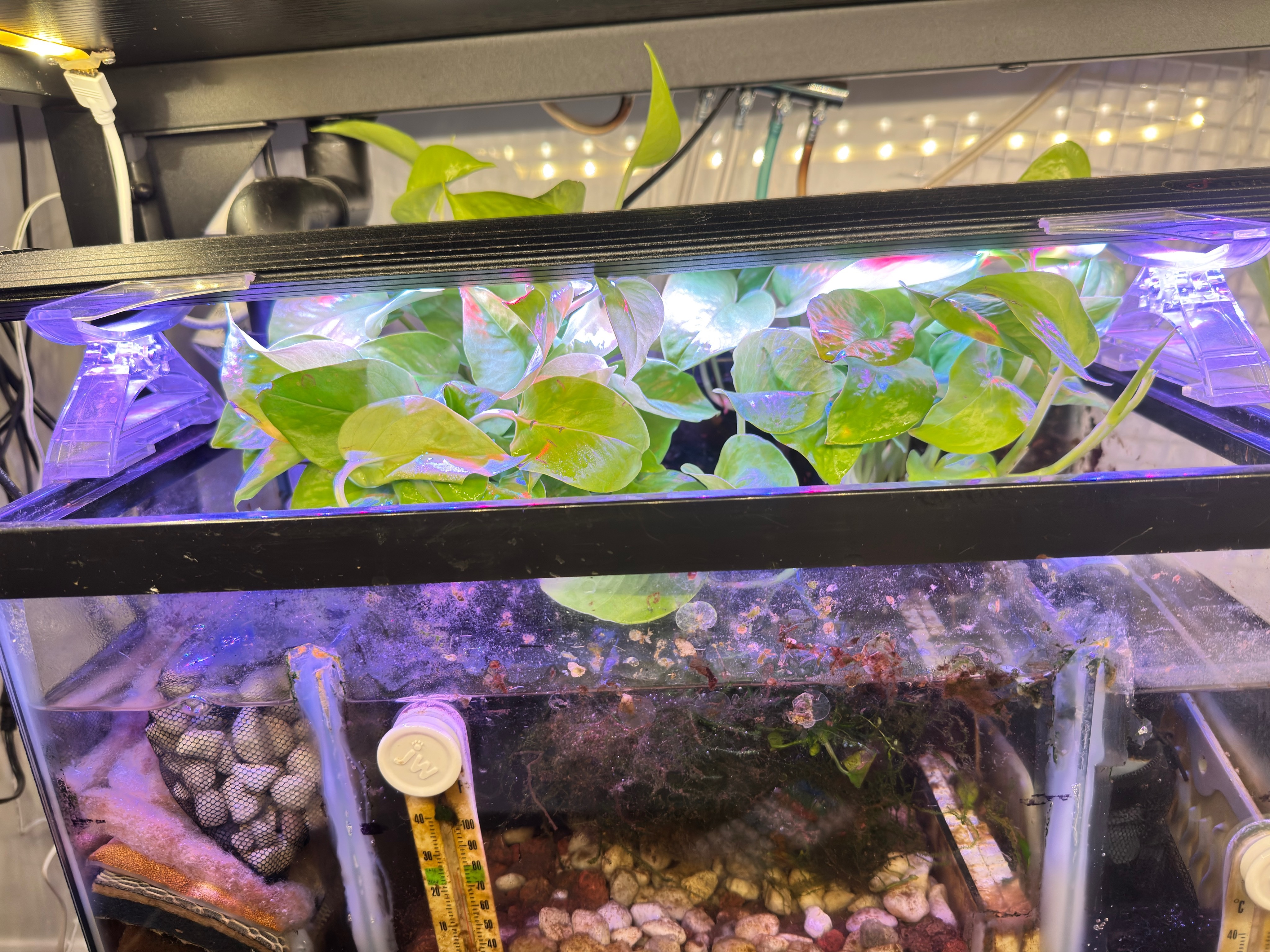
Reducing nitrates isn’t about “cleaning” a tank. It’s about supporting a stable biological ecosystem. One of the most effective low-tech tools we’ve used for long-term nitrate control is pothos — a terrestrial plant that functions as Biological Nutrient Export (BNE) when adapted to aquarium conditions.
This method is affordable, scalable, and welfare-focused — but it requires understanding how and when pothos actually begins to work.
Note: Pothos is effective and fish-safe, but it contains calcium oxalate crystals that are toxic to cats and dogs if ingested. Keep leaves out of reach of pets.
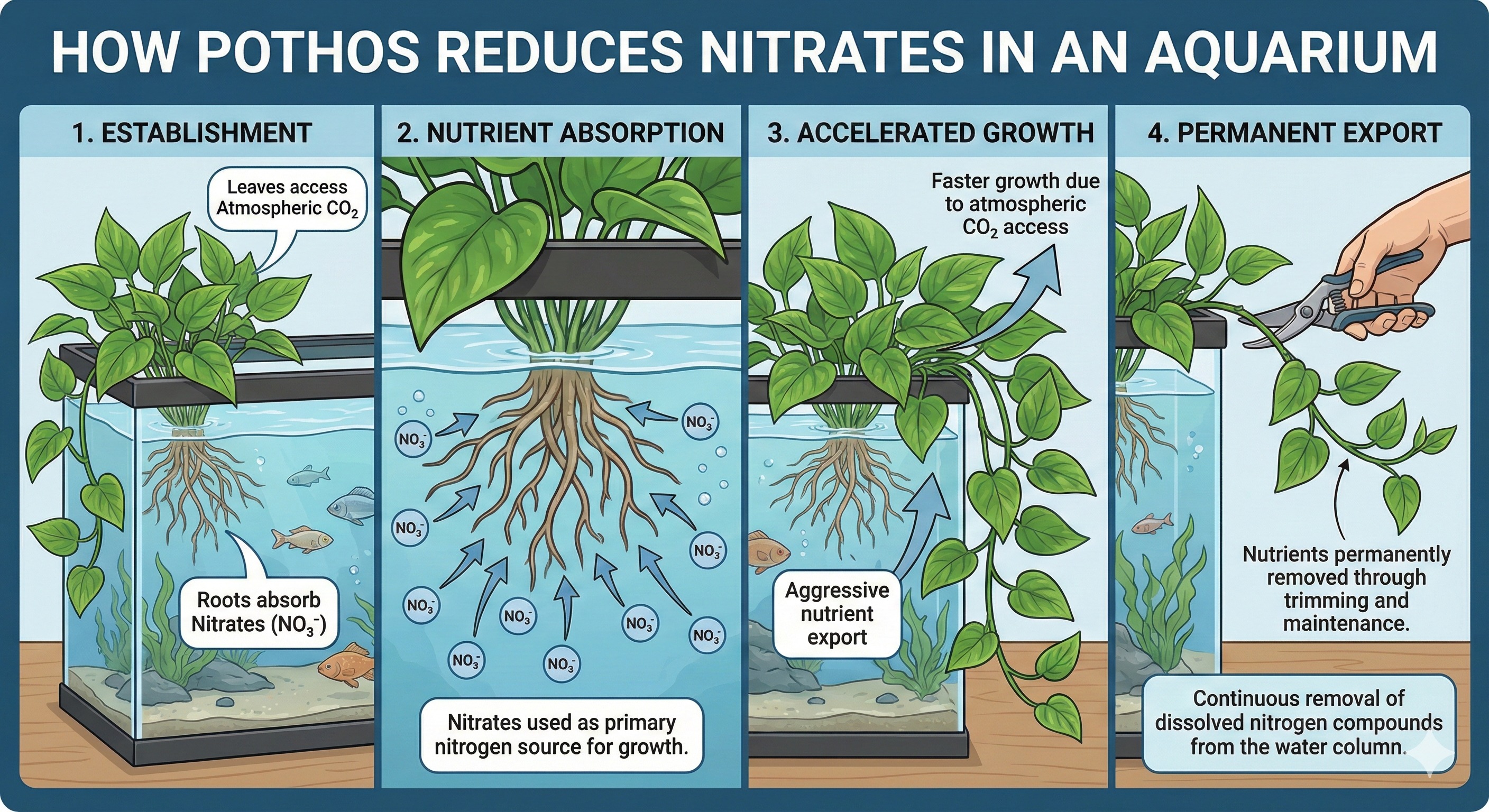
How Pothos Reduces Nitrates in an Aquarium
Here’s how it works:
Pothos reduces nitrates by using them as a primary nitrogen source for growth. Because the leaves must remain above the waterline (both for function and to prevent rot), the plant has access to atmospheric CO₂, allowing faster growth and more aggressive nutrient export than fully submerged aquatic plants.
Once established, pothos continuously removes dissolved nitrogen compounds from the water column, exporting them permanently through trimming and root maintenance.
How Long Does Pothos Take to Lower Nitrates?
Pothos is not an instant fix.
In our test tanks, pothos required a 2–3 month transition period before meaningful nitrate reduction occurred. During this time, the plant converts from soil-based or “dry” roots to aquatic roots capable of efficient nutrient uptake.
Before this transition is complete, nitrate absorption is limited. Afterward, uptake becomes consistent and predictable.
Timeline may vary based on light availability, initial root health, and tank bioload, but most systems follow this pattern.
Relearning Nutrient Balance in a Planted Aquarium
Once pothos becomes established, it acts as a dominant nutrient sink. In planted aquariums, this can shift nutrient availability dramatically.
We observed:
- Faster nitrate drops than expected
- Signs of nutrient competition in submerged plants
- The need to relearn dosing schedules based on observation, not habit
What we recommend during transition:
- Test nitrates weekly
- Watch for pale or stalling aquatic plants
- Adjust fertilization gradually
- Support submerged plants with targeted root tabs (substrate fertilizers) if needed
Balance isn’t lost — it’s redefined.
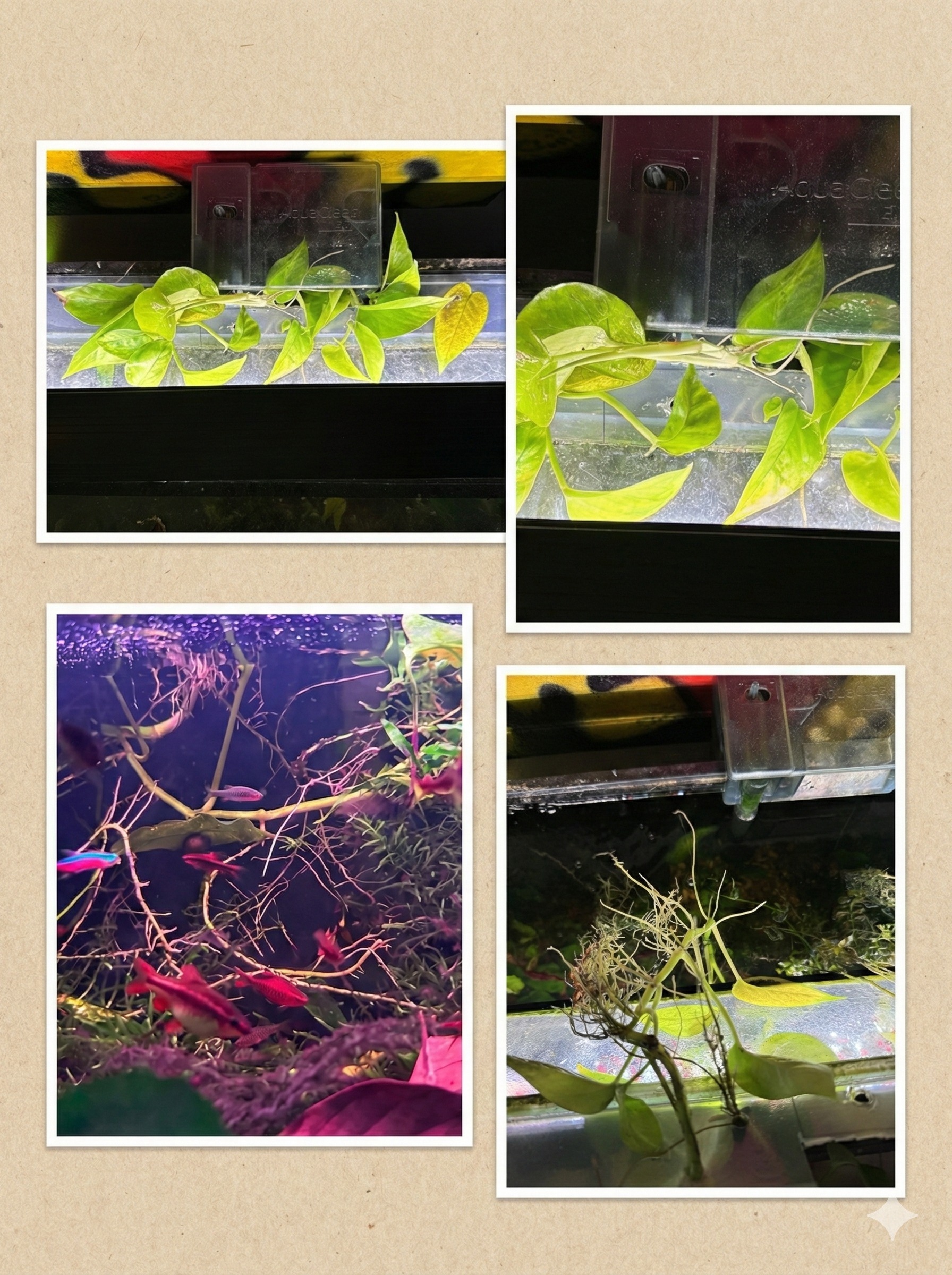
What We Tried: Real-World Setup Lessons
We tested three placement methods over 18 months. Here’s what we learned:
Hang-On-Back Filter (What Didn’t Scale)
We initially placed pothos directly into a hang-on-back filter. Growth was rapid, but roots tangled into filter media and impellers. Maintenance became disruptive, and the risk to flow consistency wasn’t worth it long-term — any flow disruption can stress fish or impact oxygen levels.
The Drilled Lid Method (Worked, But Required Vigilance)
Next, we drilled small holes into a Versa-Top aquarium lid and placed pothos cuttings through the openings so the leaves stayed above water while the stems sat in the tank.
This controlled placement better, but fast-growing roots eventually tangled with moss, plants, and hardscape. It worked — but demanded frequent root pruning.
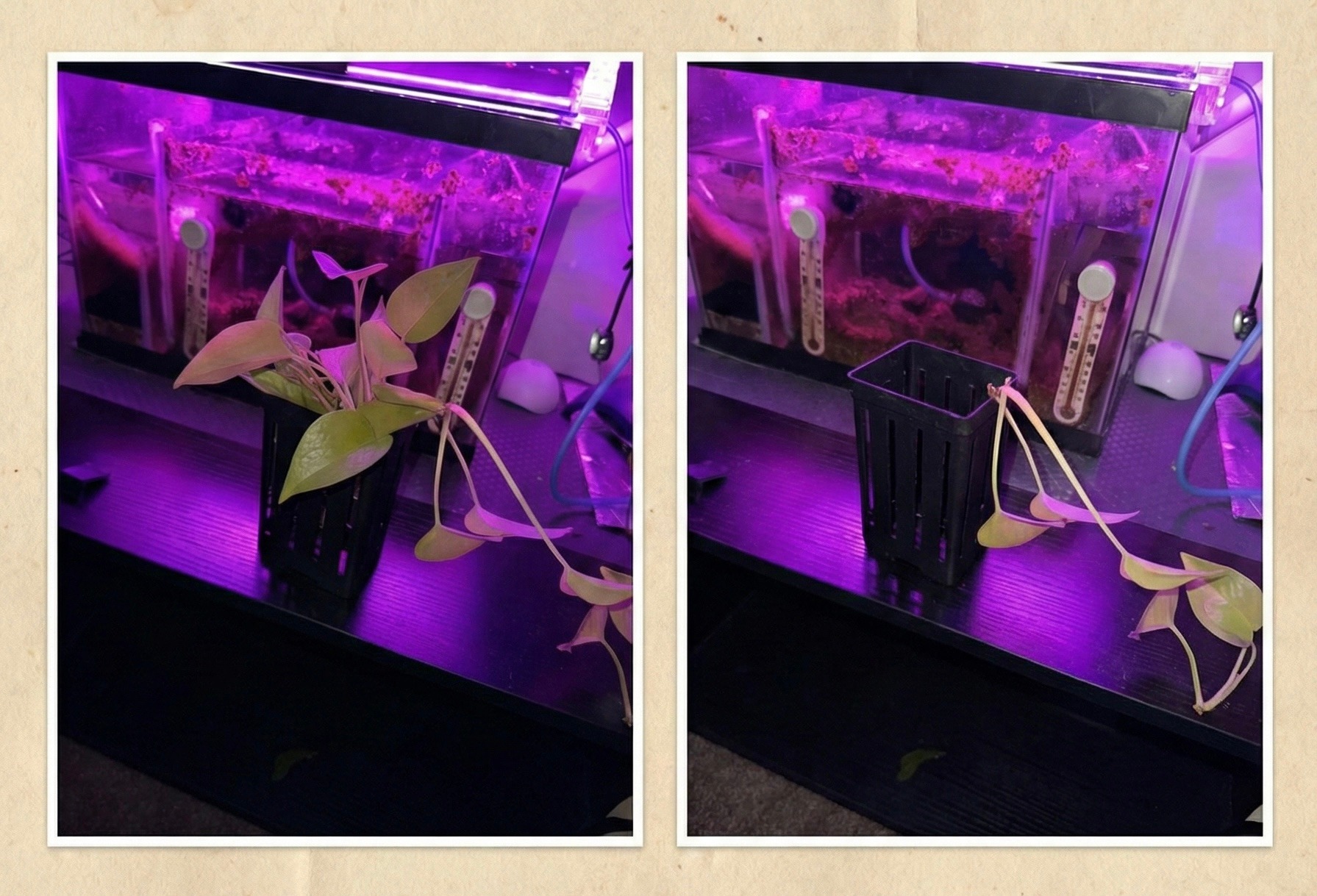
Dedicated Aquarium Holders (Best Long-Term Solution)
The most effective system we’ve used is aquarium-specific pothos holders, including 3D-printed designs.
Why this worked best:
- Roots stay contained
- Entire holder lifts out for trimming
- No disturbance to aquascape or filtration
- Predictable nutrient export
Before roots escape the container, we trim and reset. Simple, clean, repeatable.
Safety note: Make sure any 3D-printed holders are aquarium-safe (PLA, PETG) and free of paint or coatings.
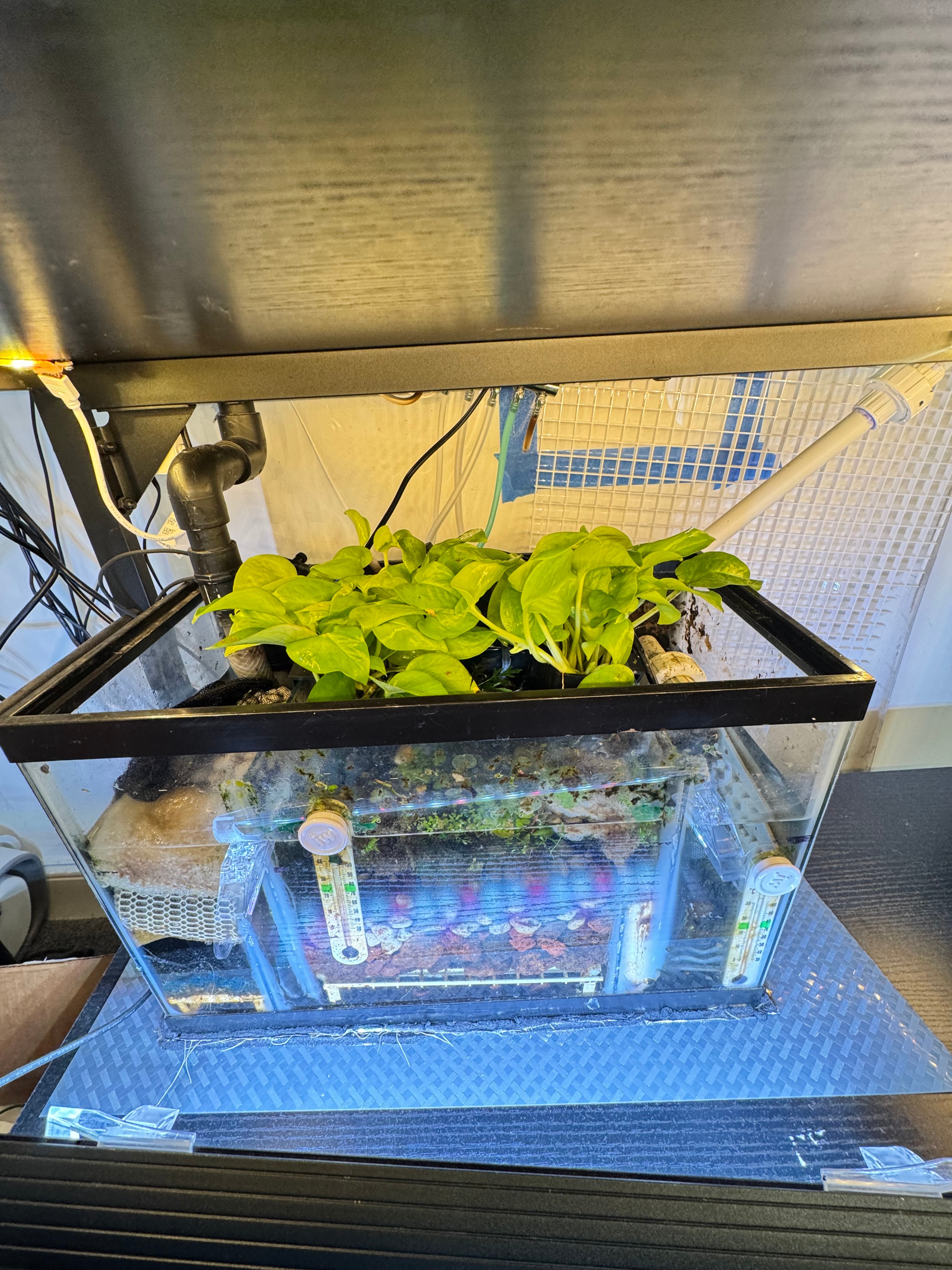
Using Pothos in a Sump Refugium
We’ve also used pothos in a sump refugium (a separate compartment for biological filtration and nutrient export), and growth rates matched display-tank setups. In our 29-gallon sump, pothos growth matched display tank rates despite lower light exposure.
The key difference was awareness. Because refugiums are out of sight, nutrient drawdown can go unnoticed.
In this system, we stayed focused on:
- Monitoring nitrate trends
- Dosing only when needed
- Maintaining stability instead of chasing numbers
Once understood, pothos became a low-effort, high-impact BNE tool in the refugium.
Light Requirements (The Overlooked Factor)
Pothos cannot export nutrients without adequate photosynthesis.
- Bright ambient room light (such as near a south-facing window) may sustain slow growth, but consistent nitrate export requires dedicated lighting or a well-lit location
- Consistent growth requires reliable light exposure
- Dedicated plant lighting improves root development and export rate
A pothos cutting placed in a dim corner of the room may survive but won’t actively reduce nitrates. Placement matters.
No light = no nutrient export.
Safety & Welfare Notes
Pet Safety:
- Pothos contains calcium oxalate crystals
- Keep leaves away from cats and dogs
- Consider placement carefully before adding to your system
Fish Safety:
- Roots are soft, flexible, and safe for fish to swim through or rest near
- Always keep leaves above water to prevent rot
Maintenance:
- Remove any failing or rotting cuttings promptly to prevent water quality issues
This method supports fish welfare when managed correctly.
The Stabilization Point
By around three months, most systems reach a new equilibrium:
- Nitrates stabilize
- Root growth becomes predictable
- Dosing routines adjust naturally
- Maintenance becomes minimal
At this stage, pothos shifts from “experiment” to ecosystem infrastructure.
If you’re not seeing these signs by month four, revisit lighting and root health — small adjustments usually resolve stalling.
Final Takeaway
Pothos isn’t a shortcut — it’s a biological strategy.
When used intentionally, monitored responsibly, and maintained properly, it becomes one of the most effective DIY tools for long-term nitrate control. Whether in a display tank or refugium, pothos supports stability, reduces intervention, and aligns with a welfare-first approach to fishkeeping.
This is nutrient management that works with the ecosystem — not against it.
Optional FAQs
How long does pothos take to reduce aquarium nitrates?
In our testing, pothos typically needs a 2–3 month transition period before nitrate reduction becomes consistent. During this time, it converts from “dry”/soil roots to aquatic roots that can uptake nutrients efficiently. Light intensity, root health, and bioload can shift the timeline.
Is pothos safe for fish tanks?
Yes—pothos roots are fish-safe, and many fish will swim through or rest near them. The key is keeping the leaves above the waterline to prevent rot. Separately, pothos is toxic to cats and dogs if ingested, so keep leaves out of reach of pets.
Can pothos replace water changes?
No—pothos can reduce nitrates through biological nutrient export, but it does not replace water changes. Water changes also manage dissolved organics, minerals, and overall system stability. Think of pothos as support for long-term balance, not a substitute for basic maintenance.
Does pothos work in sumps and refugiums?
Yes. We’ve used pothos in a sump refugium and observed growth rates comparable to display-tank setups. Because the refugium is out of sight, it’s important to monitor nitrate trends so nutrient drawdown doesn’t go unnoticed. Consistent light and periodic root trimming keep export predictable.
How much light does pothos need above an aquarium?
Pothos can survive in lower light, but consistent nitrate export requires consistent growth—and growth requires reliable light. Bright ambient room light may sustain slow growth, while dedicated plant lighting generally improves root development and export rate. No light means little to no nutrient export.
Log parameters, feeding, and maintenance with our journals and guides.