Neocaridina Shrimp Diet Guide: What They Really Eat (From Biofilm to Balanced Feeding)
By FishKeepingLifeCo | Published February 2026
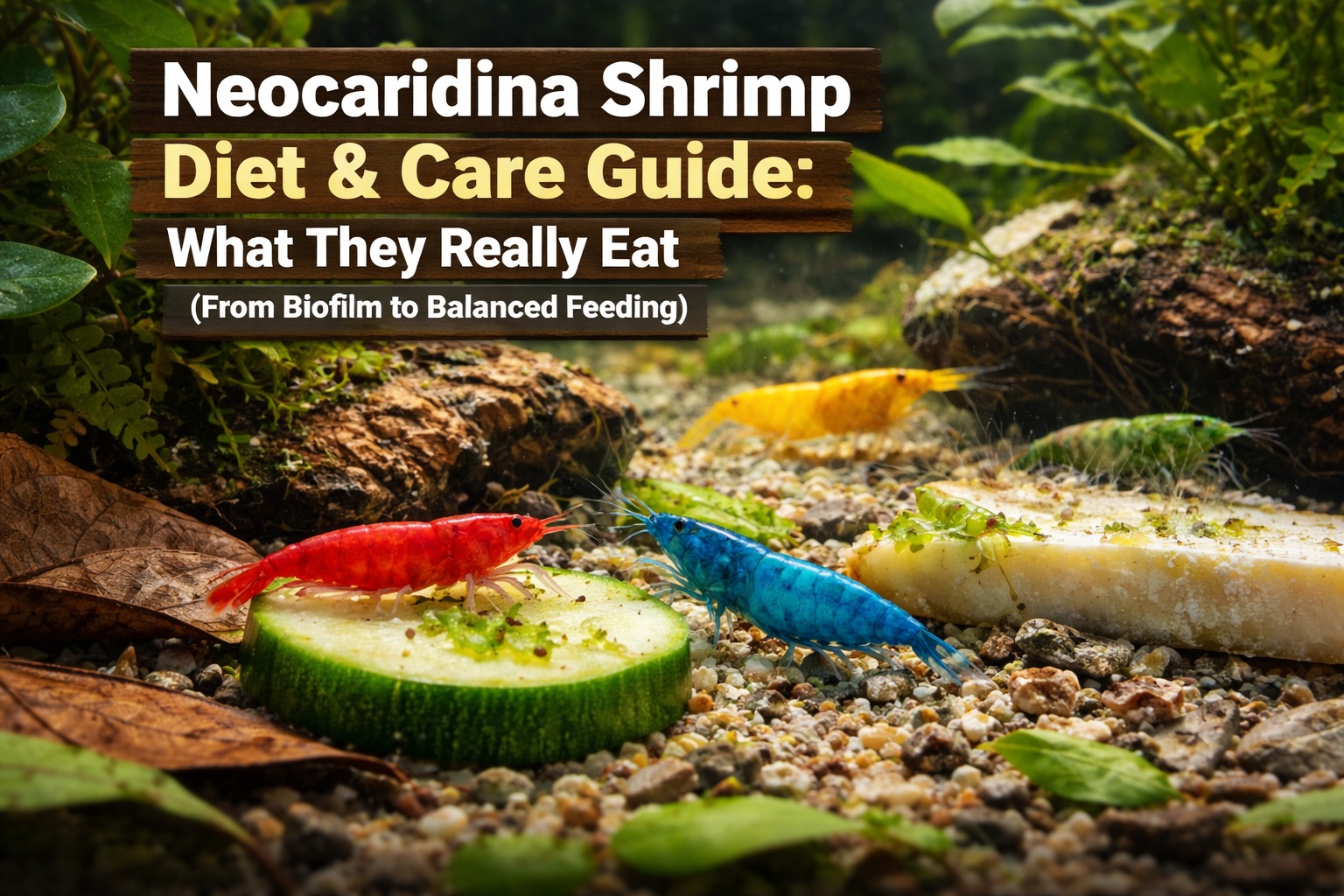
If you’ve just brought home your first colony of Cherry, Blue Dream, or Jade Green shrimp, you’ve likely noticed one thing:
They’re almost always eating.
Your shrimp spend the majority of their waking hours grazing across glass, driftwood, plants, and rocks — every surface in your tank becomes part of their buffet.
But here’s the real question:
Are they actually getting what they need to grow, molt properly, and reproduce?
In the world of Neocaridina shrimp, diet isn’t about how often you feed. It’s about whether your ecosystem can support them.
A thriving colony doesn’t depend on constant pellets. It depends on balance.
Let’s break that down.
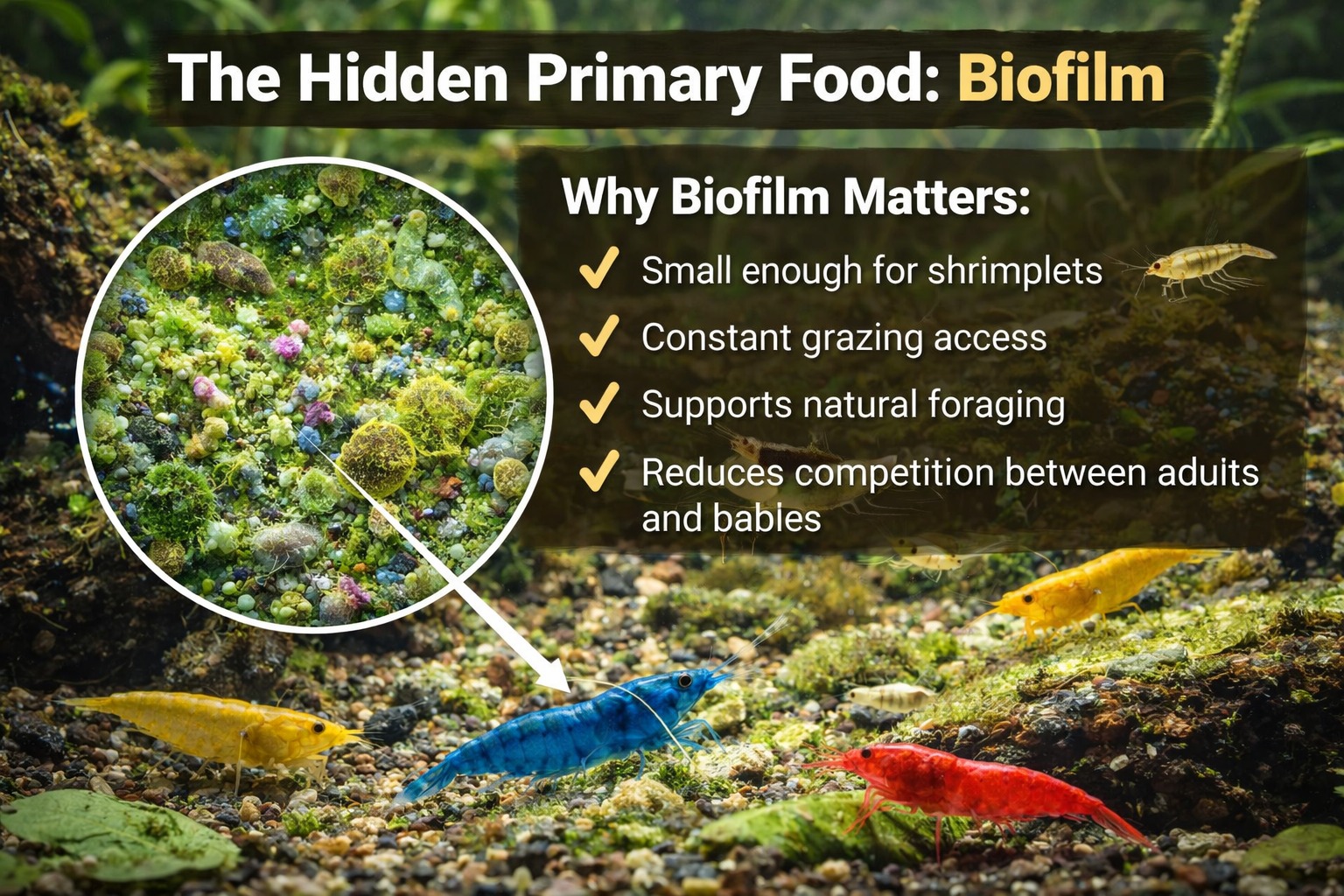
1. The Hidden Primary Food: Biofilm
Before you drop a single pellet into the water, your shrimp are already eating.
Biofilm is a microscopic layer of bacteria, algae, fungi, and microorganisms that grows naturally on every surface of a mature aquarium. It forms wherever water, light, and nutrients meet — creating a living film rich in protein, carbohydrates, and trace nutrients.
To shrimp, this isn’t grime. It’s nutrition.
Why Biofilm Matters:
- It’s the only food small enough for newborn shrimplets.
- It provides constant grazing access without scheduled feedings.
- It supports natural foraging behavior.
- It reduces competition between adults and babies.
In established tanks, biofilm often makes up the majority of a shrimp’s diet.
The Pro Move:
Don’t scrub your tank “hospital clean.”
That green film on the back glass.That brown coating on driftwood.
That’s not neglect. That’s infrastructure.
A clean-looking tank is not the same as a healthy one. Shrimp thrive in mature systems rich with microscopic life.
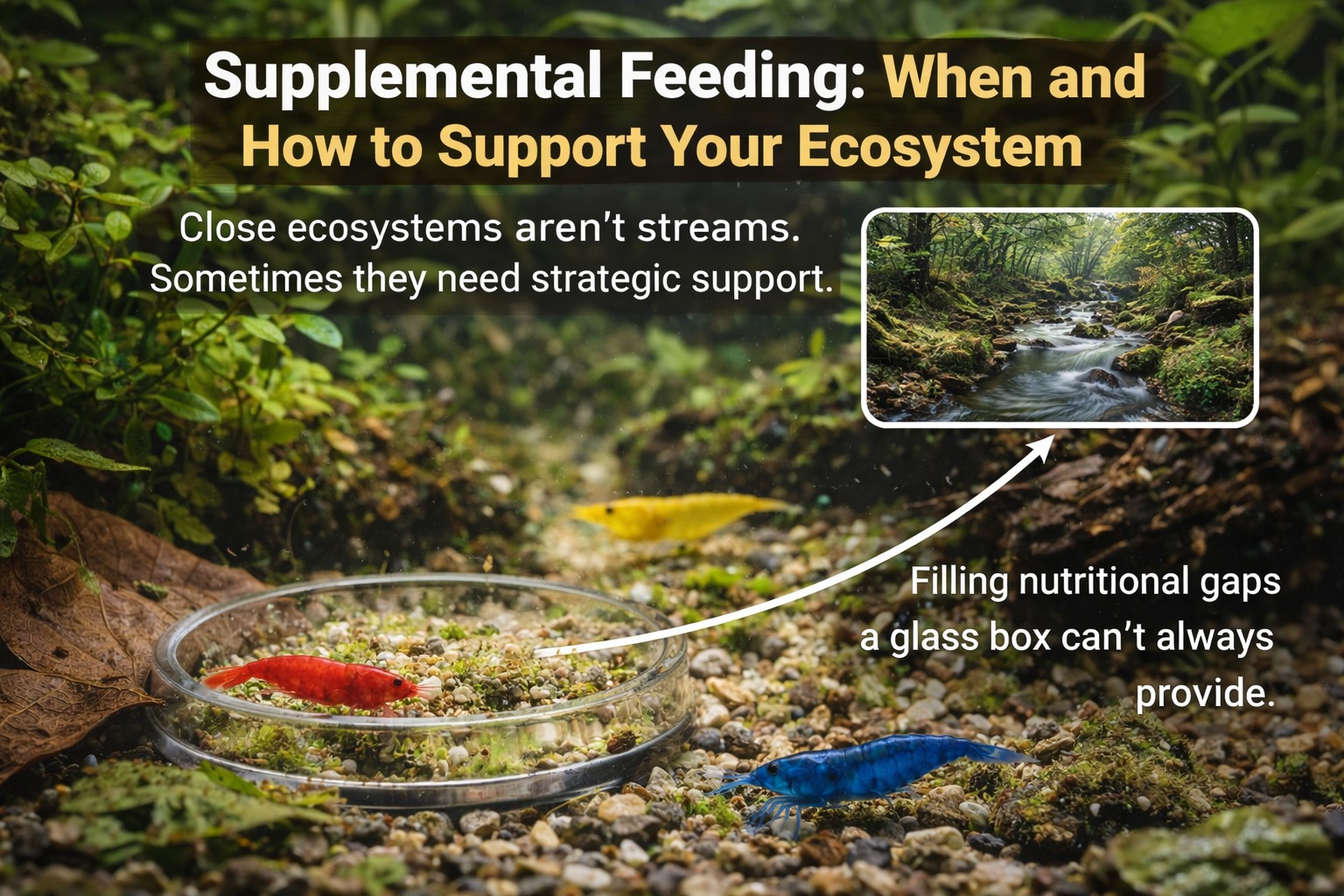
2. Supplemental Feeding: When and How to Support Your Ecosystem
If your shrimp tank is mature, planted, and full of surface area, your colony is already eating all day long.
So why supplement at all?
Because closed systems aren’t streams. And sometimes the ecosystem needs strategic support.
Supplemental feeding isn’t about giving shrimp “more food.” It’s about filling nutritional gaps that a glass box can’t always provide on its own.
Let’s approach it strategically.
Biofilm Boosters (Use With Intention, Not Habit)
New tanks lack established biofilm. Heavily stocked breeding tanks can outpace natural grazing. This is where powdered microbial supplements like GlasGarten Bacter AE can be helpful.
It isn’t a pellet. It’s designed to encourage biofilm growth throughout the tank — especially useful for shrimplets too small to compete for solid food.
But more is not better.
Overuse can cloud water and fuel bacterial blooms. In most established tanks, it’s used lightly and occasionally — not daily.
When to use it:
- During the first 4–6 weeks of a new tank setup
- In heavily stocked breeding colonies
- When shrimplet survival rates drop unexpectedly
When to skip it:
- In mature, low-stocked tanks with visible algae and biofilm
- If water clarity becomes consistently cloudy after use
Think of it as ecosystem support, not shrimp cereal.
Complete Shrimp Foods (Supplement, Don’t Replace Grazing)
Balanced commercial shrimp foods provide controlled protein, plant matter, and trace minerals in a consistent formula.
Two widely trusted options in the hobby include:
They’re convenient and nutritionally balanced.
But they are not the foundation of a healthy colony.
In a mature tank, feeding 2–3 times per week is often more than enough. Many successful keepers feed even less.
The goal isn’t to trigger a feeding frenzy.The goal is steady molts, vibrant color, and natural grazing behavior.
If food regularly goes untouched after a few hours, that’s usually a sign your tank is already providing sufficient nutrition.
Low-Risk “Leave-In” Foods
Some foods are designed to stay in the tank longer without rapidly degrading water quality.
One example is GlasGarten Snowflakes, made from processed soybean hulls.
They soften gradually, develop beneficial fungal growth shrimp enjoy grazing on, and break down more slowly than protein-heavy foods.
They can be useful for:
- Vacation feeding
- Breeding colonies
- Supplemental grazing in high-density tanks
Even then, moderation still applies.
Helpful — But Not Required — Feeding Tools
Glass feeding dishes and tubes can help concentrate food in one location, especially in fine sand or bare-bottom systems.
They:
- Reduce food loss into substrate
- Make cleanup easier
- Help you monitor consumption
But they are tools — not necessities.
If your ecosystem is mature and balanced, your shrimp will thrive without specialty gear.
The Ecosystem Rule
If your shrimp require heavy daily feeding to survive, something upstream is missing.
A healthy shrimp tank should provide:
- Continuous biofilm coverage
- Natural algae films
- Leaf litter or botanicals
- Microbial diversity
- Ample surface area for grazing
Supplemental food fills gaps.
It should never carry the system.
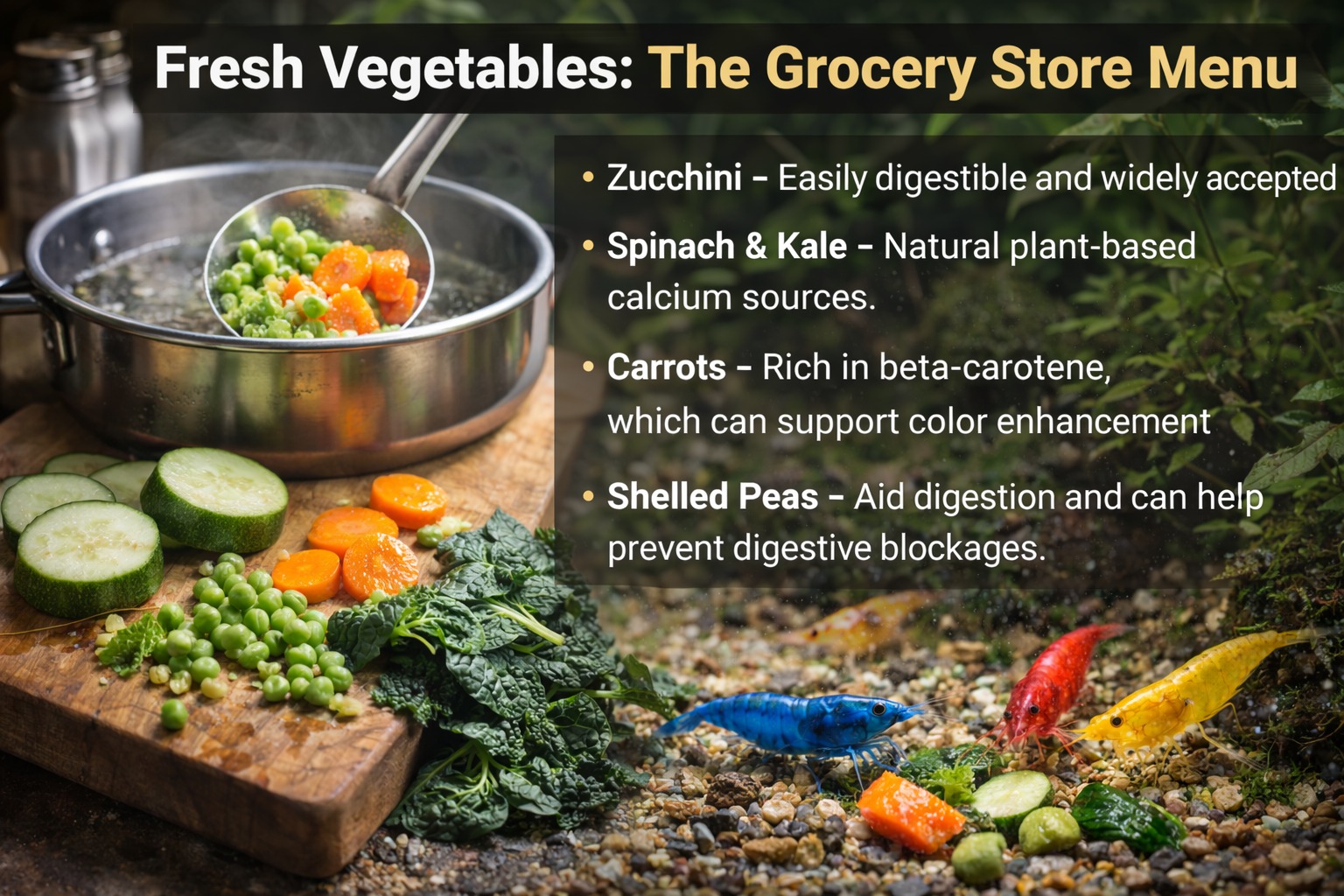
3. Fresh Vegetables: The Grocery Store Menu
You don’t need premium packaging to feed shrimp well.
Your refrigerator already contains excellent options — but preparation matters.
Always blanch vegetables for 2–3 minutes to soften fibers, make them sink-ready, and improve digestibility.
Shrimp-Friendly Vegetables:
- Zucchini – Easily digestible and widely accepted.
- Spinach & Kale – Natural plant-based calcium sources.
- Carrots – Rich in beta-carotene, which can support color enhancement.
- Shelled Peas – Aid digestion and can help prevent digestive blockages.
The 4-Hour Rule:
Fresh vegetables break down quickly in warm water.
If uneaten after 4–6 hours, remove them to prevent ammonia spikes and bacterial blooms.
Shrimp are resilient.Water chemistry is not.
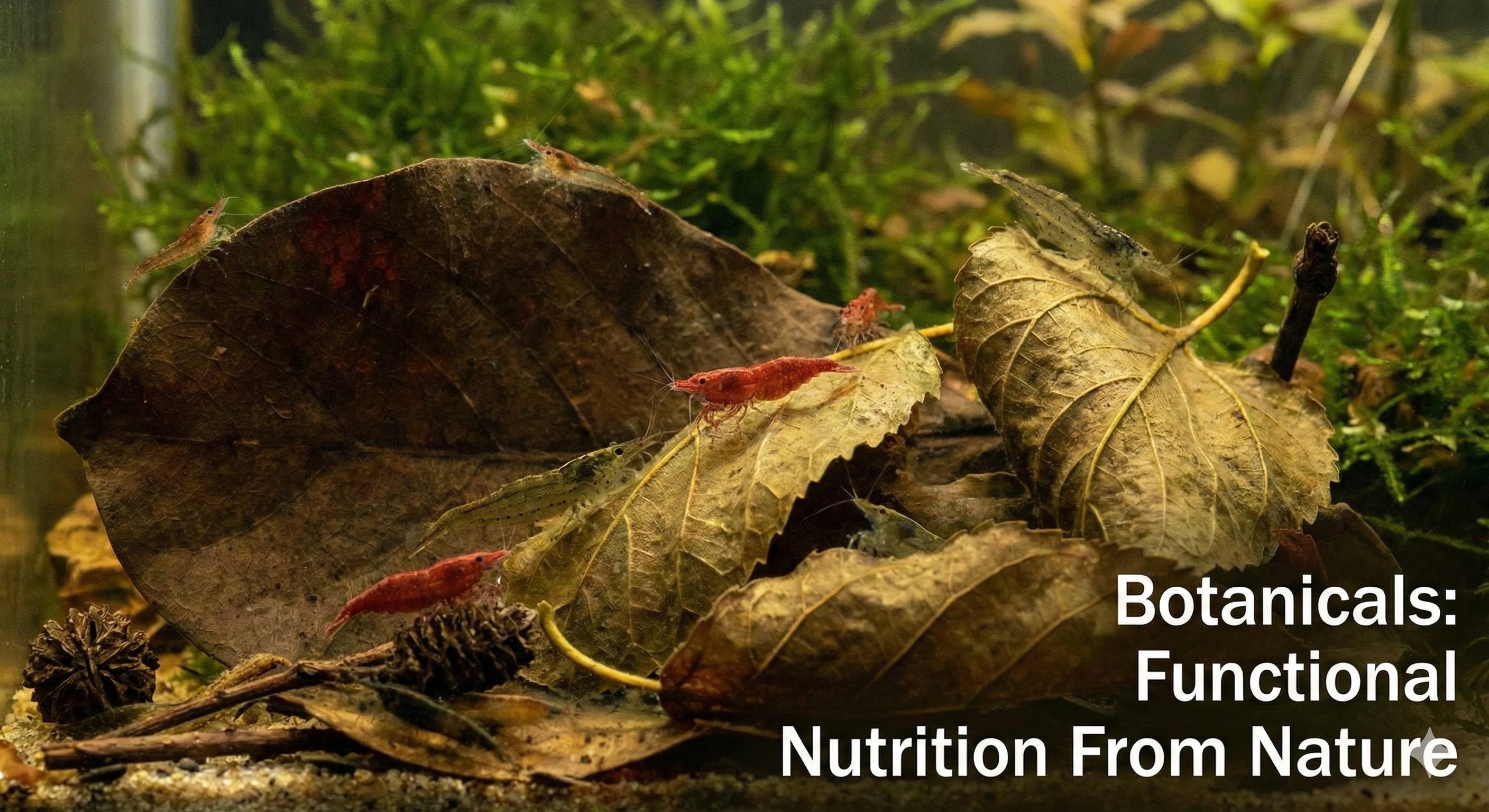
4. Botanicals: Functional Nutrition From Nature
Dried leaves and botanicals replicate the slow, organic nutrient release found in wild shrimp habitats.
They provide:
- Surface area for biofilm colonization
- Long-term grazing material
- Tannins with mild antimicrobial properties
- Natural pH buffering in some cases
Common options include dried mulberry leaves and Indian almond leaves (catappa).
They’re not miracle cures — but they support ecosystem function naturally and inexpensively.
CRITICAL SAFETY WARNING
Use foraged botanicals at your own risk.
Never collect leaves or wood from areas treated with pesticides, herbicides, or fertilizers.
Neocaridina shrimp are extremely sensitive to contaminants. One treated leaf can wipe out an entire colony within hours.
If you aren’t 100% certain of the source, purchase botanicals from a reputable aquarium supplier.
Risk management is part of responsible shrimp keeping.
5. Beyond Food: Core Care That Determines Survival
Diet matters.
But stability determines whether your shrimp live long enough to benefit from it.
Stability Over Perfection
Shrimp hate rapid changes.
It is better to maintain stable, “good enough” parameters than to chase perfect numbers that fluctuate weekly.
Consistency builds resilience. Perfection creates stress.
Mineral Support & Molting Success
Shrimp don’t just eat for calories.
They eat — and absorb — for minerals.
Molting requires adequate calcium and magnesium availability in the water column. Without proper mineral support, shrimp struggle to shed their old exoskeletons or develop thin, fragile shells.
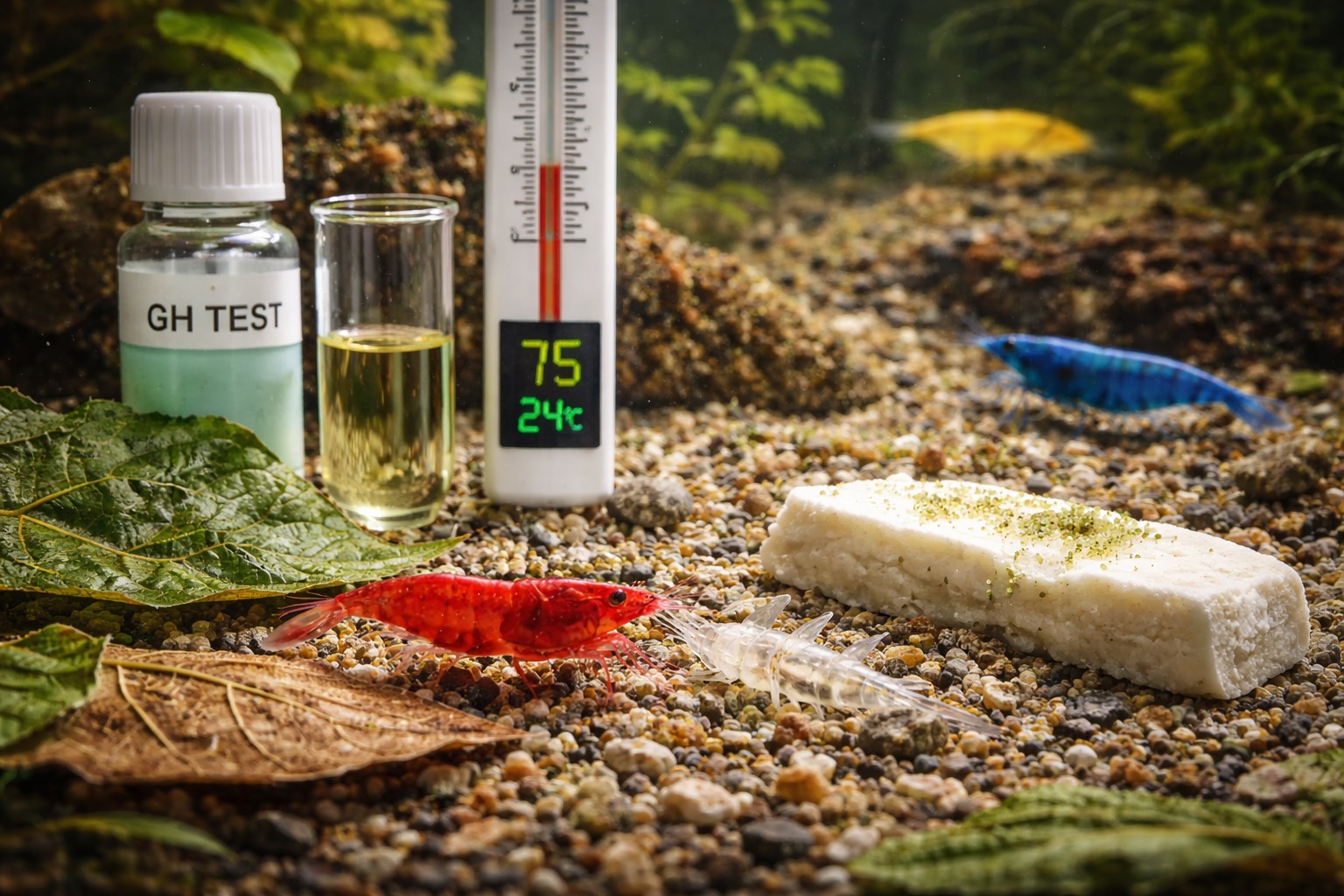
One simple, low-cost method many keepers use is adding a small piece of cuttlebone (the same natural calcium source sold for birds).
Placed in the tank or filter:
- It slowly releases calcium carbonate over time.
- It can help stabilize mineral availability in soft water systems.
- It becomes a grazing surface once biofilm develops on it.
However, it is not a replacement for proper GH levels.
Cuttlebone works best in systems that are slightly mineral-deficient — not as a correction for unstable or untested water chemistry.
Test your GH before adding mineral supplements.
Shrimp need balance, not guesswork.
The White Ring of Death
If you see a thick white band between the head and body before a molt, the shrimp is struggling.
This is commonly linked to:
- Mineral imbalance (low calcium or magnesium)
- Sudden parameter swings (pH, temperature, GH)
- Inconsistent ecosystem stability
Molting is one of the most vulnerable stages in a shrimp’s life.
Nutrition matters.Minerals matter.Stability matters most.
Final Thoughts: Building a System That Feeds Itself
A healthy shrimp colony does not revolve around feeding time.
A healthy shrimp colony revolves around ecosystem maturity.
Biofilm first.Surface area second.Supplemental feeding third.
When you combine mature tank biology, controlled supplemental feeding, fresh vegetables, botanicals, and proper mineral balance — your shrimp don’t just survive.
They thrive.
Ready to build a shrimp tank that feeds itself?
Start with patience. Let your tank mature. Watch biofilm develop. Then — and only then — think about pellets.
Your shrimp will thank you with steady molts, vibrant color, and generations of healthy shrimplets.