Freshwater Aquarium Clean-Up Crew: A Guide to Snail Welfare & Balance
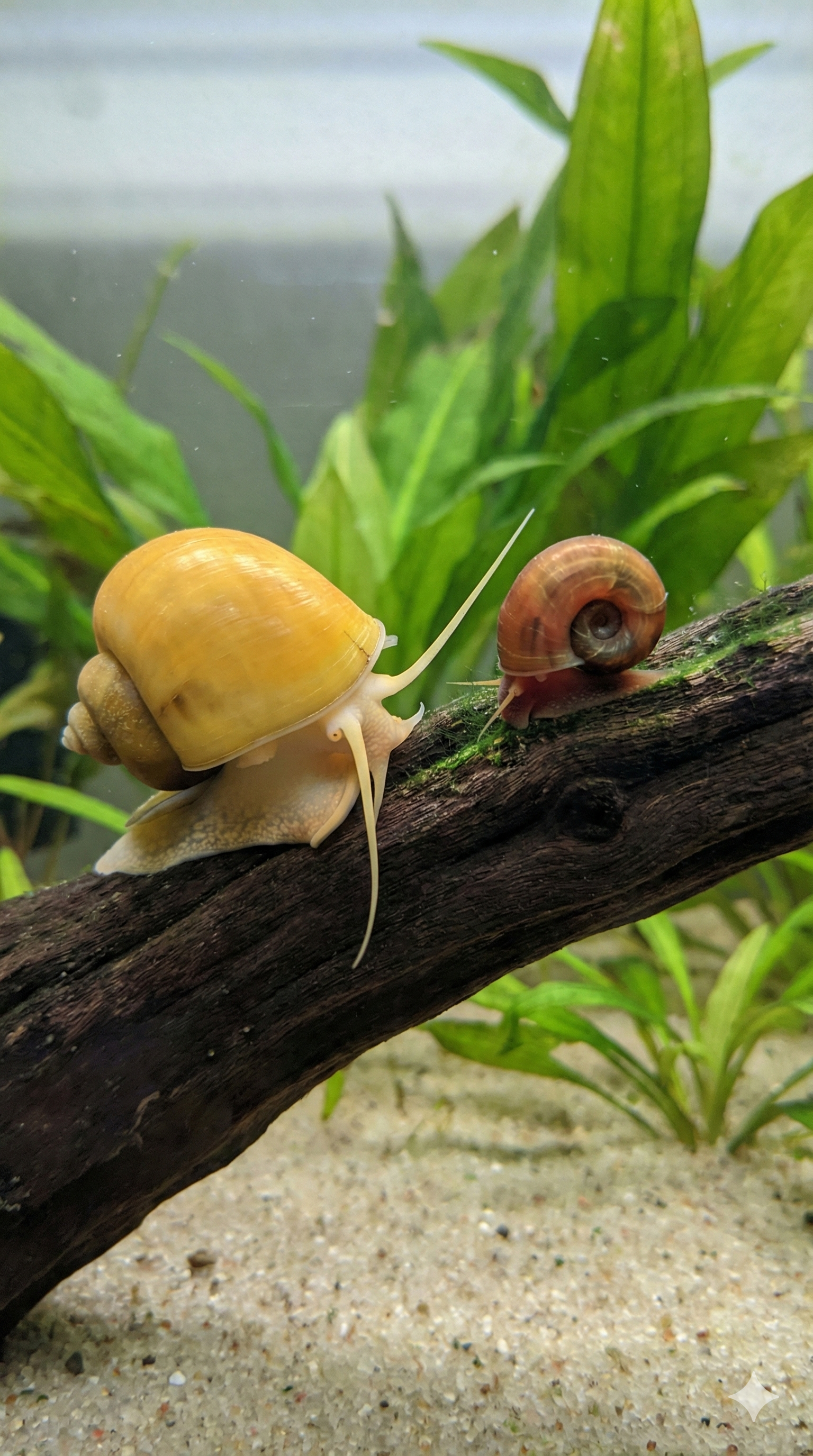
The Tank Guide · A FishKeepingLifeCo publication | Published January 2026
When nuisance algae growth starts showing up in an aquarium, one of the first terms many hobbyists search is “clean-up crew.”
It makes sense.
Algae looks messy. It feels like something is wrong. And the idea of fixing it naturally — by adding organisms that already exist in real ecosystems — feels like the right move.
In rivers, lakes, and wetlands, snails graze on surfaces, aerate the substrate, and break down organic waste. In aquariums, that same behavior helps convert uneaten food and decaying plant matter into forms that beneficial bacteria can process more easily as part of the nitrogen cycle.
So adding snails feels intuitive — especially in planted tanks where the goal is long-term balance, not constant intervention.
And here’s the truth:
Snails are excellent clean-up crew members.
They absolutely do what they’re supposed to do.
Most problems don’t come from snails themselves — they come from how and why they’re added.
What We Mean by “Clean-Up Crew” (and What We Don’t)
In this guide, the term clean-up crew is used very intentionally.
Here, clean-up crew refers only to invertebrates:
- Snails
- Shrimp (acknowledged, but covered separately)
We do not consider fish to be part of the clean-up crew.
Fish are not maintenance tools. They are primary livestock that require their own long-term planning, diet, and environment.
Many fish commonly sold as algae eaters:
- grow much larger than expected
- primarily consume biofilm rather than nuisance algae
- require supplemental feeding once natural food sources are gone
- produce more waste than they remove
If you choose to keep a fish like that, it should be because you want that fish — not because you expect it to manage algae.
For this guide, the focus remains on invertebrate welfare, specifically snails, whose natural behavior genuinely supports ecosystem balance when used correctly.
Why Snails Are So Often Added
Snails are usually introduced for one of three reasons:
- Algae appears in a new or recently adjusted tank
- The hobbyist wants a low-intervention, natural-looking ecosystem
- A planted tank keeper wants organisms interacting with soil and hardscape
All of these are valid reasons.
Algae blooms in newer tanks are normal. They’re often tied to lighting changes, nutrient swings, or a system finishing early biological stages.
The issue arises when snails are added as a solution, rather than as long-term ecosystem members.
The Functional Roles of Snails in a Balanced Tank
When added intentionally, snails provide real, measurable benefits:
- Algae grazing on glass, rocks, and hardscape
- Organic waste processing, including leftover food and decaying plants
- Substrate movement, reducing stagnant zones and compacted soil
- Nutrient recycling, supporting bacterial colonies
In planted aquariums, this constant low-level activity keeps the system dynamic rather than stagnant.
Snails are not decorations.
They are not disposable tools.
They are living invertebrates with ongoing needs.
Tool
Snail Stocking Recommender
Estimate a starting snail population based on tank size and species, then adjust once you see how your system responds.
Open calculatorThe “Quick Fix” Trap → Why Problems Appear Later
Here’s a common pattern:
Snails are added to control algae.
They succeed.
And then the environment stops supporting them.
Once snails successfully reduce algae to low levels:
- Food availability drops
Many snails — especially algae-dependent species — do not readily switch to prepared foods. - Populations destabilize
- Hardy species reproduce rapidly if food remains abundant
- Others slowly starve in tanks that become “too clean”
Trying to compensate by overfeeding often worsens water quality without reliably feeding the snails, since decomposition timing and substrate access determine whether food actually reaches them.
Environment Matters More Than Most People Realize
Many aquariums are simply not configured for snail longevity, even when snails are present.
Common issues include:
- Soft or acidic water that dissolves shell material
- Low calcium availability
- Systems optimized for fish or plants, but not invertebrates
So the snails perform their role — but the environment cannot sustain them.
This is why shell erosion, unexplained losses, and starvation are so common.
What Actually Counts as a Clean-Up Crew Snail?
Not all snails perform the same function. Clean-up crew snails generally fall into distinct functional categories:
- Glass & hardscape grazers (Nerite, Ramshorn)
These species focus on surface algae and biofilm, making them ideal for visible tank areas. - Substrate sifters (Malaysian Trumpet Snails)
These snails burrow through sand and soil, preventing compaction and redistributing organic debris. - Detritus processors (Mystery Snails, Apple Snails)
Larger-bodied snails that consume leftover food and decaying plant matter but also produce more waste. - Predatory control species (Assassin Snails)
Carnivorous snails used to manage populations of smaller snails, not general algae control.
Each fills a different niche — and each comes with different expectations.
Freshwater Clean-Up Crew Snail Lifespans
Quick reference (average lifespans):
- Malaysian Trumpet Snail — 1–2 years; driven by food availability and substrate conditions.
- Ramshorn Snail — 1–2 years; lifespan shortens above 27 °C (80 °F).
- Mystery Snail — 1–2 years; cooler water (20–23 °C / 68–74 °F) can extend life.
- Apple Snail (large species) — 2–4 years; needs high calcium for shell integrity.
- Nerite Snail — 1–3 years; sensitive to nitrates and reliant on natural algae.
- Bladder Snail — 6–12 months; short-lived and highly temperature-dependent.
- Assassin Snail — 2–3 years; carnivorous and needs protein-rich diet.
Short lifespans are often environmental, not inevitable.
Snail Care Level Rankings
Level 1 — Beginner (Low Maintenance)
Bladder Snail, Malaysian Trumpet Snail, Ramshorn Snail
Level 2 — Intermediate (Specific Needs)
Mystery Snail, Assassin Snail
Level 3 — Advanced (Specialized Care)
Nerite Snail, Large Apple Snail species
Hardy means more forgiving of mistakes — not zero maintenance.
A Practical Note on Snails and Shrimp
Shrimp are often grouped with snails as clean-up crew, but real-world experience shows that competition matters.
Fast-reproducing snails, such as Malaysian Trumpet Snails, operate at the same feeding level as shrimp. They graze continuously and often intercept food before shrimp can access it.
It’s common to see shrimp climbing onto a snail’s shell while the snail continues feeding uninterrupted.
This doesn’t mean shrimp and snails can’t coexist — but it does mean stacking choices matter, and shrimp require more intentional feeding strategies. That’s why shrimp are addressed separately.
Snail Compatibility Matrix
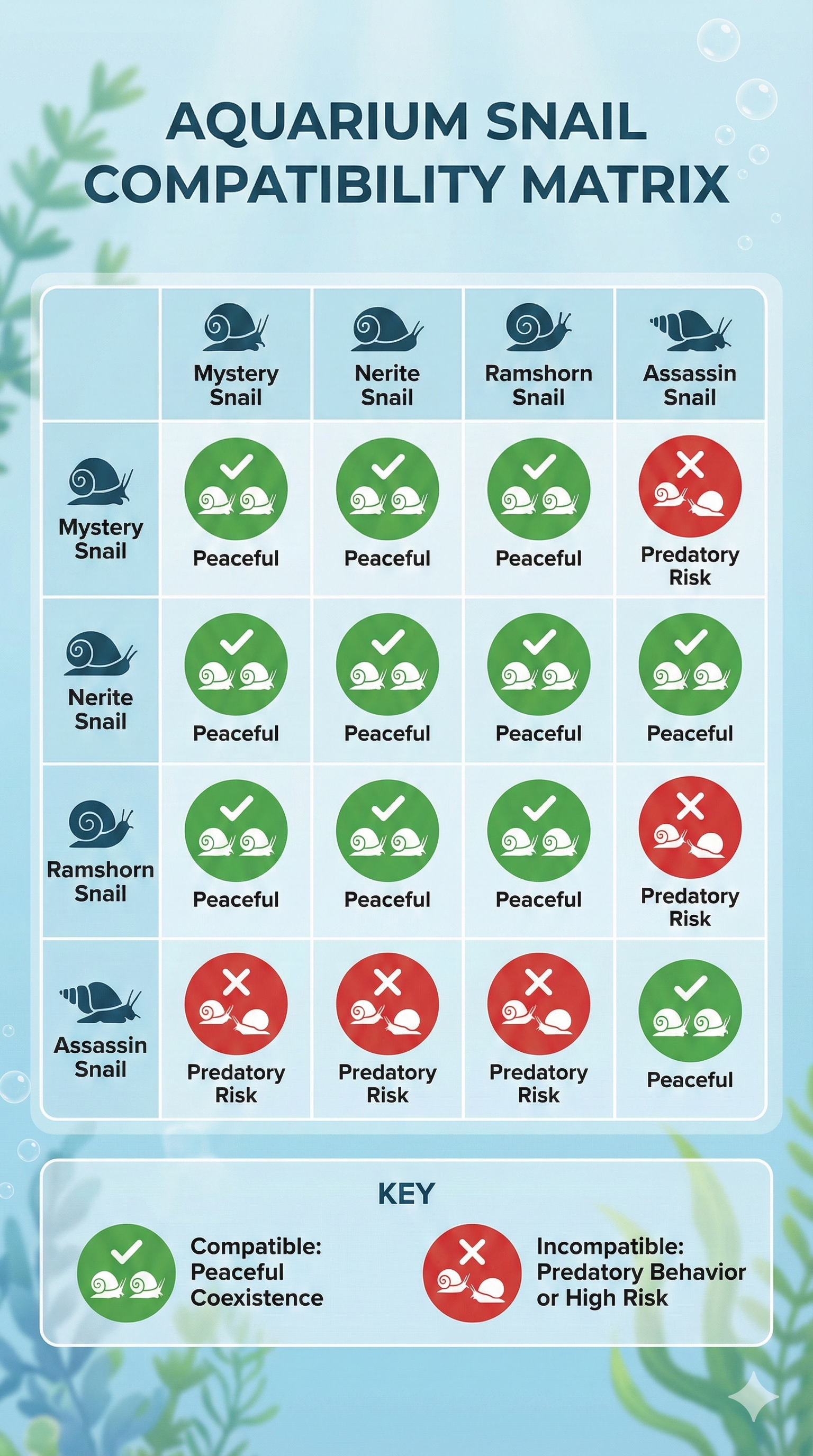
Compatibility cheat-sheet (snail vs. snail):
- Mystery / Apple Snails — Peaceful with Nerite and Ramshorn/Bladder; unsafe with Assassin Snails.
- Nerite Snails — Peaceful with Mystery/Apple and Ramshorn/Bladder; unsafe with Assassin Snails.
- Ramshorn / Bladder Snails — Peaceful with Mystery/Apple and Nerite; prey items for Assassin Snails.
- Assassin Snails — Predatory toward other snails; keep only with their own species or in controlled numbers.
Identifying and Preventing Shell Erosion
A snail’s shell is an external skeleton made primarily of calcium carbonate and is constantly interacting with water chemistry.
Key Warning Signs
- Pitting or chalky white spots
- Thinning or transparency near the shell edge
- White, crumbling apex (oldest shell area)
- Cracks exposing soft tissue (emergency)
Why Shell Erosion Happens
- Low pH (< 7.0) dissolves calcium carbonate
- Soft water (low GH/KH) pulls calcium from shells
Target ranges:
pH: 7.5–8.2
GH: 8–12 dGH
Prevention is far more effective than repair.
Feeding Snails: The “Snello” Standard
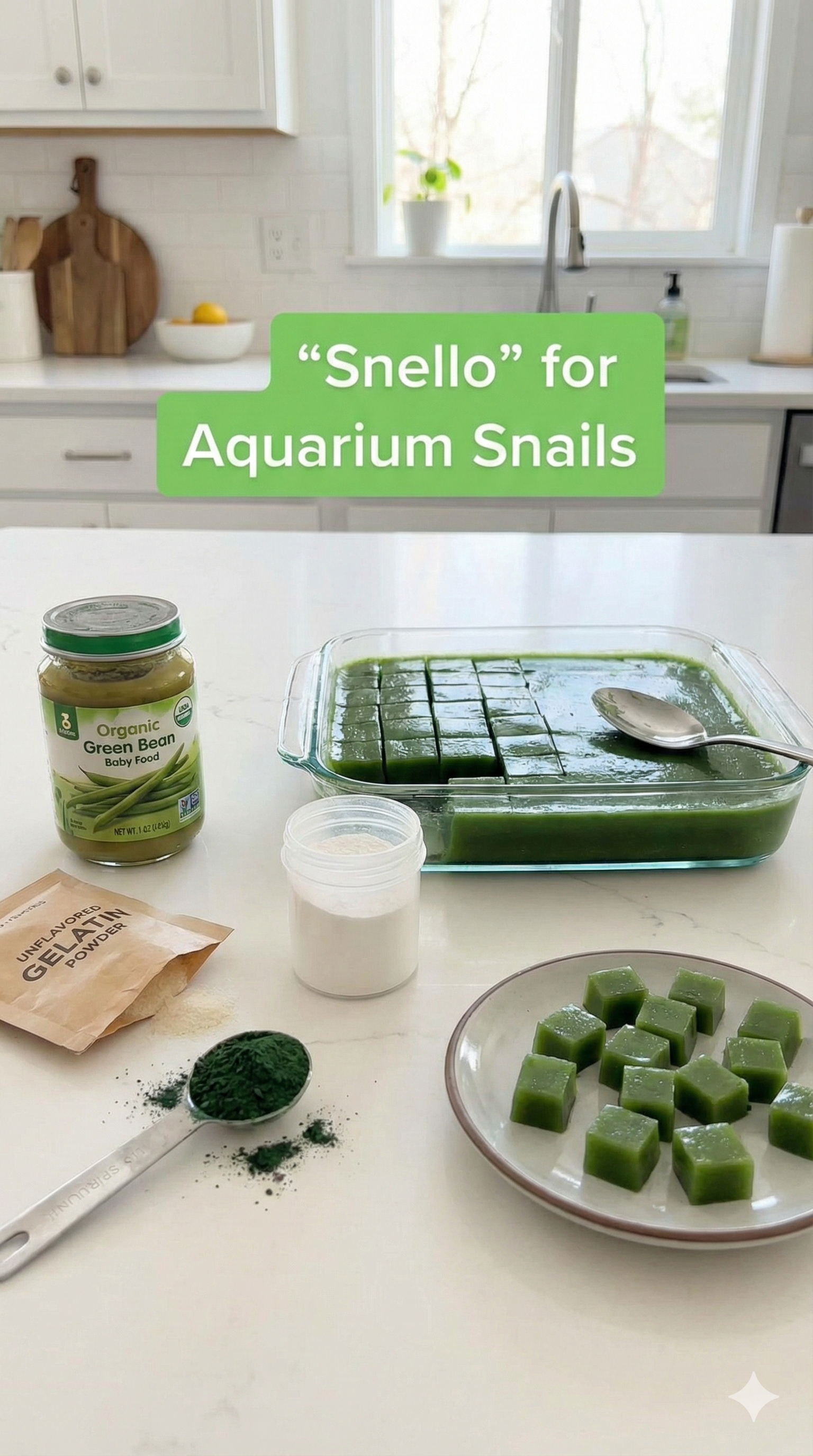
Snails cannot live on algae alone indefinitely.
Standard Snello Recipe
- 4 oz calcium-rich baby food (green beans or peas)
- 1 packet unflavored gelatin
- 1 tbsp calcium carbonate (no Vitamin D₃)
- 1 tbsp crushed fish flakes or spirulina
Preparation
- Heat baby food (do not boil)
- Stir in gelatin
- Mix in calcium and protein
- Refrigerate ~2 hours
- Cut into ~1 cm cubes and freeze
Feeding guidance:
Feed 1–2 cubes per 5–10 snails, 2–3 times per week, adjusting based on natural algae availability.
Remove uneaten food within 12–24 hours.
The Core Takeaway
Snails are not a solution to algae.
They are part of an ecosystem.
When supported correctly, they help maintain balance.
When treated as tools, they fail — not because they’re ineffective, but because they’re unsupported.
Understanding that difference is the key to ethical, successful snail keeping.
Frequently Asked Questions
Are snails enough to keep an aquarium clean by themselves?
No. Snails graze algae and process detritus, but they rely on a stable environment and regular feeding once natural biofilm declines. Treat them as ecosystem members, not single-purpose tools.
How can I prevent shell erosion in freshwater snails?
Maintain pH between 7.5–8.2 and general hardness around 8–12 dGH so shells hold calcium. Avoid persistently soft or acidic water and address erosion early rather than trying to repair severe damage.
What should I feed aquarium snails when algae runs low?
Offer calcium-rich foods like snello: baby food thickened with gelatin plus calcium carbonate and a protein source. Feed small portions 2–3 times weekly and remove leftovers within 12–24 hours.
Can snails and shrimp stay in the same clean-up crew?
Yes, but snails and shrimp compete for the same food. Fast-grazing snails often intercept food first, so plan intentional feeding spots for shrimp and choose stocking densities that avoid resource pressure.
Log parameters, feeding, and maintenance with our journals and guides.