When Your Fish Gets Sick
Ich, Common Freshwater Fish Diseases, and Doing Right by the Fish You Care For
By FishKeepingLifeCo — Jan 2026
Affiliate disclosure: Some links on this page may be affiliate links. If you buy through them, we may earn a small commission at no extra cost to you.
First — This Is Not Your Fault
If you’re reading this because one of your fish is sick, stressed, or not acting like themselves, the first thing you need to hear is this:
This is not automatically something you did wrong.
Fish do not come to hobbyists with medical histories. We don’t know how long they were alive before we brought them home, what stress they experienced during shipping, or what genetic weaknesses they may have carried.
What is in your control starts once that fish is yours. That control looks like:
- Providing a stable environment.
- Keeping water clean and consistent.
- Minimizing stress.
- Making decisions with fish welfare first.
If you’re here—reading, learning, and trying—you’re already doing the right thing.
Disease Is Usually About Stress — Not Failure
Most freshwater fish diseases don’t appear out of nowhere. They take advantage of specific pressures that weaken a fish’s natural defenses.
Common triggers include:
- Temperature swings.
- Transport and handling stress.
- Social stress or aggression from tankmates.
- Instability in the aquarium ecosystem.
Disease doesn’t mean you failed as a hobbyist; it means something overwhelmed the fish’s ability to cope. Our role is not to achieve perfection, but to reduce that pressure wherever possible.
Ich (I-C-H) Is Different — and Must Be Treated System-Wide
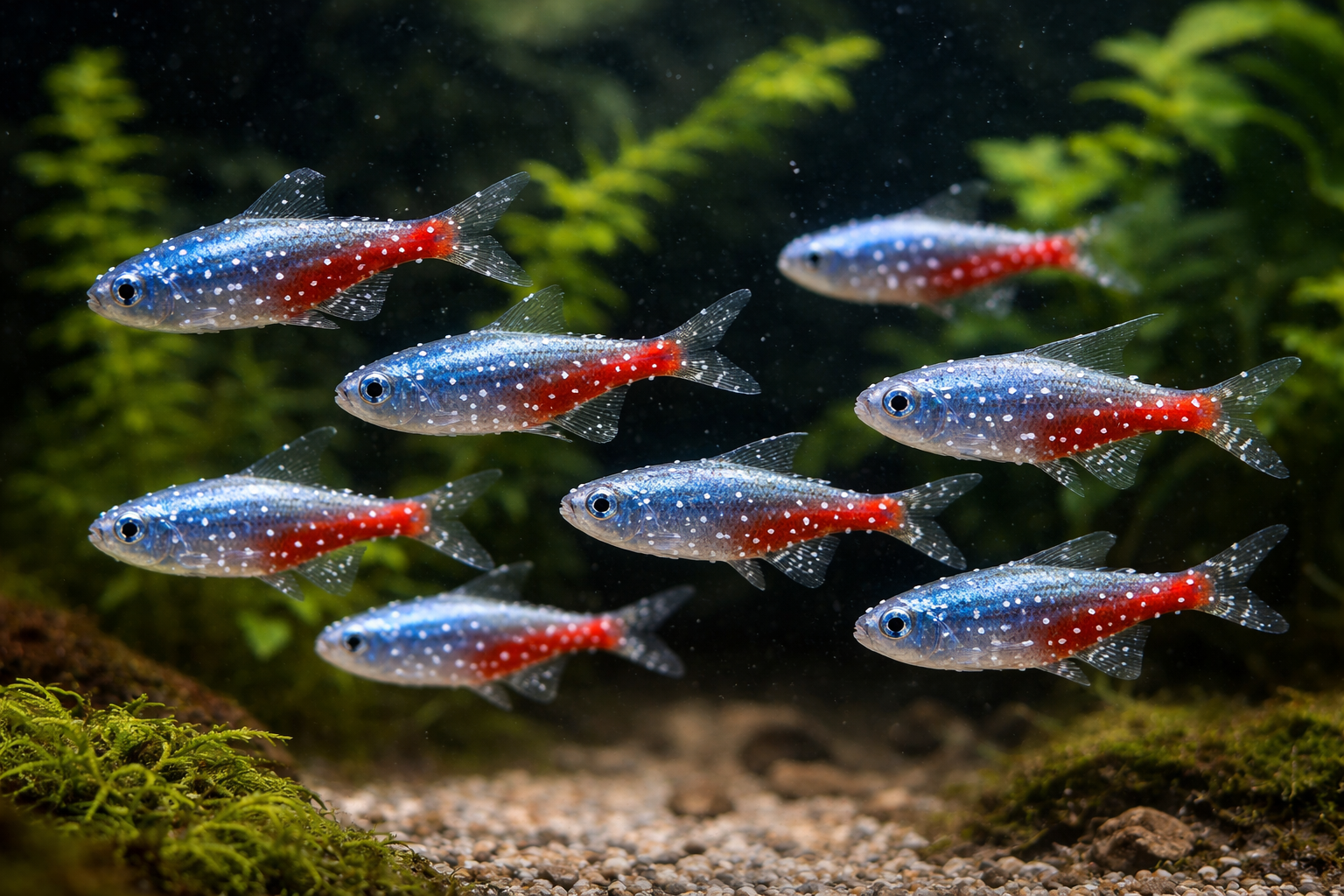
Ich (Ichthyophthirius multifiliis) is one of the most common freshwater fish diseases—and one of the most misunderstood. It usually appears as:
- Small white spots (resembling grains of salt).
- “Flashing” or scratching against decor.
- Clamped fins or labored breathing.
Here is the most important thing to understand: You don’t just treat the fish; you treat the entire water column. Even if only one fish shows visible spots, the parasite is already present throughout the aquarium. This is one of the few situations where isolating a single fish is not enough to stop the cycle.
Why Ich Spreads So Easily
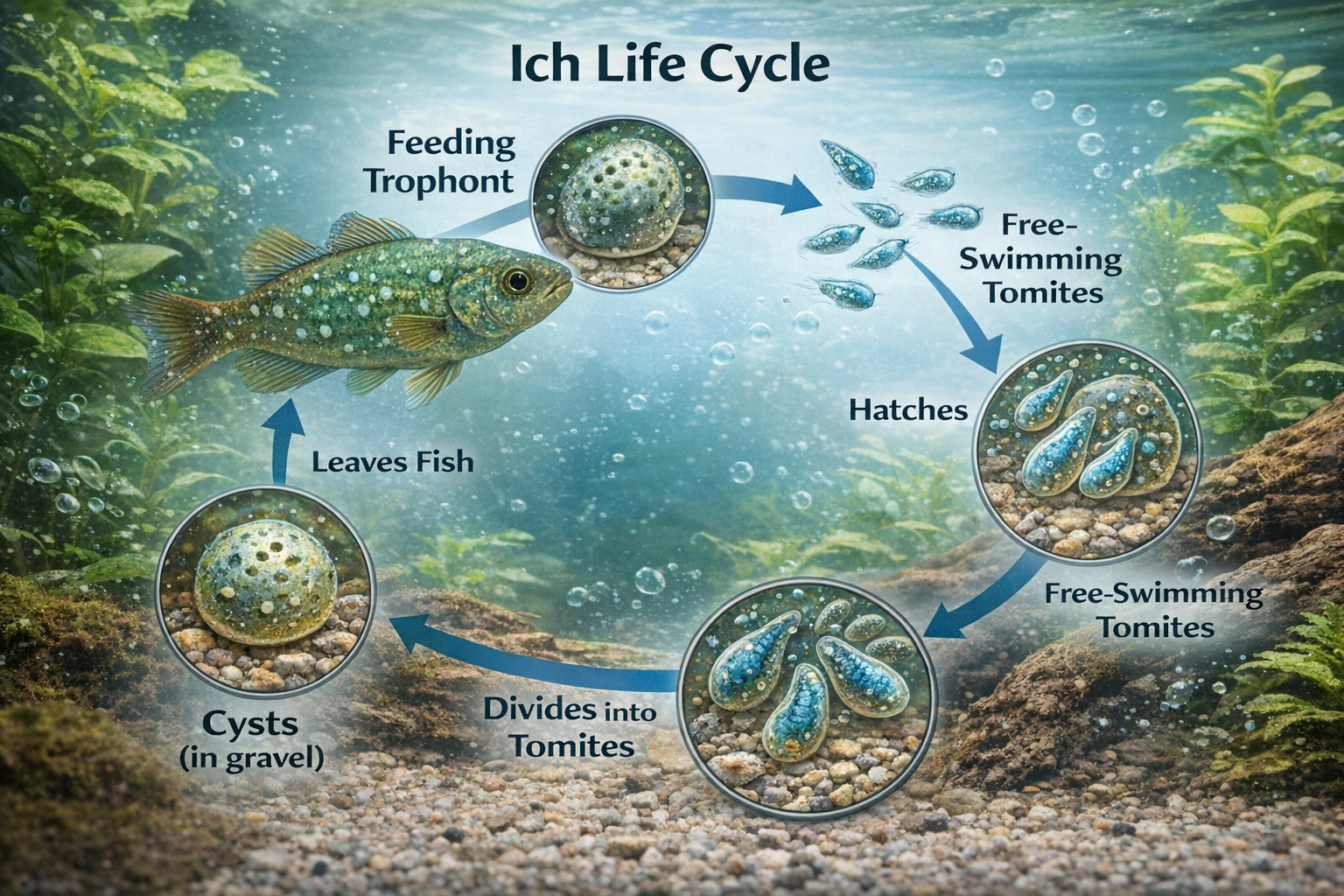
Ich has multiple life stages, but only one stage is vulnerable to treatment: the free-swimming stage.
The difficulty lies in the fact that:
- You cannot see the parasite during this stage.
- It exists in the water itself, not just on the fish.
- It can repeatedly reinfect the population if the entire system is not addressed.
This is why Ich often feels like it gets worse before it gets better, and why stopping treatment too early almost always leads to a relapse.
Medication Is an Option — But Not Always the First One
There are effective over-the-counter Ich medications available, such as Ich-X. These products can work well, especially in fast-progressing cases. However, medication affects the entire ecosystem. The goal isn’t to medicate automatically; it’s to medicate when necessary, at the right time, and for the right reason. Whenever conditions allow, many hobbyists find success with a natural, biology-based method first.
The Natural Ich Treatment Method: Heat + Water Changes
This approach works by using the parasite’s own biology against it.
Step 1: Raise the Temperature and Aeration Slowly
- Increase the temperature gradually over 24–48 hours.
- Aim for approximately 82–86°F (28–30°C), depending on the specific tolerance of your species.
- Increase Aeration: As water warms, its ability to hold dissolved oxygen decreases. To support your fish’s breathing while we speed up the parasite’s cycle, increase surface agitation by adjusting your filter intake or adding an air stone.
- The “Why”: Raising the temperature speeds up the parasite’s life cycle, forcing it to leave the fish and enter the vulnerable free-swimming stage faster.
Step 2: Expect It to Look Worse Before It Looks Better
As the temperature increases, you will likely see more spots. This doesn’t mean you are failing; it means you are forcing the parasite into the only stage where it can be physically removed.
Step 3: Frequent, Consistent Water Changes
This is the most critical part of the process. If possible, perform 25–50% water changes daily using temperature-matched, dechlorinated water. This physically removes the free-swimming parasites and reduces reinfection pressure.
Step 4: Maintain the Process
Continue this routine for 7–10 days. Do not stop as soon as the white spots disappear. Visible improvement does not mean the parasite is gone from the water; stopping early is the most common reason the infection returns.
Other Common Freshwater Fish Issues
Not every disease should be treated the same way as Ich.
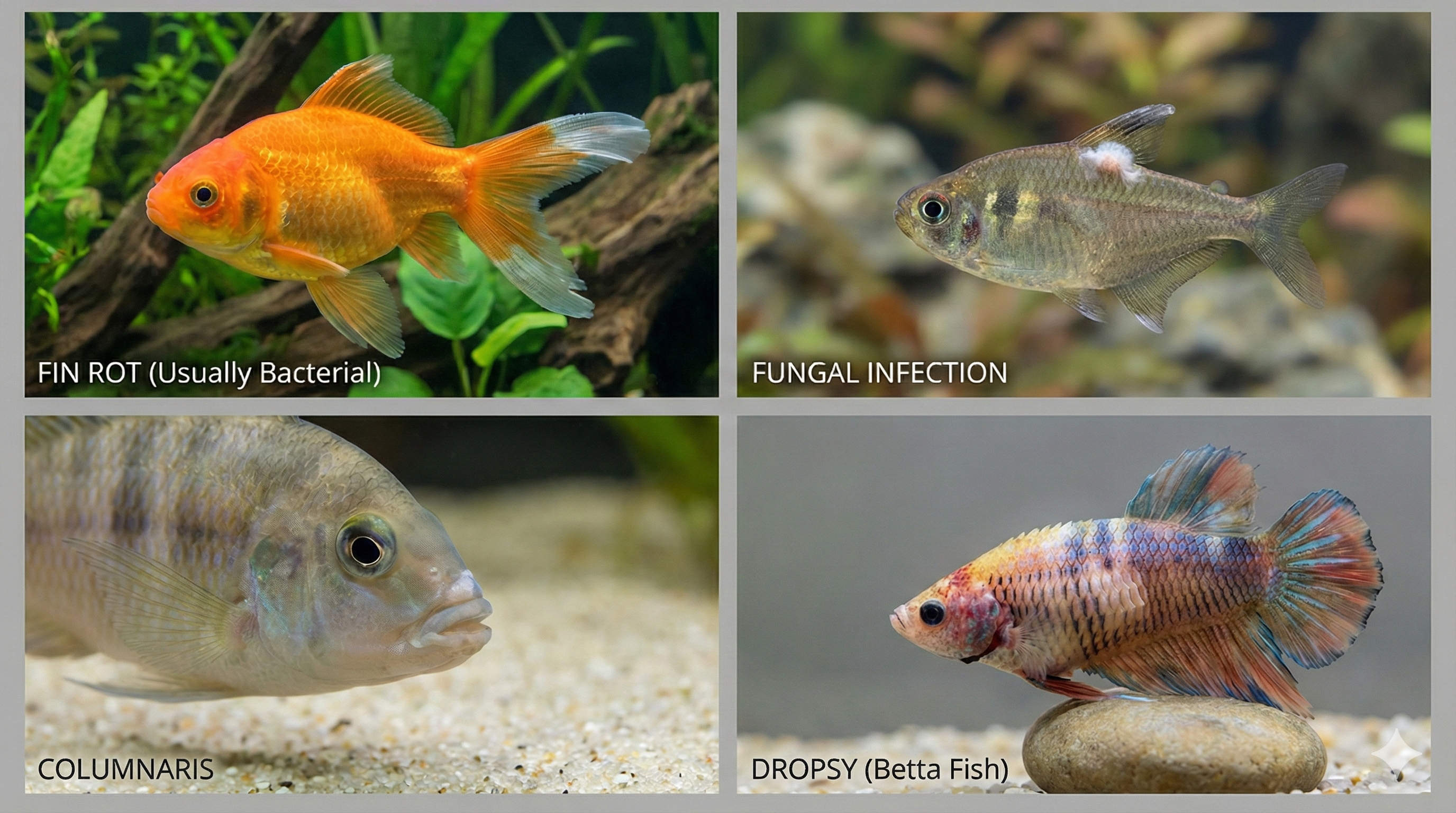
- Fin Rot (Usually Bacterial): Often begins at the edges of the fins. In early stages, this can frequently be improved simply by ensuring the water is clean and stable.
- Fungal Infections: These appear as cottony or fuzzy patches, often occurring after a physical injury.
- Columnaris: Often misidentified as a fungus, this bacterial infection shows as mouth erosion or “saddle-shaped” lesions.
- Dropsy: This is a symptom of internal organ failure characterized by a swollen body and “pineconing” scales. Once visible, the prognosis is often poor.
When Isolation and Medication Make Sense
For many diseases other than Ich, isolating the fish in a “hospital tank” is often the better option. This allows you to treat only the affected fish without stressing healthy tankmates or impacting the beneficial bacteria in your main display. Medication should be used thoughtfully, as it has a metabolic cost for the fish.
Supportive Care Matters More Than Supplements
While you will hear many suggestions for preventative additives, the core of fish welfare remains simple:
- A well-rounded, species-appropriate diet.
- Consistent feeding schedules.
- Stable water conditions.
Additives like garlic or vitamins can be supportive, but they do not replace the necessity of environmental stability.
When Treatment Isn’t Working
There are times when a fish does not respond to treatment, and their quality of life continues to decline. Signs that it may be time to consider an ethical end include a persistent loss of balance, labored breathing, or refusal to eat over an extended period. At this point, the focus shifts to reducing suffering.
A Personal Note on Fish Welfare
I once cared for a betta named Walter Mitty. When his condition continued to decline despite every effort, I chose humane euthanasia using the clove oil method. It was a difficult choice, but it was a calm and compassionate one. Sometimes, doing right by a fish means letting go with dignity rather than trying “one last thing” out of our own fear.
The Core Truth of Fishkeeping
Our responsibility isn’t perfection; it is compassion, stability, and making informed decisions. You cannot control a fish’s past, but you can control the quality of the life they live while they are in your care.
If you’re here—reading, learning, and trying—you’re already honoring that responsibility.
Frequently Asked Questions
How do you treat Ich naturally in a freshwater aquarium?
The natural method for treating Ich involves using the parasite’s biology against it through heat and water changes. Gradually raise the tank temperature to 82–86°F (28–30°C) over 24–48 hours to speed up the life cycle. While doing so, increase surface aeration to support fish respiration. Perform daily 25–50% water changes to physically remove free-swimming parasites from the water column.
Why should I increase aeration when treating fish for Ich?
When you raise the water temperature to treat Ich, the water's ability to hold dissolved oxygen decreases. Increasing surface agitation or adding an air stone ensures the fish can breathe easily while the heat speeds up the parasite's life cycle.
Is it my fault if my fish gets sick?
No. Fish illnesses are often the result of unseen stressors such as transport, genetic weaknesses, or environmental shifts. FishKeepingLifeCo emphasizes that disease is a sign of stress, not a failure of the hobbyist. Focus on providing stability and clean water to support the fish's immune system.
When should I consider humane euthanasia for a sick fish?
If a fish shows a persistent loss of balance, labored breathing, an inability to eat, or no improvement after a full treatment cycle, it may be time to prioritize welfare over further treatment. The goal is to reduce suffering through compassionate, intentional decisions.
Understanding the Nitrogen Cycle
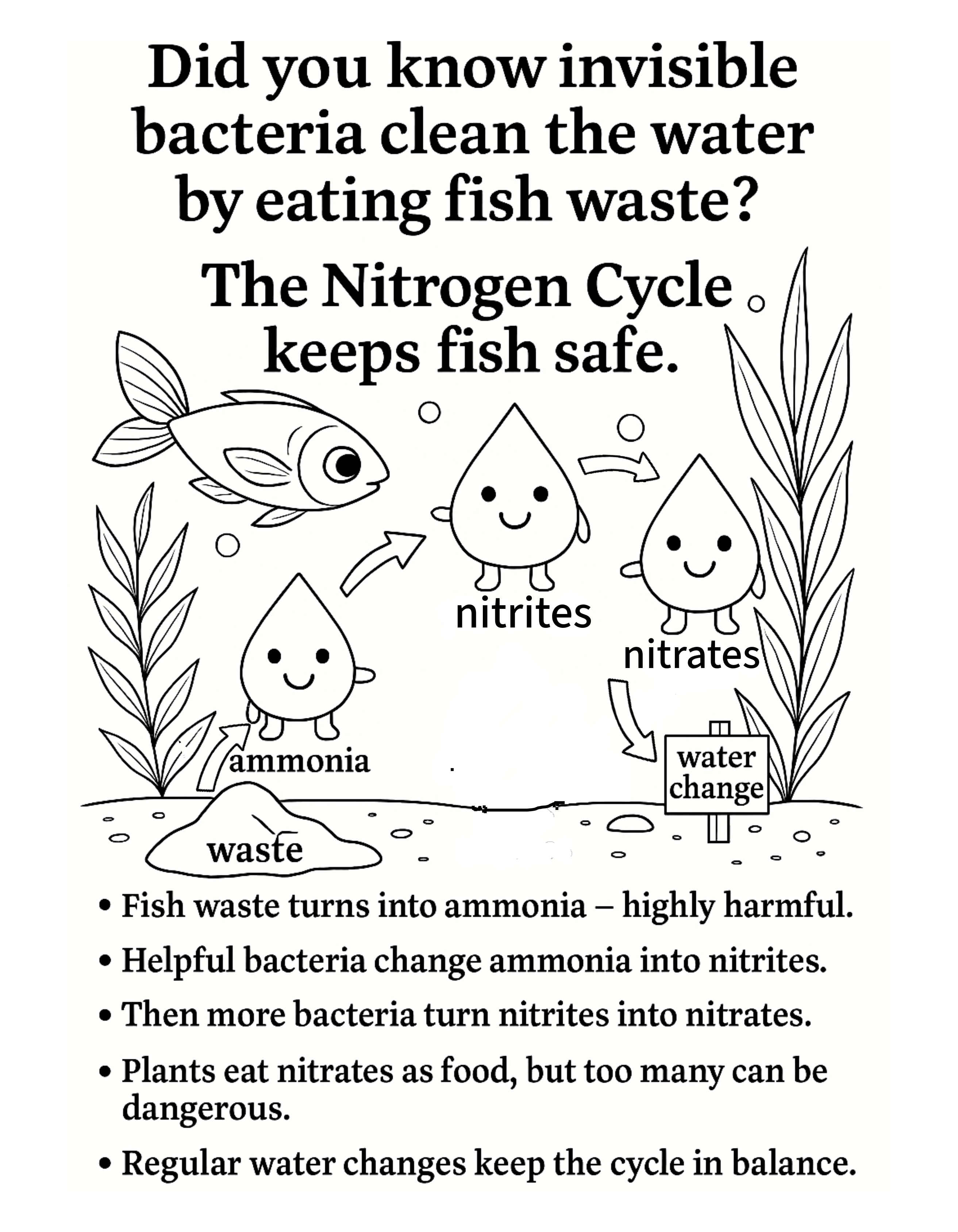
To keep a low-maintenance tank, you must respect the nitrogen cycle. Beneficial bacteria convert toxic ammonia (from fish waste) into nitrites, and then into less harmful nitrates. Managing bioload ensures this cycle is never overwhelmed.
Log parameters, feeding, and maintenance with our journals and guides.