Online vs. In-Store Aquarium Sourcing: What Actually Matters
By FishKeepingLifeCo
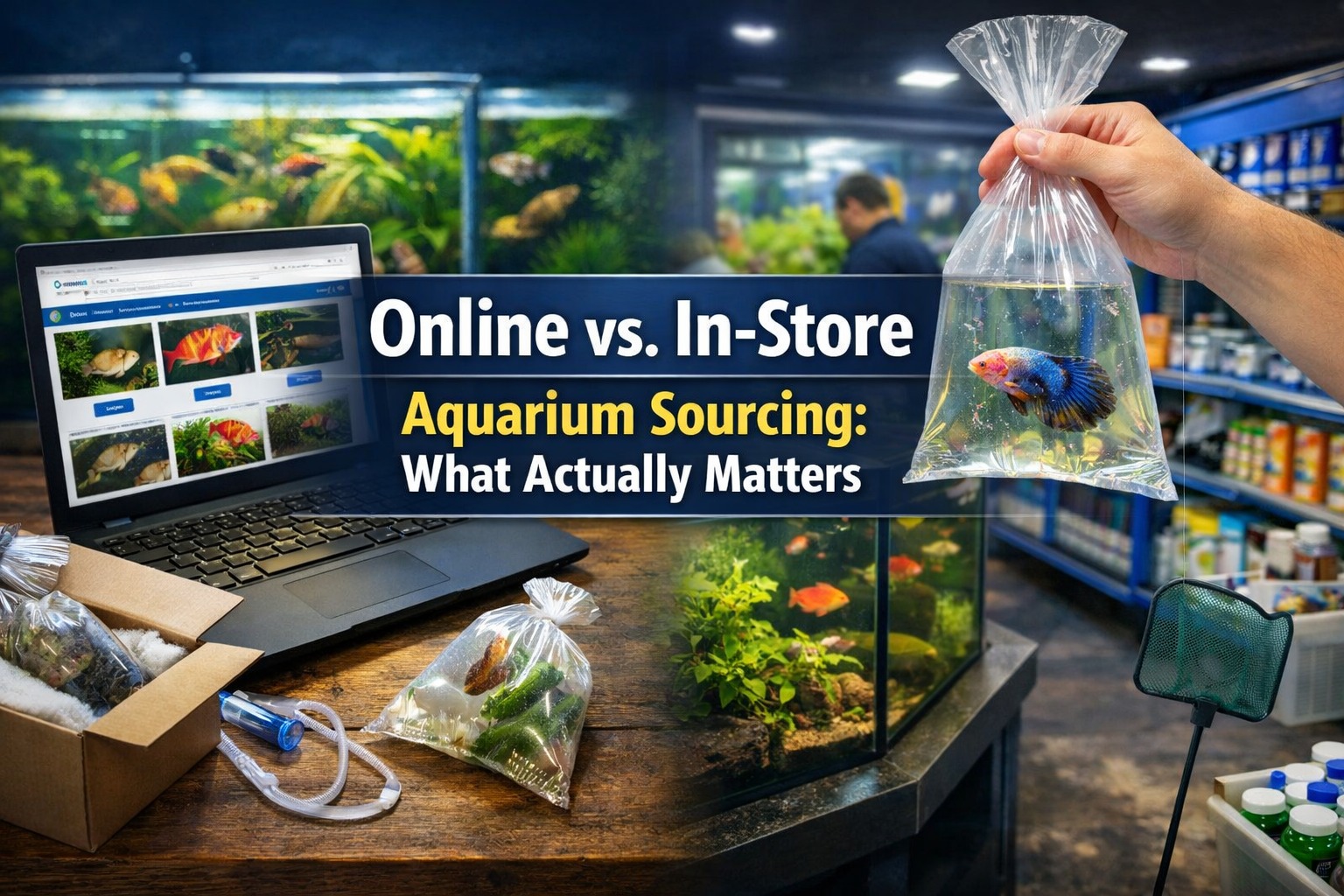
Fish, shrimp, plants, and snails all move through very different systems
Aquarium buying decisions are often framed as online versus in-store, but that framing misses the bigger picture.
Buying livestock or plants involves more than just choosing a store—it applies equally to fish, shrimp, snails, and plants.
Both online and in-person purchases can succeed. Both can fail. The difference is understanding the systems behind each option and preparing accordingly.
Buying Aquarium Livestock Online: Purpose-Raised and Traceable
One of the biggest advantages of buying aquarium livestock and plants online is traceability.
Many online sellers are:
- Dedicated breeders
- Shrimp and snail specialists
- Plant growers and nurseries
- Hobbyists focused on specific species
That often means:
- Fish, shrimp, and snails are captive-bred, supporting more sustainable aquarium keeping
- Plants are grown submerged or emersed in controlled systems
- Livestock is conditioned to aquarium life from early on
- Reduced exposure to large, mixed retail distribution systems
This can result in:
- Stronger survival rates after introduction
- More predictable behavior and growth
- Fewer pest or parasite introductions
- Healthier long-term outcomes for the aquarium
For shrimp and snails especially, captive-raised stock is often more resilient than organisms that have passed through multiple distribution steps.
The tradeoff with online sourcing
When online purchases fail, it’s rarely due to weak livestock.
Most issues come from:
- Shipping delays
- Temperature swings during transit
- Rough handling by carriers
- Buyers being unprepared at delivery
- Rushed or improper acclimation
In these cases, logistics and preparation matter just as much as livestock quality.
Buying Aquarium Livestock In-Person: Beyond Retail Chains
“In-store” buying doesn’t just mean walking into a retail chain.
In-person sourcing can include:
- Local fish stores
- Aquarium club meetings and swaps
- Hobbyist auctions and conventions
These options often provide:
- Shorter supply chains
- Locally bred fish, shrimp, and snails
- Plants grown in nearby systems
- The ability to observe livestock behavior before purchase
For many aquarists, these sources combine personal inspection with healthier sourcing than large-scale distribution networks.
The In-Store Tradeoff: Constant Activity and Environmental Pressure
While in-person buying offers visibility and immediacy, it also comes with tradeoffs that are easy to overlook.
Fish, shrimp, and snails in retail environments are frequently exposed to:
- Continuous foot traffic
- Repeated netting and handling
- Bright lighting for extended periods
- Vibrations and noise from constant movement
- Ongoing additions and removals within shared systems
Even in well-run stores, this creates chronic, low-level stress.
Unlike shipping stress—which is intense but temporary—retail stress is prolonged. Livestock may appear active and healthy while still being physiologically taxed from continuous disturbance.
Many in-store purchases still result in healthy, long-lived aquarium inhabitants—success depends on recognizing these conditions and providing appropriate recovery time.
This helps explain why losses sometimes occur days after an in-store purchase rather than immediately. Recovery often depends on providing calm, stable conditions once livestock reaches a home aquarium.
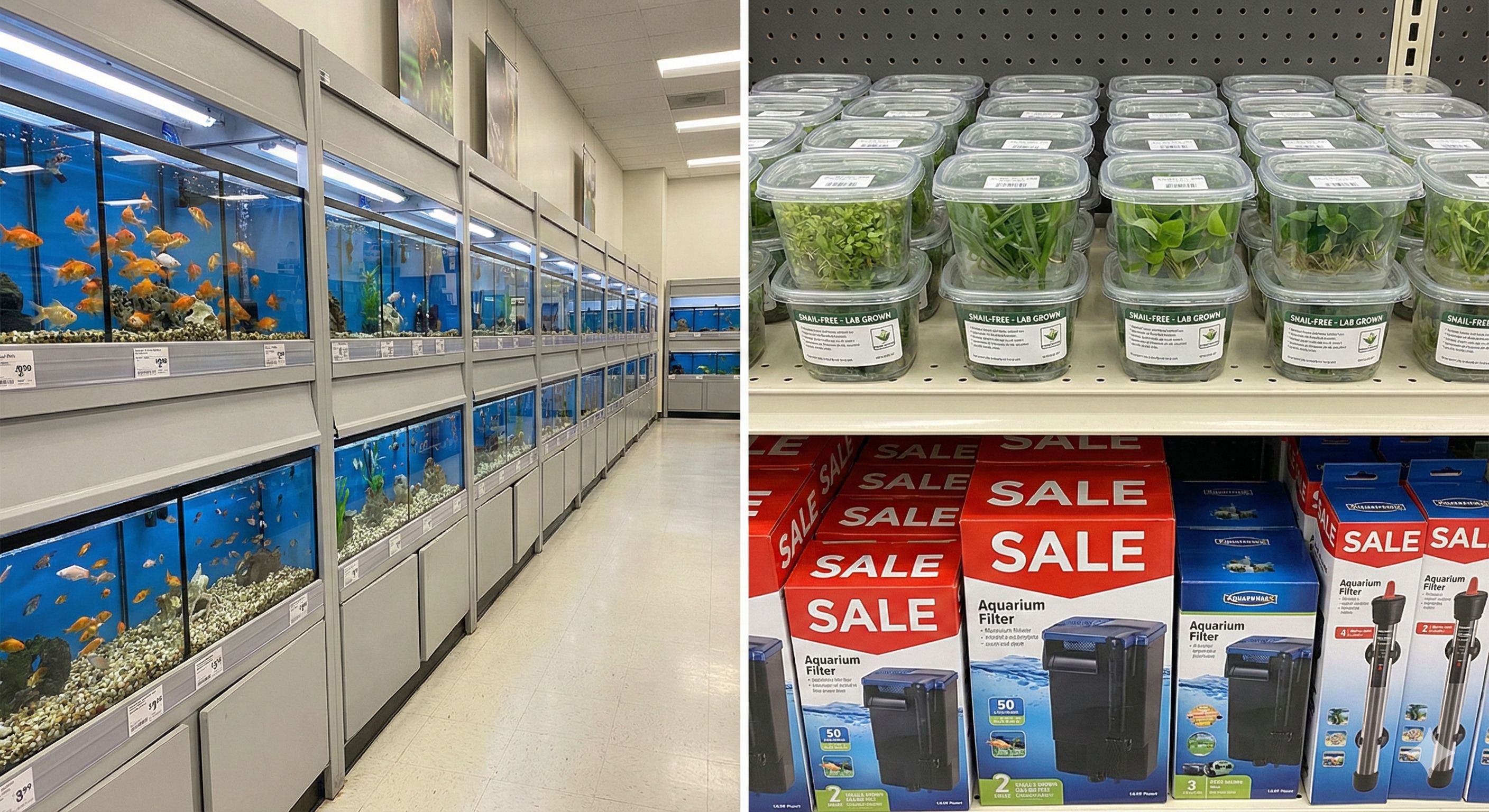
Big Box Stores: High Volume, Higher Risk (With Practical Exceptions)
Large chain pet stores operate on high-volume, centralized distribution models. Livestock moves through multiple holding systems and is restocked based on turnover schedules, which creates distinct tradeoffs compared to specialist retailers.
This often leads to:
- Increased disease transmission
- Higher cumulative stress on fish, shrimp, and snails
- Systems optimized for turnover rather than long-term health
A common belief is that buying livestock from poor conditions is a form of rescue. In reality, each purchase reinforces demand and results in that animal being replaced.
Where big box stores can make sense
Plants and equipment are a different category.
Many large retailers sell aquarium plants in individual sealed packaging, which can offer a biosecurity advantage for hobbyists trying to avoid hitchhiker snails or unintended invertebrate introductions. These plants are typically grown in controlled environments away from mixed retail systems.
Big box stores can also be useful for equipment purchases. They occasionally run significant sales, making them a good option for:
- Spare aquariums
- Future tank projects
- Quarantine, hospital, or backup systems
- Replacing or upgrading equipment affordably
These sales reward planning ahead rather than impulse buying.
For live animals, however, local fish stores, breeders, and hobbyist networks consistently provide better outcomes.
Stress Isn’t the Problem — Transition Is
All aquarium life experiences stress.
- Fish, shrimp, and snails face handling, transport, and unfamiliar environments
- Plants experience changes in light, nutrients, and water chemistry, especially when transitioning between emersed and submerged growth forms
This plant transition often involves shedding air-grown (emersed) leaves in order to develop water-adapted (submerged) foliage.
Losses usually occur when:
- New additions are introduced too quickly
- Systems are not fully stable
- Environmental differences are underestimated
Organisms don’t fail because they were bought online or in person — they fail when the transition outpaces their biological ability to adapt.
Cost: Looking Beyond the Price Tag
In-person purchases often appear cheaper at checkout. Online sourcing may seem more expensive due to shipping and specialized handling.
Long-term cost tells a different story.
Replacing lost fish, shrimp, snails, or plants is always more expensive than sourcing thoughtfully and managing transitions properly from the start.
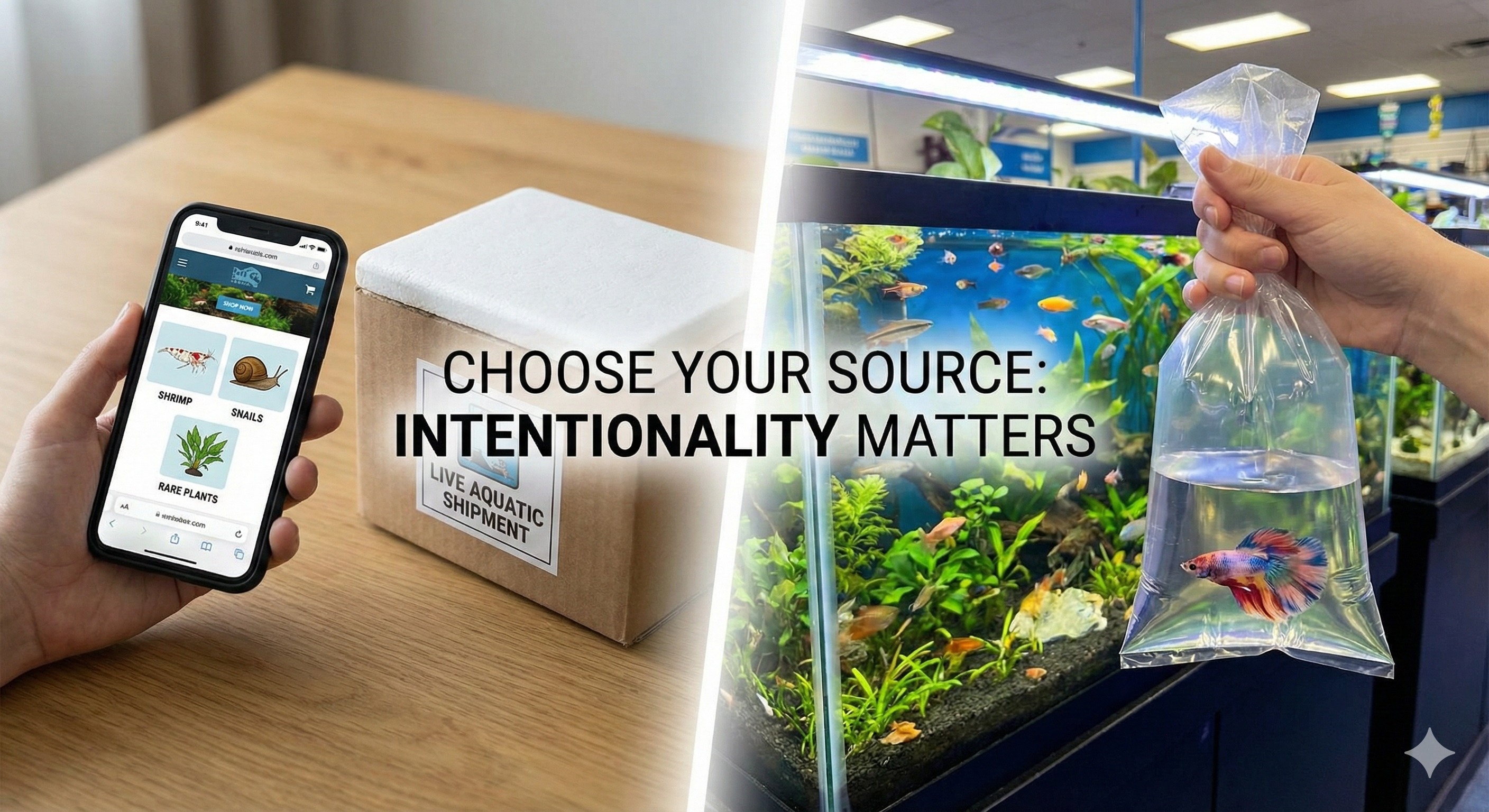
Choosing the Right Source for Your Aquarium
Online sourcing often works well for:
- Shrimp and snail keepers
- Planted tanks seeking specific species
- Breeding or species-specific systems
- Aquarists comfortable with preparation and observation
In-person sourcing works well for:
- Beginners buying from reputable local options
- Community aquariums
- Supporting local aquarium communities
- Selecting individual livestock or plants directly
Neither approach is inherently better. Intentional sourcing is.
The Takeaway
Successful aquarium keeping depends on intentional sourcing rather than a specific retail format.
Online vendors offer traceability and specialist stock. Local networks offer visibility and shorter supply chains. The critical factor in long-term success is how well the transition period is managed—not where the purchase was made.
Aquarium keeping isn’t about luck. It’s about informed decisions made before anything enters the tank.
Log parameters, feeding, and maintenance with our journals and guides.