Aquarium Fertilizers Explained: Liquid, Root Tabs, EI Dosing, and DIY Options
The Tank Guide · A FishKeepingLifeCo publication — Mar 2026
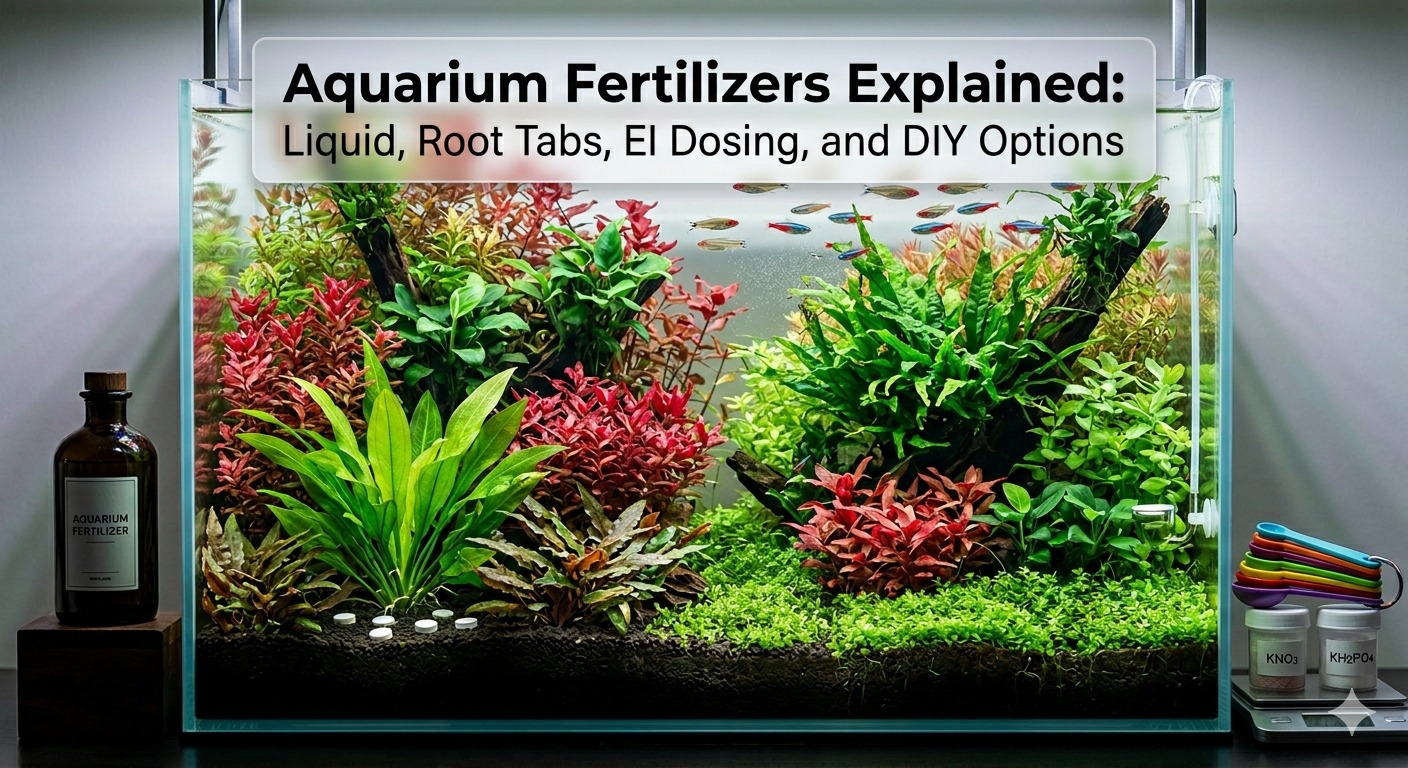
Aquarium Fertilizers Explained: Liquid, Root Tabs, EI Dosing, and DIY Options
Most live aquarium plants need more than just light to grow well.
In nature, aquatic plants receive nutrients from decomposing organic material, fish waste, and natural soil. Inside an aquarium, those nutrients are limited and can eventually be depleted as plants grow.
Aquarium fertilizers replace these nutrients, helping plants maintain healthy growth and strong coloration. Some are added to the water column, while others deliver nutrients directly through plant roots. Understanding these options helps you choose the right approach for your planted aquarium.
Understanding What Aquarium Plants Actually Need
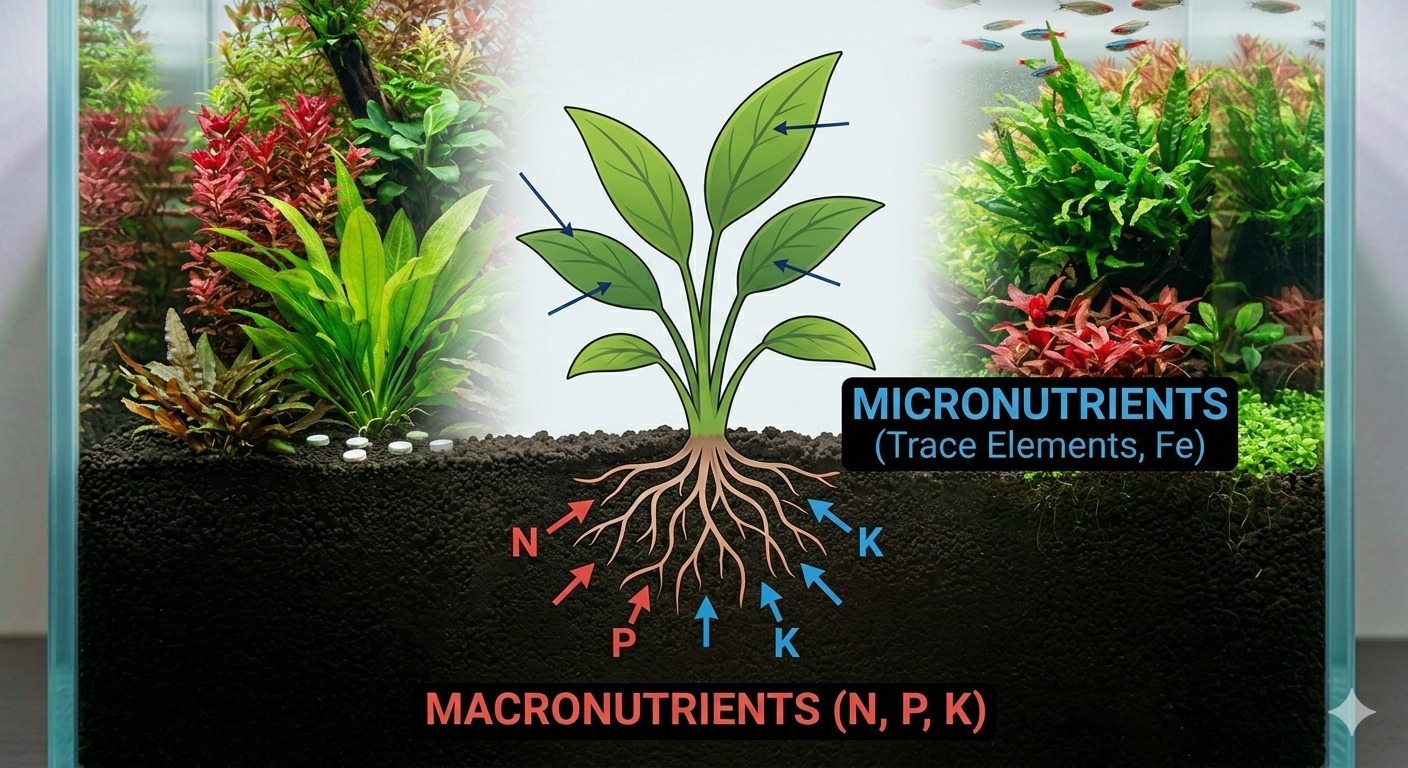
Aquatic plants rely on several essential nutrients to grow properly. These nutrients fall into two main categories: macronutrients and micronutrients.
Macronutrients
Plants require these nutrients in larger quantities:
- Nitrogen (N)
- Phosphorus (P)
- Potassium (K)
These nutrients support leaf growth, root development, and overall plant structure.
Many fertilizers add nitrates to the aquarium water, since nitrate is the form of nitrogen that plants absorb most readily. Ideally, plants consume those nutrients as they grow. If too much fertilizer is added or plant growth is limited, however, nitrates can accumulate and cause water quality issues. Regular water changes and matching fertilizer doses to plant demand help keep levels stable.
Micronutrients (Trace Elements)
Plants also require smaller amounts of trace elements, including:
- Iron
- Magnesium
- Manganese
- Zinc
- Boron
Iron is particularly important in planted aquariums because it plays a major role in chlorophyll production and plant coloration.
Liquid Fertilizers (All-in-One Fertilizers)
Liquid fertilizers are one of the most common ways to supply nutrients in planted aquariums, especially for beginners.
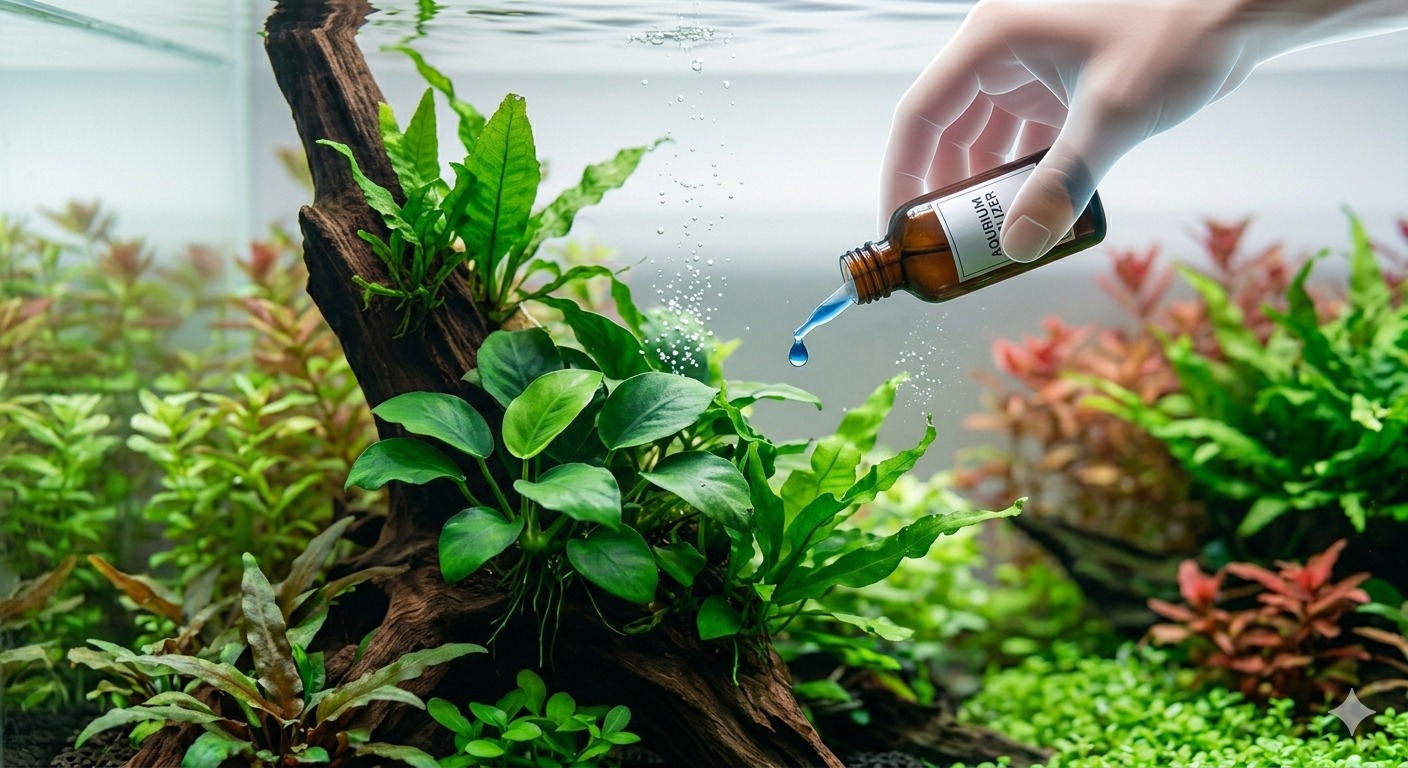
These fertilizers are added directly to the water column, allowing plants to absorb nutrients through their leaves. Many products combine macro and micronutrients into a single all-in-one formula, making dosing straightforward.
Why Aquarists Use Liquid Fertilizers
- Easy to dose with minimal measuring
- Well-suited for plants that absorb nutrients through their leaves
- Works well in low-tech aquariums
Plants like Anubias, Java Fern, Bucephalandra, and mosses — plants that grow without much fuss — benefit especially from water-column fertilization because they grow attached to rocks or driftwood rather than rooted in substrate. Most aquarists dose liquid fertilizers once or twice per week, depending on plant density.
Root Tabs (Feeding Plants Through the Substrate)
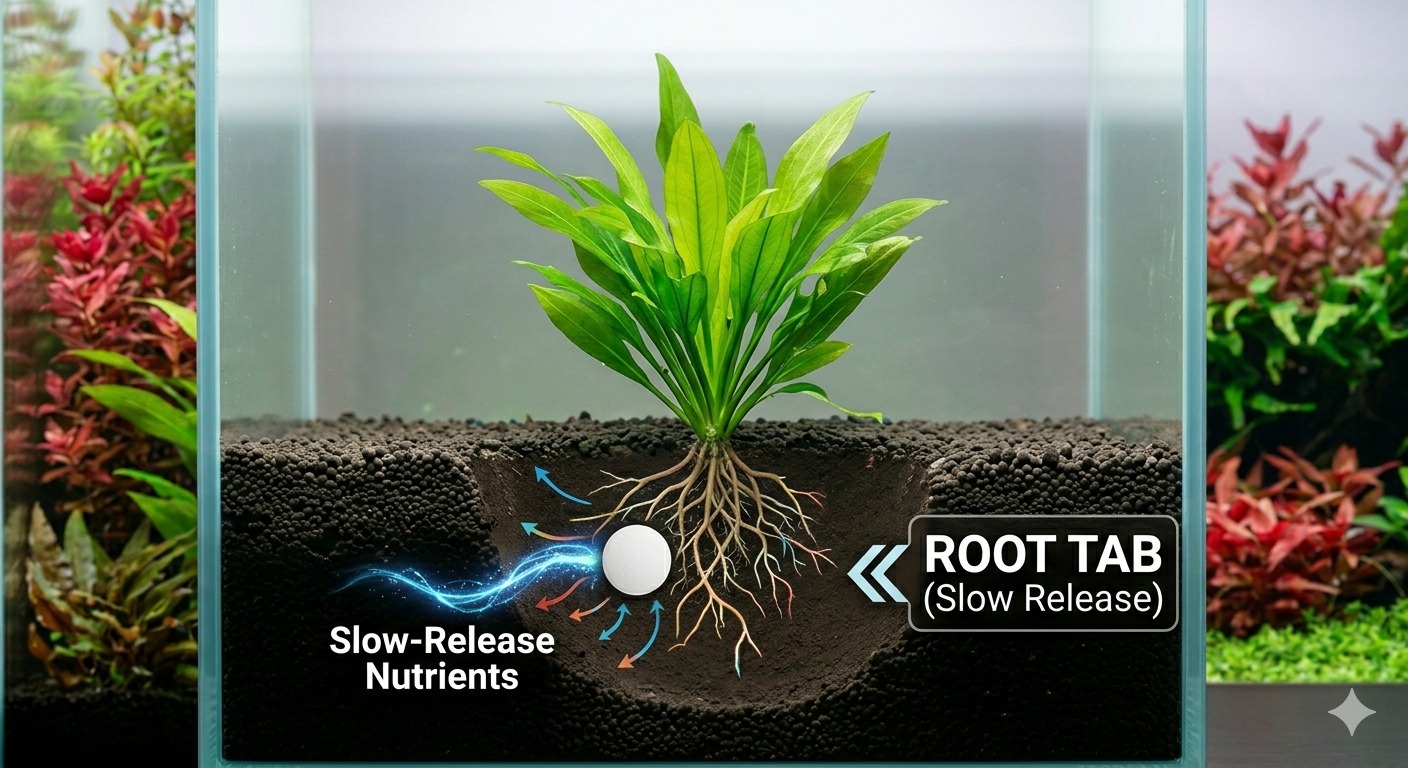
Root tabs are fertilizer tablets pushed directly into the aquarium substrate. They slowly release nutrients around the plant roots, allowing heavy root feeders to draw what they need from the substrate layer.
Plants That Benefit Most From Root Tabs
- Amazon Swords
- Cryptocoryne
- Vallisneria
- Tiger Lotus
These plants rely heavily on nutrients in the substrate. In aquariums with inert substrates like sand or gravel, root tabs help replace the nutrients that natural soils would normally provide — see our substrate guide on root tabs for inert substrates. They are typically replaced every one to three months, depending on plant growth.
Dry Fertilizers and the Estimative Index (EI Method)
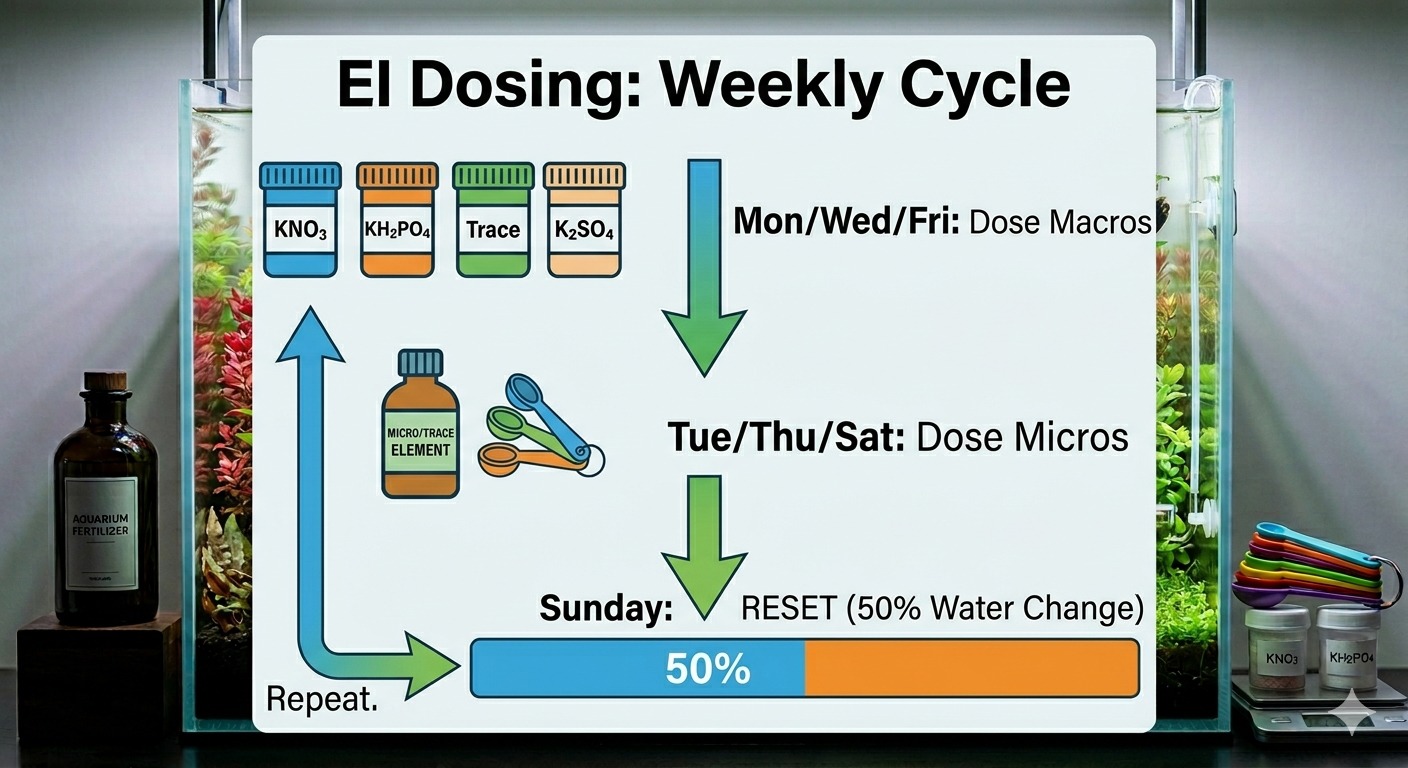
Some aquarists prefer using dry fertilizers with a structured dosing system called the Estimative Index, or EI.
The EI method was developed by aquascaper Tom Barr and is built around the idea of providing plants with abundant nutrients so they are never the limiting factor in growth. Rather than trying to maintain precise measurements, aquarists add measured doses of dry nutrients throughout the week.
Common EI nutrients include:
- Potassium Nitrate (KNO₃)
- Monopotassium Phosphate (KH₂PO₄)
- Potassium Sulfate (K₂SO₄)
- Trace element mixes
At the end of each week, a large water change — typically around 50 percent — resets nutrient levels and prevents buildup.
Why Some Aquarists Prefer EI
- Supports faster plant growth
- Gives full control over nutrient dosing
- Cost-effective long term
EI dosing is most commonly used in high-tech aquariums with strong lighting and CO₂ injection — our Gear Guide covers lighting and dosing gear, and we compare high-tech versus low-tech in a separate article.
DIY Aquarium Fertilizers
Many aquarists eventually explore making their own fertilizers. DIY options can be significantly cheaper and allow you to customize nutrient ratios for your specific setup.
DIY Liquid Fertilizers
Some hobbyists mix dry nutrients with distilled or RO water to create their own liquid fertilizer solutions. This allows them to prepare separate macro and micronutrient mixes, or build custom ratios based on their tank's needs. Accurate measuring and a basic understanding of nutrient levels is important when going this route.
DIY Root Tabs
DIY root tabs are another popular option. They are often made using nutrient-rich materials such as:
- Mineralized soil
- Clay powder
- Osmocote slow-release fertilizer pellets (note: Osmocote is formulated for terrestrial plants — results can vary in aquariums, and some coatings may behave unpredictably when submerged. It's widely used in the hobby but worth researching before committing to a recipe)
The mixture is typically packed into gel capsules, which dissolve slowly in the substrate and release nutrients near plant roots. DIY root tabs can be very effective and often cost far less than commercial products.
Common Fertilizer Mistakes Beginners Make
Fertilizers can dramatically improve plant growth, but adding too much — or using them incorrectly — can cause problems instead of solving them. Most beginner issues come down to balance.
Adding Fertilizer Without Enough Plants
If a tank only has a few slow-growing plants, heavy fertilizing allows nutrients to build up in the water. When plants aren't using those nutrients, algae often will.
Overdosing Fertilizers
More fertilizer does not mean faster plant growth. Excess nutrients can raise nitrate levels and destabilize water conditions. It's usually better to start with light dosing and increase gradually as plant growth picks up.
Ignoring Light and CO₂ Balance
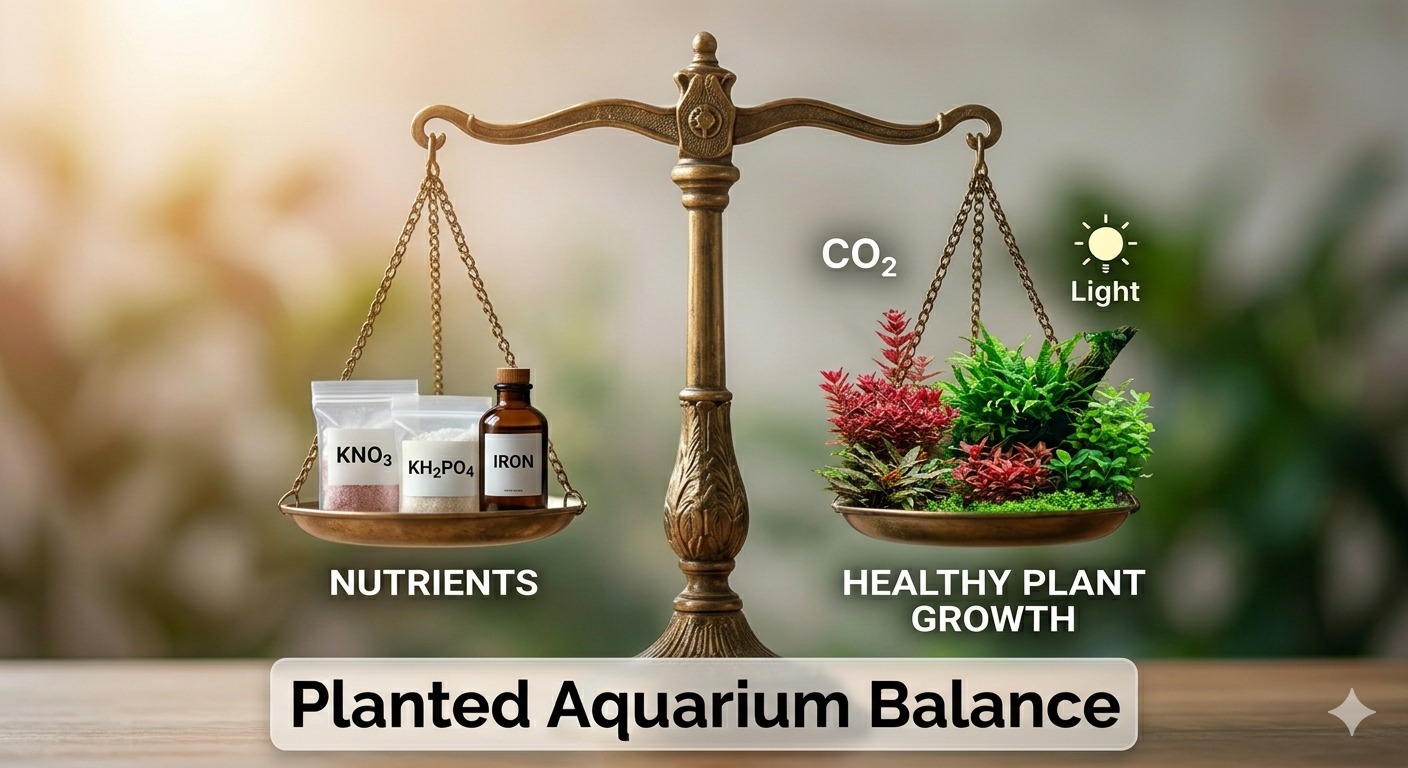
Fertilizer alone will not fix plant problems. Plants need three things to grow properly: light, nutrients, and carbon (CO₂). If one of these is missing or out of balance, adding more fertilizer won't solve the issue — and may actually encourage algae growth instead.
Forgetting About Water Changes
Regular water changes help prevent nutrient buildup and keep the aquarium balanced. Many fertilizing methods, including EI, rely on weekly water changes to reset nutrient levels and maintain a stable system.
Finding the Right Fertilizer Approach
There is no single fertilizer method that works for every aquarium.
Many aquarists combine approaches — using liquid fertilizers for water-column feeders while adding root tabs for heavy root feeders. The best method depends on your plant species, substrate choice, lighting levels, and overall setup.
When light, nutrients, and carbon are dialed in together, aquatic plants can grow into a stable and thriving underwater ecosystem.
Frequently Asked Questions
What is the difference between liquid fertilizer and root tabs?
Liquid fertilizers feed plants through the water column, while root tabs deliver nutrients directly into the substrate for root-feeding plants.
When should you use root tabs in a planted aquarium?
Use root tabs when growing heavy root feeders such as Amazon swords, Cryptocoryne, and Vallisneria, especially in inert sand or gravel substrates.
Do all aquarium plants need liquid fertilizer?
Not all plants need liquid fertilizer, but many water-column feeders benefit from it while rooted species may rely more on substrate nutrition.
Why are my aquarium plants not turning red?
Red coloration usually depends on high enough light, sufficient micronutrients like iron, balanced nitrogen, and overall healthy growth.
What is the most common fertilizer mistake in planted tanks?
A common mistake is overdosing nutrients without enough healthy plant mass to use them, which can fuel algae and destabilize water quality.