How to Acclimate Shrimp After Shipping: Receiving and Early Adjustment
Experience-based guidance for winter arrivals, ammonia concerns, and the first day after delivery.
By FishKeepingLifeCo — Jan 2026
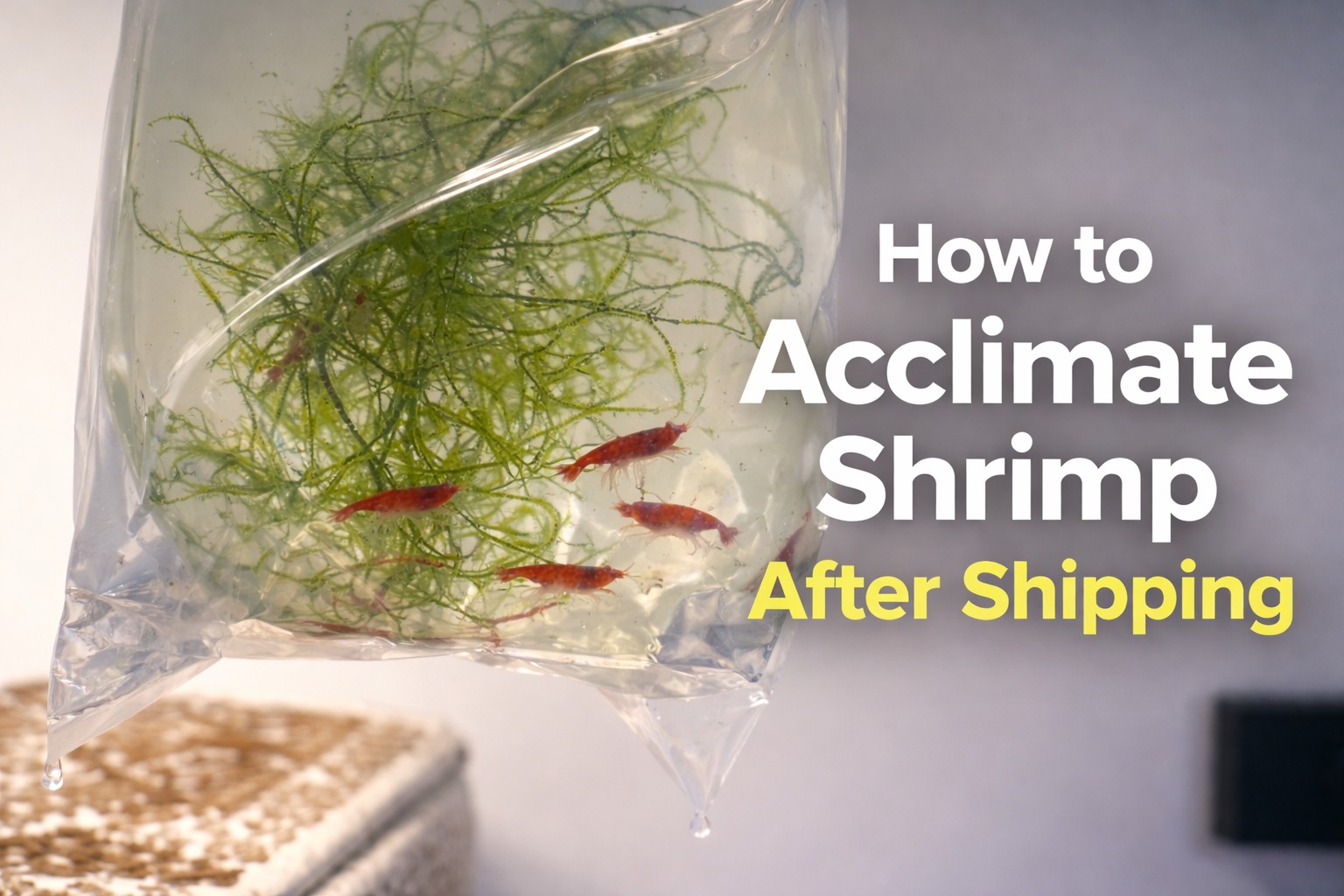
How to Acclimate Shrimp After Shipping: Receiving and Early Adjustment
This section documents the receiving and acclimation phase of an online shrimp order, focusing on what happens after shipping ends and responsibility fully transfers to the aquarist.
This is not a prescriptive guide or a guarantee of outcomes. It reflects one real-world experience shaped by winter shipping conditions, system maturity, and a preference for slow, low-stress transitions. Because this experience took place during winter shipping, temperature management shaped much of the approach.
-----
Delivery Day Reality
When the package arrives, the most important factor isn’t speed—it’s readiness.
Successful online shrimp orders typically benefit from:
- A stable, mature aquarium
- Parameters appropriate for the species
- Time set aside for acclimation
- A calm, observational approach
Opening the box is not the start of shrimp care—it’s the continuation of it. This process starts before the box arrives and continues for weeks after—success depends more on what you don’t do than what you do.
Rushed unboxing or improvising acclimation methods in the moment can introduce pressure that compounds what shipping already caused.
-----
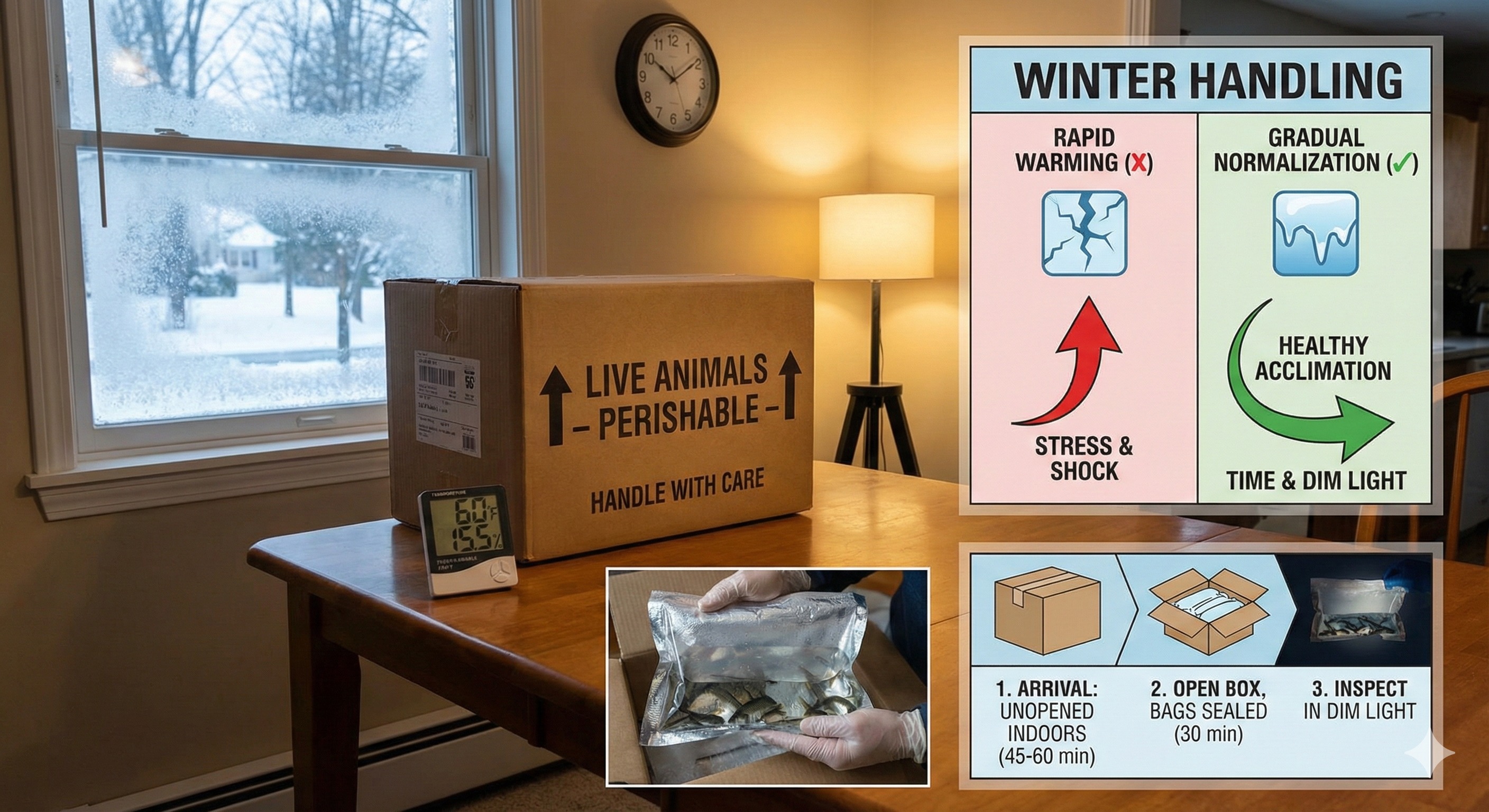
Cold-Weather Receiving: Winter Handling Considerations
Because this order took place in the middle of winter, temperature management began before the box was opened.
When the package arrived, it was brought indoors and left unopened for 45 minutes to an hour. This allowed the entire package to gradually normalize after cold outdoor exposure.
After allowing gradual indoor temperature normalization, the box was opened without exposing the contents to bright light. The bags remained sealed and were left for another 30 minutes, continuing slow temperature equalization. Only after this second pause was the livestock inspected.
Why Temperature Matters More Than Speed
Cold pressure doesn’t end the moment a package enters the house. Rapid warming, bright light, and movement can add unnecessary demands on top of what shipping already introduced.
At the inspection point:
- Shrimp were observed in the bag
- General movement and posture were noted
- No handling or rapid adjustments were made during this temperature stabilization phase
Next, the sealed bag was floated in the aquarium with:
- Tank lights off
- Room lighting kept low
- Minimal external disturbance
The bag floated for an additional 30 minutes, allowing further temperature alignment without introducing sudden light or motion.
Summer arrivals or insulated packaging may reduce temperature concerns, but gradual equalization remains beneficial.
-----
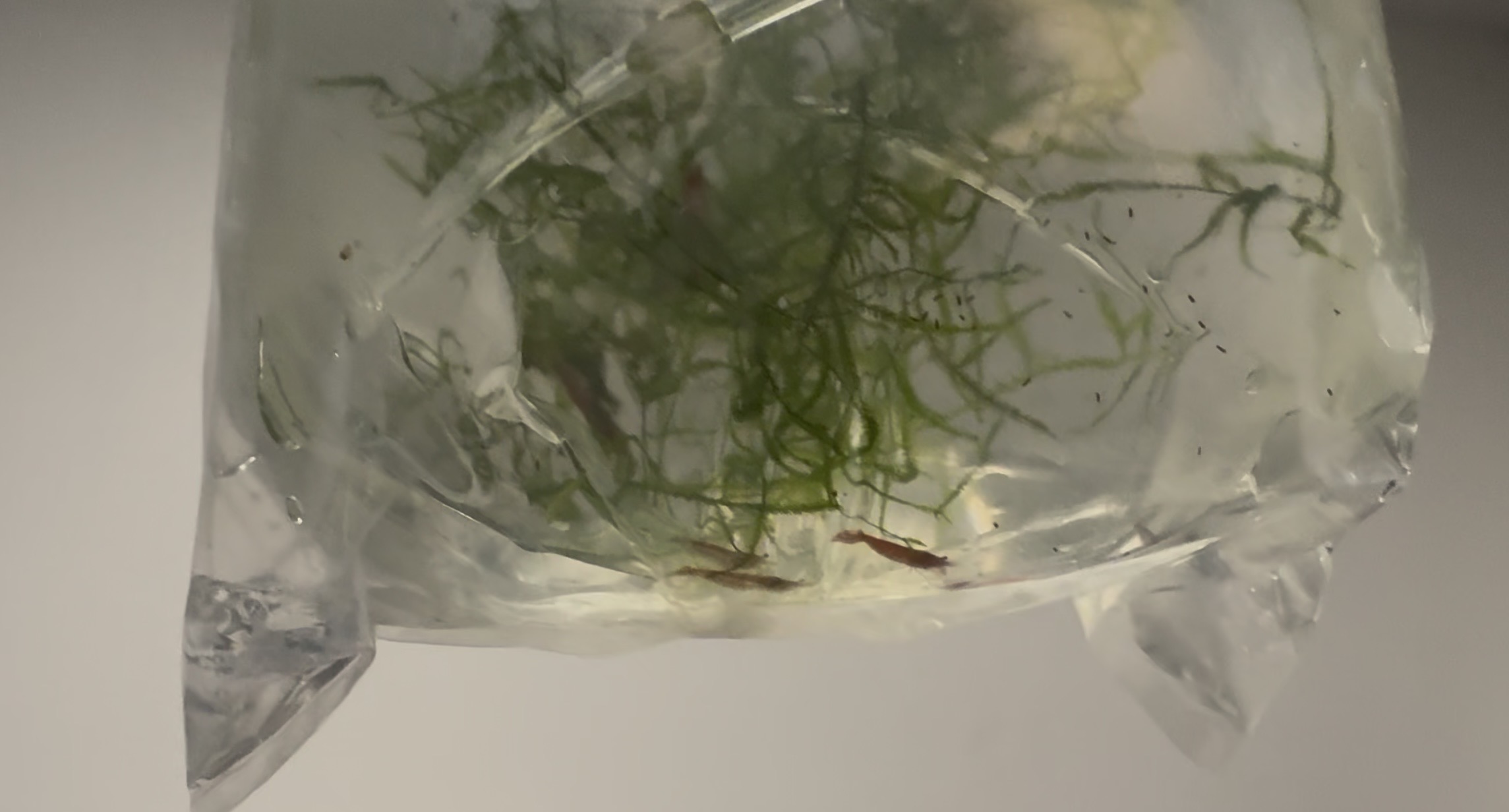
Reading Arrival Condition: What to Watch and What to Wait For
With temperature stabilized, we could now assess condition—but initial impressions after shipping can be misleading.
Shrimp may arrive appearing:
- Pale or washed out
- Less active than expected
- Grouped together
- Slow to respond
These signs do not automatically indicate poor health.
In many cases, they reflect shipping pressure, oxygen fluctuation, temperature change, and temporary metabolic slowdown. Conserving energy during transit is a common survival response.
Rather than making an immediate call, we found it more useful to observe the shrimp for several minutes after opening the package. This included noticing:
- The general temperature of the bagged water
- Posture and movement once exposed to room conditions
- Whether any losses were immediately apparent (primarily for documentation if required)
Allowing time before drawing conclusions mattered most.
In our experience, issues attributed to shipping often don’t appear immediately. They tend to surface later and are more closely tied to parameter differences, acclimation pace, or overall system stability than to the shipping event itself.
Understanding this helps prevent snap judgments at unboxing.
-----
Acclimation in Practice: A Gradual Cup Method
After temperature stabilization and inspection, we moved into acclimation.
For this order, we used a gradual cup-style acclimation, chosen for control and consistency rather than speed. The goal was to reduce osmotic and chemical pressure following winter shipping.
Before starting, a small amount of Seachem Prime was added directly to the shipping bag.
-----
Stepwise Acclimation Process
The acclimation followed a slow, repeatable rhythm:
- A small amount of tank water was added to the bag
- After 10 minutes, water was gently removed
- Fresh system water was added again
- This cycle was repeated every 10 minutes, for a total of four rounds
This gradual exchange allowed TDS, hardness, and pH to equalize while minimizing osmotic pressure changes.
At no point were shrimp poured directly into the aquarium—this avoids introducing shipping water and its accumulated waste into the system.
Once acclimation was complete, shrimp were netted out of the bag and transferred into the tank. Shipping water was discarded.
-----
Why Add an Ammonia Detoxifier During Acclimation?
During transit, shrimp produce waste that converts to ammonia. While the bag remains sealed, low oxygen and lower pH keep ammonia in a less toxic form. Once the bag is opened and oxygen enters, pH can rise, increasing ammonia toxicity.
Adding a small amount of an ammonia-binding conditioner at this stage is a precautionary step that helps reduce risk during acclimation, especially while water chemistry is changing.
At the system level, Seachem Stability was added to the aquarium beforehand. This was used as a supportive measure during a known challenge event, not as a substitute for a mature biofilter.
-----
Introduction and First Night Handling
After introduction:
- Aquarium lights remained off until the following day
- Room lighting stayed low
- We avoided additional maintenance or disturbances
A small amount of food was added shortly after introduction—not to feed the shrimp, but to distract existing fish and reduce attention toward new invertebrates during their most vulnerable period.
The first night was treated as a quiet stabilization window.
-----
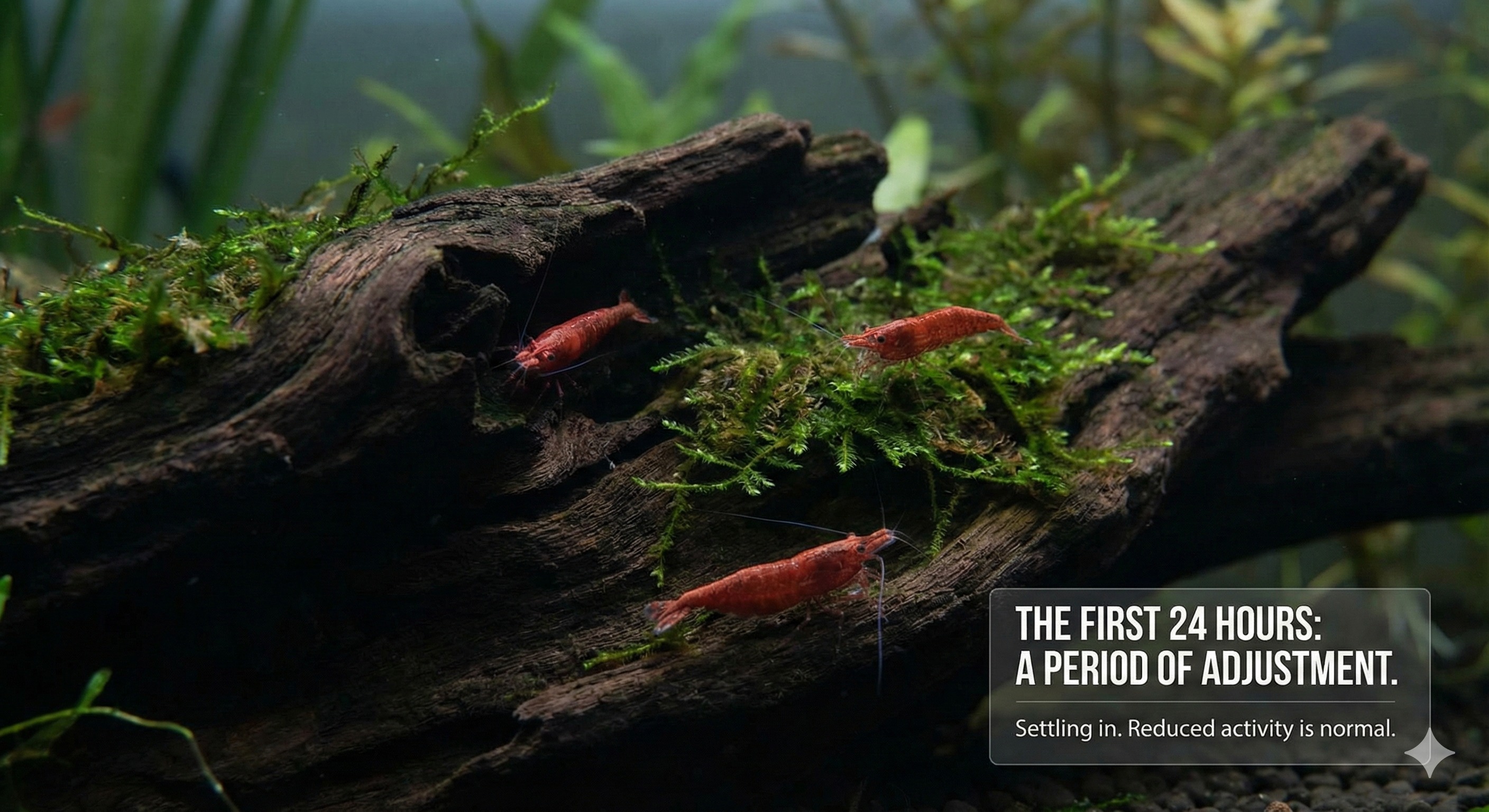
The First 24 Hours: A Period of Adjustment
Making it through acclimation is an important step, but it isn’t the end of adjustment.
The first day is best viewed as a settling period. Shrimp are still adapting internally, and behavior may look different than what’s seen in an established system.
Reduced activity, time spent in sheltered areas, or brief stillness are often part of this transition.
Challenges during this period often reflect parameter differences or acclimation pace rather than shipping quality.
Minimal intervention during this window often supports better long-term outcomes.
-----
Early Losses and Individual Limits
Early losses don’t always indicate a failed process.
Some shrimp may already be older, weakened, or near the end of their natural lifespan. For those individuals, the combined demands of shipping, handling, and environmental change can simply exceed recovery limits.
This is why slow acclimation matters. Reducing pressure during transition gives each shrimp—regardless of age or prior condition—the best chance to adapt within their individual limits.
-----
Closing: Letting the System Do Its Work
Even with careful acclimation, shrimp don’t adapt instantly. Full adjustment can take days to weeks.
During this period, we’ve found it best to do as little as possible in the aquarium. Avoid major maintenance, avoid chasing numbers, and let the system stabilize around the new livestock.
We also prefer introducing shrimp right after a scheduled water change, allowing them to adapt alongside the system’s normal reset. By the time the next water change occurs, they’re typically more comfortable and better established.
In many cases, the quiet period after introduction—where patience matters more than action—often plays a significant role in whether shrimp simply survive or truly settle in.
Sometimes, the best thing you can do is let the tank be.
Log parameters, feeding, and maintenance with our journals and guides.